
| 영문 | rat | 한글 | 쥐 |
|---|---|---|---|
| 설명 | 포유류 쥐목 쥐아목의 총칭. 남극과 뉴질랜드를 제외한 세계의 각 지방에 분포한다. 지금부터 약 3,600만 년 이전에 나타난 이후, 쥐목 중에서 가장 번성하고 있는 종류로서 220속 약 1,800종을 포함하며, 포유류의 약 3분의 1을 차지하고 있다. 따라서 형태, 몸의 구조, 서식장소 등의 변화가 많다. 사람 질병의 매개체가 된다. 적어도 11종의 기생충을 갖고 있어 사람에게 전파할 위험이 있다. 조충, 회충, 선모충 등이 그 예이다. 또한 페스트, 발진티푸스, Weil병, 쥐물음열 등의 병원체 보유체이기도 하다. R. norvegicus의 백색 변이종은 실험동물로 사용된다. |
||
| 영문 | white matter | 한글 | 백색질 |
|---|---|---|---|
| 설명 | 1. 뇌는 두 부분으로 나뉘어져 있다. 대뇌겉질이나 뇌의 중앙부에 위치하는 핵(예를 들면 시상, 시상하부, 바닥핵 등)이 회색질이고 그 외는 백색질이다. 척수의 경우에는 바깥쪽의 하얀부분을 백색질이라 하고, 안쪽의 색깔이 어두운 부분을 회색질이라 한다. 이중 실제적으로 대부분의 신경세포의 돌기 특히 축삭과 말이집으로 구성된 것이 백색질이며, 회색질은 신경세포와 보조하는 세포들이 많은 곳이다. 또한 척수도 백색질과 회색질로 나뉘어 있다. 2. 치아에 점착된 백색 물질로서 세균 및 사상 미생물을 함유한 점액 및 상피세포로 구성된다. 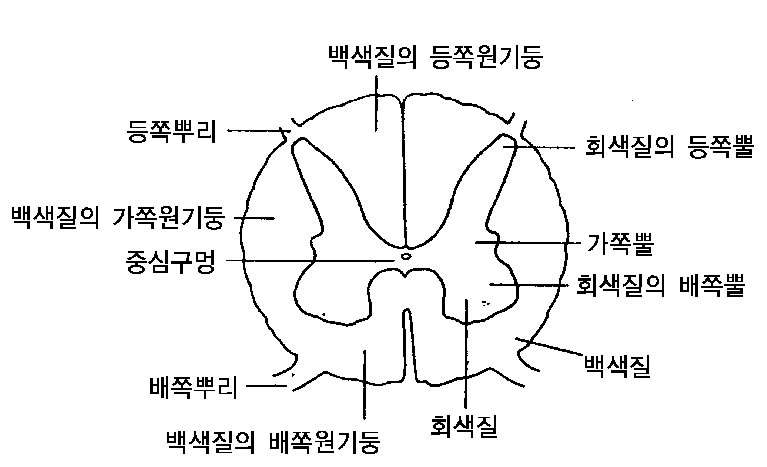 |
||
| 영문 | white blood cell(WBC), leukocyte | 한글 | 백혈구 |
|---|---|---|---|
| 설명 | 혈액내에 골수구계세포와 림프계세포, 단핵구계세포를 모두 통틀어 말한다. 백혈구의 증가가 있으면 대개 감염이 있거나, 혹은 탈수현상이 있음을 의미한다. 또한 지나친 백혈구수의 감소는 인체내 면역기능이 떨어져 있음을 의미하며, 다른 질병에 의해 나타나는 이차적인 현상이 아닌지 꼭 진단을 받아보아야 한다. |
||
| WC | ward clerk; water closet; Weber-Christian [syndrome]; wheel chair; white cell; white cell casts; whi... |
|---|---|
| TWBC | total white blood cells; total white blood count |
| WBC | well baby care/clinic; white blood cell; white blood cell count; whole blood cell count |
| WM | Waldenstrom macroglobulinemia; ward manager; warm and moist; Wernicke-Mann [hemiplegia]; wet mount; ... |
| WF | Weil-Felix reaction; white female; Wistar-Furth [rat] |
| W-W | white-on-white |
|---|---|
| CFW | Calcofluor white |
| HEWL | Hen Egg White Lysozyme |
| HEW | Hen egg white |
| HEL | Hen egg white lysozime |
| rat | 1. <zoology> One of the several species of small rodents of the genus Mus and allied genera, larger than mice, that infest houses, stores, and ships, especially the Norway, or brown, rat (M. Alexandrinus). These were introduced into Anerica from the Old World. 2. A round and tapering mass of hair, or similar material, used by women to support the puffs and rolls of their natural hair. 3. One who deserts his party or associates; hence, in the trades, one who works for lower wages than those prescribed by a trades union. "It so chanced that, not long after the accession of the house of Hanover, some of the brown, that is the German or Norway, rats, were first brought over to this country (in some timber as is said); and being much stronger than the black, or, till then, the common, rats, they in many places quite extirpated the latter. The word (both the noun and the verb to rat) was first, as we have seen, leveled at the converts to the government of George the First, but has by degrees obtained a wide meaning, and come to be applied to any sudden and mercenary change in politics." Bamboo rat, any American rat of the genus Neotoma, especially N. Floridana, common in the Southern United States. Its feet and belly are white. Origin: AS. Raet; akin to D. Rat, OHG. Rato, ratta, G. Ratte, ratze, OLG. Ratta, LG. & Dan. Rotte, Sw. Ratta, F. Rat, Ir. & Gael radan, Armor. Raz, of unknown origin. Cf. Raccoon. Source: Websters Dictionary (01 Mar 1998) |
|---|---|
| rat-bite disease | A syndrome characterised by recurring fever, rash, and arthralgias occurring days to weeks after a rat bite. The causative agents are either streptobacillus moniliformis or spirillum minus. (12 Dec 1998) |
| rat-bite fever | A syndrome characterised by recurring fever, rash, and arthralgias occurring days to weeks after a rat bite. The causative agents are either streptobacillus moniliformis or spirillum minus. (12 Dec 1998) |
| rat-flea typhus | Murine typhus, an acute infectious disease with fever, headache, and rash, all quite similar to, but milder than, epidemic typhus, caused by a related microoganism, rickettsia typhi (mooseri), transmitted to humans by rat fleas (xenopsylla cheopis). The animal reservoir includes rats, mice and other rodents. Murine typhus occurs sporadically worldwide but is more prevalent in congested rat-infested urban areas. Also known as endemic typhus and urban typhus of malaya. (12 Dec 1998) |
| rat leprosy | A slowly but progressively fatal form of leprosy occurring in rats, caused by Mycobacterium lepraemurium; it appears in two forms, glandular and musculocutaneous; causes induration, alopecia, and eventually ulceration. Synonym: mouse leprosy, murine leprosy. (05 Mar 2000) |
| rat mite dermatitis | An eruption of wheals, papules, or vesicles caused by the rat mite. (05 Mar 2000) |
| rat sialodacryoadenitis virus | A coronavirus causing sialodacryoadenitis in rats. (05 Mar 2000) |
| rat-tail | 1. <veterinary> An excrescence growing from the pastern to the middle of the shank of a horse. 2. <zoology> The California chimaera. See Chimaera. Any fish of the genus Macrurus. See Grenadier. Source: Websters Dictionary (01 Mar 1998) |
| rat-tailed | <zoology> Having a long, tapering tail like that of a rat. <zoology> Rat-tailed larva, the musk shrew. Source: Websters Dictionary (01 Mar 1998) |
| water rat | 1. <zoology> The water vole. See Vole. The muskrat. The beaver rat. See Beaver. 2. A thief on the water; a pirate. Source: Websters Dictionary (01 Mar 1998) |
| coronavirus, rat | A species of coronavirus causing pneumonia in newborn rats but a clinically inapparent infection in adults. It is separate but antigenetically related to mouse hepatitis virus (gastroenteritis virus, murine). (12 Dec 1998) |
| sea rat | 1. A pirate. 2. <zoology> The chimaera. Source: Websters Dictionary (01 Mar 1998) |
| typhus, rat-flea | See Typhus, murine. (12 Dec 1998) |
| Kilham rat virus | A virus of the genus Parvovirus causing inapparent infection in rats; also recoverable from rat tumours. Synonym: latent rat virus. (05 Mar 2000) |
| latent rat virus | A virus of the genus Parvovirus causing inapparent infection in rats; also recoverable from rat tumours. Synonym: latent rat virus. (05 Mar 2000) |
| white rat |
The Brown Rat or Norway Rat (Rattus norvegicus) is one of the most well-known and common rats, and also one of the largest. Thought to have originated in northern China, this rodent has now spread to all continents and is the dominant rat in Europe and much of North America. It is a common pest wherever humans live, particularly in urban areas and degraded environments. It is also an important model organism in biological research, as well as a common pet. ...
출처: en.wikipedia.org/wiki/White_rat
|
|---|
제품명 |
판매사 |
보험코드 | 성분/함량 | 구분/보험급여 |
|---|
제품명 |
판매사 |
보험코드 | 성분/함량 | 구분/보험급여 |
|---|