
| 영문 | phosphorus | 한글 | 인 |
|---|---|---|---|
| 설명 | 칼슘과 같이 뼈의 대부분을 구성하는 요소. 인의 농도는 칼슘의 농도에도 많은 영향을 끼친다. 인은 비타민 D에 의해 위창자관에서의 흡수가 증가하고 소변으로 배설이 감소하여 결국은 혈중농도를 상승시킨다. 그러나 부갑상샘호르몬에 의해서는 소변으로 인한 배설이 증가하여 혈중농도가 감소한다. |
||
| 영문 | white matter | 한글 | 백색질 |
|---|---|---|---|
| 설명 | 1. 뇌는 두 부분으로 나뉘어져 있다. 대뇌겉질이나 뇌의 중앙부에 위치하는 핵(예를 들면 시상, 시상하부, 바닥핵 등)이 회색질이고 그 외는 백색질이다. 척수의 경우에는 바깥쪽의 하얀부분을 백색질이라 하고, 안쪽의 색깔이 어두운 부분을 회색질이라 한다. 이중 실제적으로 대부분의 신경세포의 돌기 특히 축삭과 말이집으로 구성된 것이 백색질이며, 회색질은 신경세포와 보조하는 세포들이 많은 곳이다. 또한 척수도 백색질과 회색질로 나뉘어 있다. 2. 치아에 점착된 백색 물질로서 세균 및 사상 미생물을 함유한 점액 및 상피세포로 구성된다. 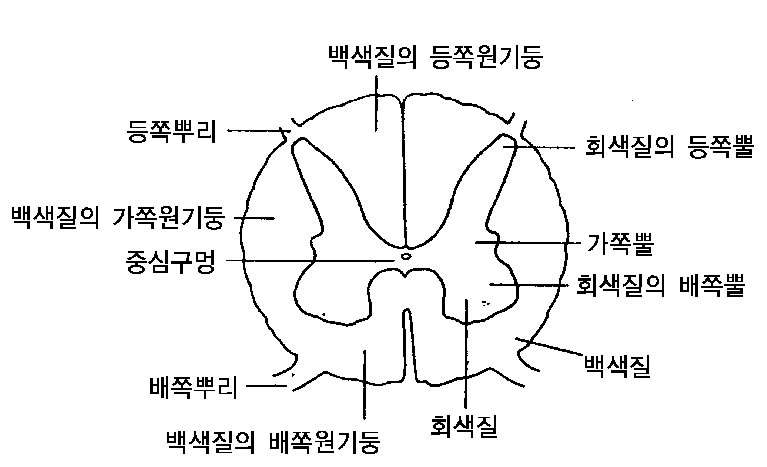 |
||
| 영문 | white blood cell(WBC), leukocyte | 한글 | 백혈구 |
|---|---|---|---|
| 설명 | 혈액내에 골수구계세포와 림프계세포, 단핵구계세포를 모두 통틀어 말한다. 백혈구의 증가가 있으면 대개 감염이 있거나, 혹은 탈수현상이 있음을 의미한다. 또한 지나친 백혈구수의 감소는 인체내 면역기능이 떨어져 있음을 의미하며, 다른 질병에 의해 나타나는 이차적인 현상이 아닌지 꼭 진단을 받아보아야 한다. |
||
| WC | ward clerk; water closet; Weber-Christian [syndrome]; wheel chair; white cell; white cell casts; whi... |
|---|---|
| TWBC | total white blood cells; total white blood count |
| WBC | well baby care/clinic; white blood cell; white blood cell count; whole blood cell count |
| WM | Waldenstrom macroglobulinemia; ward manager; warm and moist; Wernicke-Mann [hemiplegia]; wet mount; ... |
| DNAP | deoxyribonucleic acid phosphorus |
| W-W | white-on-white |
|---|---|
| 31P-MRS | 31-Phosphorus magnetic resonance spectroscopy |
| 31PNMR | 31-Phosphorus nuclear magnetic resonance |
| NPD | Nitrogen-phosphorus detection |
| P | Phosphorus |
| amorphous phosphorus | Red phosphorus, an allotropic form of phosphorus formed by heating ordinary phosphorus, in the absence of oxygen, to 260캜; it occurs as an amorphous dark red mass or powder, nonpoisonous, and much less flammable than ordinary phosphorus; it may be reconverted to the latter by heating to 454.4캜 in nitrogen gas. (05 Mar 2000) |
|---|---|
| carbon-phosphorus lyase | <enzyme> Found in bacteria which utilise alkyl and phenylphosphonic acids Registry number: EC 4.99.- Synonym: c-p lyase, carbon-phosphorus cleavage enzyme (26 Jun 1999) |
| phosphorus | Origin: L, the morning star, Gr, lit, light bringer; light + to bring. 1. The morning star; Phosphor. 2. <chemistry> A poisonous nonmetallic element of the nitrogen group, obtained as a white, or yellowish, translucent waxy substance, having a characteristic disagreeable smell. It is very active chemically, must be preserved under water, and unites with oxygen even at ordinary temperatures, giving a faint glow, whence its name. It always occurs compined, usually in phosphates, as in the mineral apatite, in bones, etc. It is used in the composition on the tips of friction matches, and for many other purposes. The molecule contains four atoms. Symbol P. Atomic weight 31.0. 3. <chemistry> Hence, any substance which shines in the dark like phosphorus, as certain phosphorescent bodies. <medicine> Bologna phosphorus, phosphorescent substances which shine in the dark after exposure to the sunlight or other intense light. Source: Websters Dictionary (01 Mar 1998) |
| phosphorus-32 | Radioactive phosphorus isotope; beta emitter with half-life of 14.28 days; used as tracer in metabolic studies and in the treatment of certain diseases of the osseous and haematopoietic systems. (05 Mar 2000) |
| phosphorus-33 | A radioactive isotope of phosphorus with a half-life of 25.3 days; used as a tracer in metabolic studies. (05 Mar 2000) |
| phosphorus acids | Inorganic acids that contain phosphorus as an integral part of the molecule. (12 Dec 1998) |
| phosphorus compounds | Inorganic compounds that contain phosphorus as an integral part of the molecule. (12 Dec 1998) |
| phosphorus, dietary | Phosphorus used in foods or obtained from food. This element is a major intracellular component which plays an important role in many biochemical pathways relating to normal physiological functions. High concentrations of dietary phosphorus can cause nephrocalcinosis which is associated with impaired kidney function. Low concentrations of dietary phosphorus cause an increase in calcitriol in the blood and osteoporosis. (12 Dec 1998) |
| phosphorus isotopes | Stable phosphorus atoms that have the same atomic number as the element phosphorus, but differ in atomic weight. P-31 is a stable phosphorus isotope. (12 Dec 1998) |
| phosphorus metabolism disorders | Disorders in the processing of phosphorus in the body: its absorption, transport, storage, and utilization. (12 Dec 1998) |
| phosphorus-oxygen lyases | <enzyme> Enzymes that catalyze the cleavage of a phosphorus-oxygen bond by means other than hydrolysis or oxidation. Registry number: EC 4.6 (12 Dec 1998) |
| phosphorus pentoxide | P2O5;the ultimate anhydride of orthophosphoric acid; a drying and dehydrating agent; corrosive. (05 Mar 2000) |
| phosphorus radioisotopes | Unstable isotopes of phosphorus that decay or disintegrate emitting radiation. P atoms with atomic weights 28-34 except 31 are radioactive phosphorus isotopes. (12 Dec 1998) |
| anterior white commissure | A narrow band of white substance bordering on the anterior median fissure of the spinal cord in front of the anterior gray commissure, and consisting of nerve fibres crossing over from one half of the spinal cord to the other. Synonym: commissura alba, anterior white commissure, commissura ventralis alba, ventral white column. (05 Mar 2000) |
| blue white colour selection | <molecular biology, procedure> Method for identifying bacterial clones containing plasmids with inserts. Many modern vectors have their polycloning site within a part of the LacZ gene encoding _ galactosidase, which provides _ complementation in an appropriate mutant E. Coli strain. This means that a re ligated (empty) vector will produce blue colonies when grown on plates containing IPTG and X gal, but colonies with a substantial insert in their plasmid's polycloning site are unable to produce functional _ galactosidase and so produce white colonies. (16 Dec 1997) |
제품명 |
판매사 |
보험코드 | 성분/함량 | 구분/보험급여 |
|---|
제품명 |
판매사 |
보험코드 | 성분/함량 | 구분/보험급여 |
|---|