
| 영문 | white blood cell(WBC), leukocyte | 한글 | 백혈구 |
|---|---|---|---|
| 설명 | 혈액내에 골수구계세포와 림프계세포, 단핵구계세포를 모두 통틀어 말한다. 백혈구의 증가가 있으면 대개 감염이 있거나, 혹은 탈수현상이 있음을 의미한다. 또한 지나친 백혈구수의 감소는 인체내 면역기능이 떨어져 있음을 의미하며, 다른 질병에 의해 나타나는 이차적인 현상이 아닌지 꼭 진단을 받아보아야 한다. |
||
| 영문 | white matter | 한글 | 백색질 |
|---|---|---|---|
| 설명 | 1. 뇌는 두 부분으로 나뉘어져 있다. 대뇌겉질이나 뇌의 중앙부에 위치하는 핵(예를 들면 시상, 시상하부, 바닥핵 등)이 회색질이고 그 외는 백색질이다. 척수의 경우에는 바깥쪽의 하얀부분을 백색질이라 하고, 안쪽의 색깔이 어두운 부분을 회색질이라 한다. 이중 실제적으로 대부분의 신경세포의 돌기 특히 축삭과 말이집으로 구성된 것이 백색질이며, 회색질은 신경세포와 보조하는 세포들이 많은 곳이다. 또한 척수도 백색질과 회색질로 나뉘어 있다. 2. 치아에 점착된 백색 물질로서 세균 및 사상 미생물을 함유한 점액 및 상피세포로 구성된다. 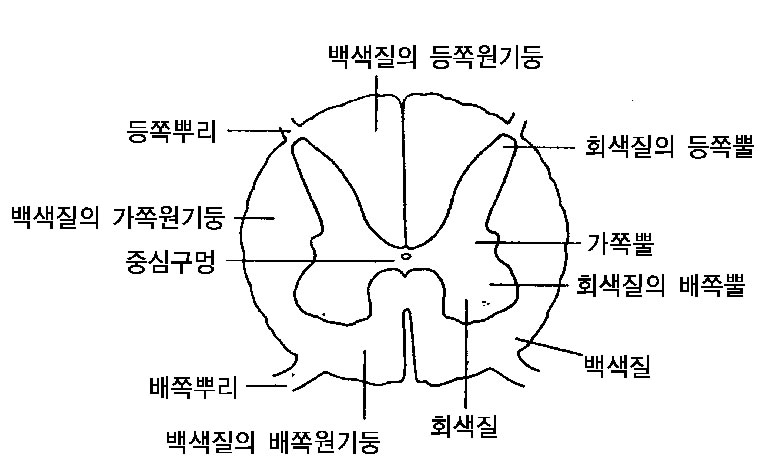 |
||
| 영문 | blood clotting, blood coagulation | 한글 | 혈액응고 |
|---|---|---|---|
| 설명 | 사람의 몸에 상처가 나서 출혈이 있을 경우에 이것을 막고 피를 더이상 나지 않게 하는 것을 지혈이라고 한다. 지혈의 과정에는 크게 두 가지 단계가 있다. 첫번째 단계는 혈소판들이 상처가 나서 손상된 혈관의 부위를 막는 것이다. 이렇게 하면 우선 혈관의 손상부위로 부터 피가 나오는 것을 막을 수가 있다. 다음의 단계는 상처를 막고 있는 혈소판위에 여러 가지 물질들이 작용해서 더욱 단단하게 하여 상처가 난 혈관에서 피가 새는 것을 영구히 막는 것이다. 쉽게 말하면 혈소판은 벽돌에 해당하는 것이고 두번째 과정에 참여하는 물질들은 시멘트에 해당하는 것이다. 이 두 과정이 완전할 경우에 지혈이 순조롭게 일어난다. 혈액응고란 두번째 단계를 지칭하는 말로써 매우 복잡한 단계를 거치는 반응으로 마지막 단계는 섬유소라는 물질이 만들어져서 이 물질이 혈소판과 그 외의 세포를 단단하게 고정시켜 피가 상처난 혈관으로 새는 것을 막는다. 이것을 가장 간단히 설명하자면 크게 다음과 같은 3가지 단계로 이루어진다. 첫번째 단계는 혈관손상에 의해서 프로트롬빈 활성제라는 것이 만들어지는 단계이다. 두번째 단계는 이 프로트롬빈 활성제라는 물질에 의해서 혈액속에 있는 프로트롬빈이라는 물질이 트롬빈이라는 물질로 바뀌는 단계이다. 세번째 단계는 트롬빈이라는 물질에 의해서 섬유소원이라는 물질이 섬유소으로 바뀌는 단계이다. |
||
| 영문 | muscle cell(=muscle fiber) | 한글 | 근육세포 |
|---|---|---|---|
| 설명 | 근육은 수의근(의식에 의해서 조절이 가능한 근육: 예를 들어 다리, 팔, 얼굴근육 등)과 불수의근(의식과 무관하게 조절하지 않아도 움직이는 근육: 예를 들어 심장근, 소화기관에 분포하는 근육 등)으로 나누어지며, 근육세포의 모양은 다음과 같다(수의근, 불수의근 외에 심장에 있는 심장근은 불수의근에 해당하지만 그 모양은 수의근과 같아 따로 분류한다).  |
||
| 영문 | mast cell | 한글 | 비만 세포 |
|---|---|---|---|
| 설명 | 동물의 결합 조직 가운데 널리 분포하는 세포. 결합조직과 점막조직 내에 있는 호염기성 색소로 이염색성(metachromasia)을 나타내는 과립을 가진 방추형의 세포에 작은 둥근 핵을 가진다. 비만세포의 표면에는 IgE에 대한 수용체가 존재하며, 수용체에 결합한 IgE 분자들끼리 다가의 항원에 의해 서로 연결되면 비만세포 과립탈출 반응이 일어나, 히스타민, 세로토닌, 헤파린 등의 화학전달 물질이 방출되어, 즉시형 알레르기 반응 등의 증상을 일으킨다. 피부, 장막, 혈관 주위, 점막 주변에 있다. |
||
| WC | ward clerk; water closet; Weber-Christian [syndrome]; wheel chair; white cell; white cell casts; whi... |
|---|---|
| WBC | well baby care/clinic; white blood cell; white blood cell count; whole blood cell count |
| CBV | capillary blood cell velocity; catheter balloon valvuloplasty; central blood volume; cerebral blood ... |
| TWBC | total white blood cells; total white blood count |
| TWD | total white and differential [cell count] |
| W-W | white-on-white |
|---|---|
| WBC | White Blood Cell |
| WBC | White Blood Cell Count |
| WBCC | white blood cell count |
| WBC | White blood count |
| white blood cell differential | <haematology> The white blood cell differential is a percentage of each type of white blood cell based on a count of 100 white cells. A change in the white blood cell type (to neutrophils or bands) can indicate a bacterial infection. Neutrophils, bands, lymphocytes, monocytes, basophils and eosinophils are all included. (13 Nov 1997) |
|---|
| differential white blood count | An estimate of the percentage of white blood cell types which make up the total white blood cell count. (05 Mar 2000) |
|---|---|
| white blood cell | <haematology> White corpuscles in the blood. They are spherical, colourless and nucleated masses involved with host defenses. Normal white blood cell counts are variable with age and sex. Normal adult range is 4, 500 to 11,000 cells per cubic millimetre of blood. Slightly higher counts are seen in children. Elevated counts can be seen in cases of inflammation and infection. See: leucocytes, basophils, coelomocytes, eosinophils, haemocytes, lymphocytes, neutrophils, monocytes. Acronym: WBC (13 Nov 1997) |
| white blood cell cast | A urinary cast composed of polymorphonuclear leukocytes, characteristic of tubulointerstitial disease, especially pyelonephritis. (05 Mar 2000) |
| white blood cell count | <haematology> A laboratory test which measures the number of white blood cells per cubic millimetre of blood. Normal white blood cell counts are variable with age and sex. Normal adult range is 4, 500 to 11,000 cells per cubic millimetre of blood. Slightly higher counts are seen in children. Elevated counts can be seen in cases of inflammation and infection. (13 Nov 1997) |
| differential blood pressure | The arterial blood pressure at corresponding points on the two sides of the body. (05 Mar 2000) |
| white blood cells | White blood cells (WBCs) are cells which circulate in the blood and lymphatic system and harbor in the lymph glands and spleen. They are part of the immune system responsible for both directly (t cells and macrophages) and indirectly (B-cells producing antibodies) attacking foreign invaders of the body. (12 Dec 1998) |
| white cell cast | A cast in the urine composed of white blood cells. (05 Mar 2000) |
| automated differential leukocyte counter | An instrument using digital imaging or cytochemical techniques to differentiate leukocytes. (05 Mar 2000) |
| Begg light wire differential force technique | An orthodontic appliance utilizing small gauge labial wires with expansion and contraction loops formed into it and attached to bands fitted to individual teeth; sometimes called Begg light wire differential force technique. (05 Mar 2000) |
| calorimetry, differential scanning | Differential thermal analysis in which the sample compartment of the apparatus is a differential calorimeter, allowing an exact measure of the heat of transition independent of the specific heat, thermal conductivity, and other variables of the sample. (12 Dec 1998) |
| semantic differential | Analysis of word concepts by the association of polar adjectives, e.g., good-bad, with the concept, father. The adjectives are usually scaled in 7 steps. The subject's placement of the concept on the adjectival scale indicates the connotative meaning of the concept. (12 Dec 1998) |
| diagnosis, differential | The determination of which two or more diseases with similar symptoms is the one from which a patient is suffering from based on an analysis of the clinical data. (27 Sep 1997) |
| differential | 1. Relating to or indicating a difference; creating a difference; discriminating; special; as, differential characteristics; differential duties; a differential rate. "For whom he produced differential favors." (Motley) 2. <mathematics> Of or pertaining to a differential, or to differentials. 3. <mechanics> Relating to differences of motion or leverage; producing effects by such differences; said of mechanism. Differential calculus. <mathematics> A portable hoisting apparatus, the same in principle as the differential windlass. A hoisting pulley to which power is applied through a differential gearing. Differential screw, a compound screw by which a motion is produced equal to the difference of the motions of the component screws. Differential thermometer, a thermometer usually with a U-shaped tube terminating in two air bulbs, and containing a coloured liquid, used for indicating the difference between the temperatures to which the two bulbs are exposed, by the change of position of the coloured fluid, in consequence of the different expansions of the air in the bulbs. A graduated scale is attached to one leg of the tube. Differential windlass, or Chinese windlass, a windlass whose barrel has two parts of different diameters. The hoisting rope winds upon one part as it unwinds from the other, and a pulley sustaining the weight to be lifted hangs in the bight of the rope. It is an ancient example of a differential motion. Origin: Cf. F. Differentiel. 1. <mathematics> An increment, usually an indefinitely small one, which is given to a variable quantity. According to the more modern writers upon the differential and integral calculus, if two or more quantities are dependent on each other, and subject to increments of value, their differentials need not be small, but are any quantities whose ratios to each other are the limits to which the ratios of the increments approximate, as these increments are reduced nearer and nearer to zero. 2. A small difference in rates which competing railroad lines, in establishing a common tariff, allow one of their number to make, in order to get a fair share of the business. The lower rate is called a differential rate. Differentials are also sometimes granted to cities. 3. <physics> One of two coils of conducting wire so related to one another or to a magnet or armature common to both, that one coil produces polar action contrary to that of the other. A form of conductor used for dividing and distributing the current to a series of electric lamps so as to maintain equal action in all. <mathematics> Partial differential, the differential of a function of two or more variables, when each of the variables receives an increment. The total differential of the function is the sum of all the partial differentials. Source: Websters Dictionary (01 Mar 1998) |
| differential adhesion | The differential adhesion hypothesis was advanced by Steinberg to explain the mechanism by which heterotypic cells in mixed aggregates sort out into isotypic territories. Quantitative differences in homo and hetero typic adhesion are supposed to be sufficient to account for the phenomenon without the need to postulate cell type specific adhesion systems: fairly generally accepted, although some tissue specific cell adhesion molecules are now known to exist. (18 Nov 1997) |
| differential centrifugation | A technique for separating organellesor other differently-sized cellcomponents in a centrifuge, particles of the same size and weight willsettle out into common layers. (09 Oct 1997) |
제품명 |
판매사 |
보험코드 | 성분/함량 | 구분/보험급여 |
|---|
제품명 |
판매사 |
보험코드 | 성분/함량 | 구분/보험급여 |
|---|