
| 영문 | torticollis, wry neck | 한글 | 기운목, 사경 |
|---|---|---|---|
| 설명 | 목근육이 수축된 상태로, 목이 비틀어져서 머리가 한쪽으로 기우는 증상. 또는 그 증상을 보이는 목. 목 근육이 선천적으로 짧아서 그런 경우가 많으며 후천적으로는 류마치스, 뼈의 이상, 사시나 심인 반응도 원인이 된다. |
||
| 영문 | cervix, neck | 한글 | 목, 경부 |
|---|---|---|---|
| 설명 | 목, 경부를 지칭하는 말. 특히 자궁의 목을 지칭하는데 쓰인다. 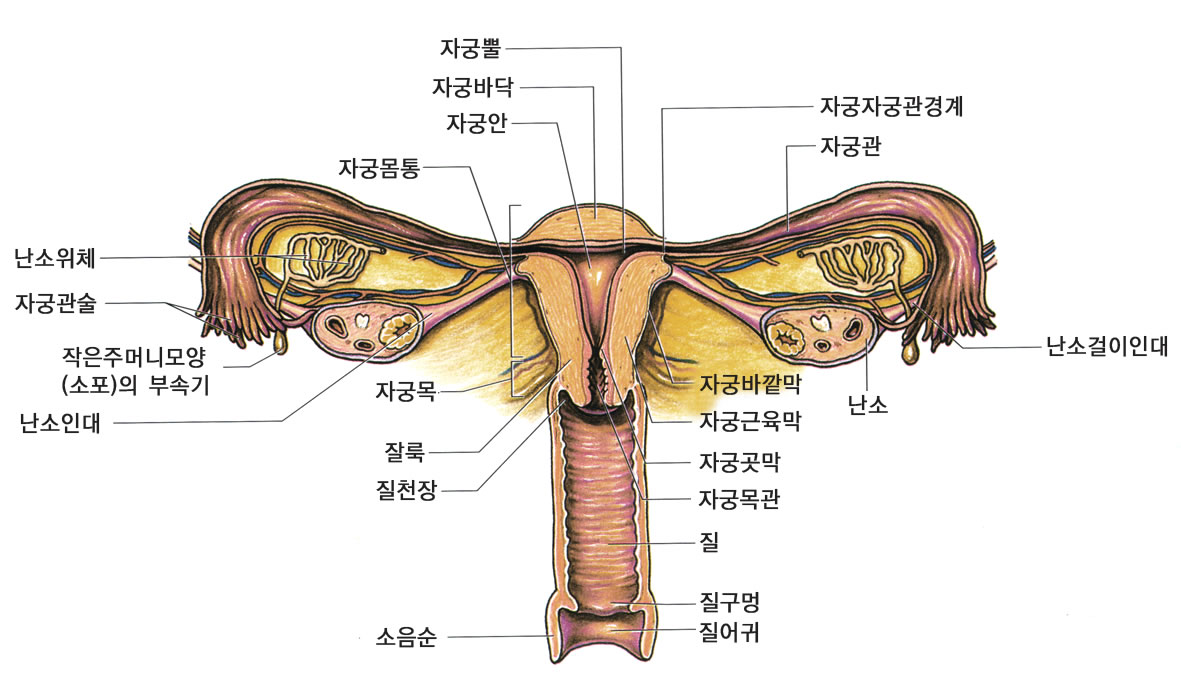 |
||
| S-G catheter | Swan-Ganz catheter; |
|---|---|
| ABCDES | abnormal alignment, bones-periarticular osteoporosis, cartilage-joint space loss, deformities, margi... |
| ADAM | amniotic deformity, adhesion, mutilation [syndrome] |
| CFD | cephalofacial deformity; craniofacial dysostosis |
| CUD | cause undetermined; congenital urinary deformity |
| Ld | Limb deformity |
|---|---|
| AAO-HNS | American Academy of Otolaryngology Head and Neck Surgery |
| BNI | Bladder neck incision |
| FN | Femoral neck |
| H&N | Head and Neck |
| swan-neck deformity | Hyperextension of the proximal interphalangeal joint with flexion of the distal interphalangeal joint of the finger. (05 Mar 2000) |
|---|---|
| catheterization, swan-ganz | Placement of a flow-directed catheter (developed by cardiologists swan and ganz) for measuring pulmonary arterial pressures. The catheter is introduced into the venous system via the basilic, internal jugular, or subclavian vein, and is guided by blood flow into the superior vena cava, the right atrium and ventricle, and into the pulmonary artery. (12 Dec 1998) |
| swan | 1. <zoology> Any one of numerous species of large aquatic birds belonging to Cygnus, Olor, and allied genera of the subfamily Cygninae. They have a large and strong beak and a long neck, and are noted for their graceful movements when swimming. most of the northern species are white. In literature the swan was fabled to sing a melodious song, especially at the time of its death. The European white, or mute, swan (Cygnus gibbus), which is most commonly domesticated, bends its neck in an S-shaped curve. The whistling, or trumpeting, swans of the genus Olor do not bend the neck in an S-shaped curve, and are noted for their loud and sonorous cry, due to complex convolutions of the windpipe. To this genus belong the European whooper, or whistling swan (Olor cygnus), the American whistling swan (O. Columbianus), and the trumpeter swan (O. Buccinator). The Australian black swan (Chenopis atrata) is dull black with white on the wings, and has the bill carmine, crossed with a white band. It is a very graceful species and is often domesticated. The South American black-necked swan (Sthenelides melancorypha) is a very beautiful and graceful species, entirely white, except the head and neck, which are dark velvety seal-brown. Its bill has a double bright rose-coloured knob. 2. An appellation for a sweet singer, or a poet noted for grace and melody; as Shakespeare is called the swan of Avon. 3. <astronomy> The constellation Cygnus. <ornithology> Swan goose, a bird of India (Cygnopsis cygnoides) resembling both the swan and the goose. Swan shot, a large size of shot used in fowling. Origin: AS. Swan; akin to D. Zwaan, OHG. Swan, G. Schwan, Icel. Svanr, Sw. Svan, Dan. Svane; and perhaps to E. Sound something audible. Source: Websters Dictionary (01 Mar 1998) |
| Swan-Ganz catheter | <equipment> A special haemodynamic monitoring device (long thin catheter) that is introduced into a large vein (in the neck, chest or groin) and advanced through the right heart to the pulmonary artery. Measurements of cardiac function and blood pressure can be made with this device that can greatly increase the physician's diagnostic ability and provide a way to monitor the patients response to different medications. May be used to diagnose pulmonary hypertension. (19 Jan 1998) |
| Akerlund deformity | Indentation (incisura) with niche of duodenal cap as demonstrated radiographically. (05 Mar 2000) |
| arnold-chiari deformity | A congenital anomaly in which the cerebellum and medulla oblongata, which is elongated and flattened, protrude down into the spinal canal through the foramen magnum. It may be associated with many other defects, including spina bifida occulta and meningomyelocele. (12 Dec 1998) |
| bankhart deformity | <radiology> Osteochondral fracture of glenoid labrum, associated with anterior shoulder dislocation see also: Hill-Sachs deformity (12 Dec 1998) |
| bell clapper deformity | A testis and epididymis free of the usual posterior attachment of the tunica vaginalis such that the tunic inserts high on the spermatic cord leaving the gonad more likely to undergo torsion. (05 Mar 2000) |
| boutonniere deformity | Flexion of the proximal interphalangeal joint with hyperextension of the distal interphalangeal joint of the finger, caused by splitting of the extensor hood and protrusion of the head of the proximal phalanx through the resulting "buttonhole." (05 Mar 2000) |
| madelung deformity | <radiology> Chondrodysplasia of distal radial epiphysis, part of dyschondrosteosis (skeletal dysplasia), usually bilateral, first apparent in early adolescence, bayonet-shaped appearance of hand and wrist resembles anterior dislocation (12 Dec 1998) |
| Madelung's deformity | <orthopaedics> A distal radioulnar subluxation due to a relative deficiency of axial growth of the medial side of the distal radius, which, as a consequence, is abnormally inclined proximally and ulnarwards. Synonym: carpus curvus. (05 Mar 2000) |
| parachute deformity | Congenital deformity of the mitral valve characterised by the presence of a single papillary muscle from which the chordae of both valve leaflets divide; thus the resemblance to a parachute; the condition often produces a stenosis as the combined result of the tugging action of the chordae on and the subsequent narrowing between the leaflets. Synonym: parachute deformity. (05 Mar 2000) |
| reduction deformity | Congenital absence or attenuation of one or more body parts; usually of the limbs or limb components. (05 Mar 2000) |
| cauliflower-ear deformity | Destruction of the underlying cartilage framework of the outer ear (pinnae), usually caused by either infection or trauma, resulting in a thickening of the ear. Classically, blood collects (haematoma) between the ear cartilage and the skin. There is a marked thickening of the entire ear which may be so extensive that the shape of the ear becomes unrecognizable. The ear is said to look like a piece of cauliflower. It is typically seen in wrestlers and boxers who have had repeated trauma to the ear. (12 Dec 1998) |
| gooseneck deformity | <radiology> Angiographic sign, seen at diastole in complete AV canal, endocardial cushion defect (ECD), L to R shunt (12 Dec 1998) |
제품명 |
판매사 |
보험코드 | 성분/함량 | 구분/보험급여 |
|---|
제품명 |
판매사 |
보험코드 | 성분/함량 | 구분/보험급여 |
|---|