
| 영문 | vocal cord | 한글 | 성대 |
|---|---|---|---|
| 설명 | 목소리를 내는 데 꼭 필요한 중요한 구조물이다. 성대주위에는 작은 근육들이 존재하여, 하는 소리가 나오도록 해 주는 데, 이 근육들은 주로 되돌이후두신경의 지배를 받고 있으며, 성대의 감각신경은 위후두신경이 맡고 있다. 이중 왼쪽 반회후두신경은 신경의 주행경로상 밑으로 내려갔다 다시 올라와 분포하게 되므로 폐암으로 인한 폐수술시에 손상받기 쉬워서, 수술합병증으로 목쉰소리가 남기도 한다. 또한 성대가 막히면, 공기의 통로가 막히게 되므로 호흡곤란을 유발한다. 성대나 그 주위에서 종양이 발생할 수 있으며, 흡연이 주요한 원인이다. 성대자체에서 종양이 발생하면 목쉰소리가 나타나 쉽게 알 수 있으나, 성대이하부위나, 이상부위에서 발생하면 증상이 늦게 나타나므로, 다른 곳으로의 전이소견이나, 혹은 호흡곤란으로 나타나기도 한다. |
||
| 영문 | spermatic cord | 한글 | 정삭 |
|---|---|---|---|
| 설명 | 고환의 위쪽끝에서부터 샅고랑의 안쪽 끝까지의 사이에 있는 끈 모양의 조직. 정관, 혈관, 신경, 민무늬근, 지방조직 따위로 이루어져 있다. |
||
| 영문 | spinal cord | 한글 | 척수 |
|---|---|---|---|
| 설명 | 척추내에 위치하는 중추신경계의 일부분. 위에서부터 목척수, 등척수, 허리척수, 엉치척수로 구분됨. 내부는 바깥쪽의 백색질과 안쪽의 회색질로 구분된다. 척수의 아래끝은 척수 원뿔이라 하며 첫번째 허리뼈 높이까지 내려온다. 뇌와 말초신경사이의 신경 통로 역할을 하며 척수반사(예: 무릎반사)에서는 뇌를 통하지 않고 반사의 중추 작용을 한다. 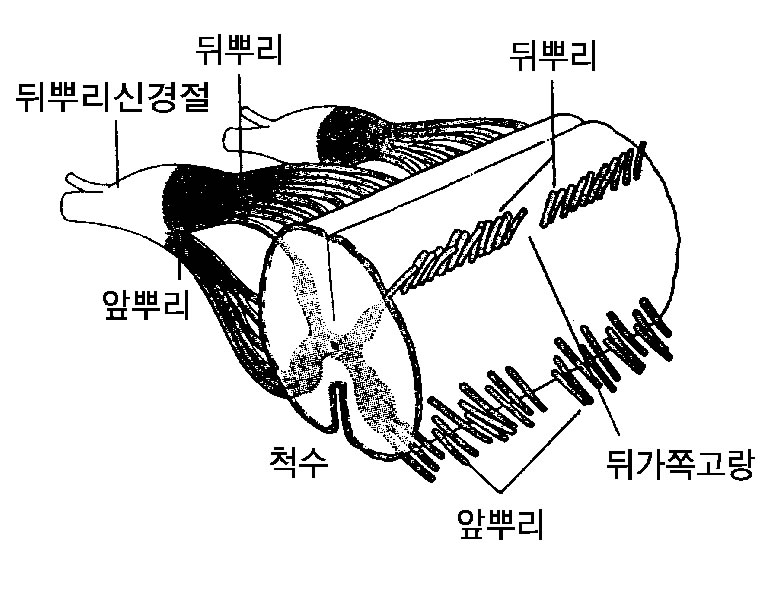 |
||
| 영문 | umbilical cord | 한글 | 탯줄, 제대 |
|---|---|---|---|
| 설명 | 태아의 배꼽을 태반과 연결시키는 유일한 구조로 2개의 탯줄동맥과 1개의 탯줄정맥이 지나간다. 신생아때에는 길이가 약 50cm이다. 태생기 발생 약 5주경에 요막경(allantoic diverticulum, body stalk)으로부터 형성되며 배꼽창자관(vitello- intestinal duct) 및 요막(allantoic membrane)을 포함하고 있다. 약 1%에서 제대동맥이 하나뿐인 경우가 있는데 이때에는 선천성기형의 동반률이 증가한다. |
||
| ASSC | acute splenic sequestration crisis |
|---|---|
| SLI | selective lymphoid irradiation; somatostatin-like immunoreactivity; splenic localization index |
| SM | Master of Science; sadomasochism; self-monitoring; silicon microphysiometer; simple mastectomy; skim... |
| SV | saphenous vein; sarcoma virus; satellite virus; selective vagotomy; semilunar valve; seminal vesicle... |
| CC | 1) Chief Complaint; 주소(主訴), 주된 호소(불평) 2) Closing Capacity ... |
| PSE | Partial splenic embolization |
|---|---|
| SLVL | Splenic Lymphoma with Villous Lymphocytes |
| SAC | Splenic adherent cells |
| SAAs | Splenic artery aneurysms |
| SI | Splenic irradiation |
| splenic cords | The tissue occurring between the venous sinuses in the spleen. Synonym: Billroth's cords, red pulp cords. (05 Mar 2000) |
|---|
| splenic branches of splenic artery | <anatomy, artery> Branches of proper splenic arteries; splenic artery entering spleen at hilum. Synonym: rami splenici arteriae splenicae, rami lienales arteriae lienalis. (05 Mar 2000) |
|---|---|
| acute splenic tumour | Acute splenitis, enlargement, and softening of the spleen, usually due to bacteraemia or severe bacterial toxaemia. (05 Mar 2000) |
| renal-splenic venous shunt | Anastomosis of the splenic vein to the left renal vein, usually end-to-side, for control of portal hypertension. Synonym: renal-splenic venous shunt. (05 Mar 2000) |
| splenic | <anatomy> Pertaining to the spleen. (27 Sep 1997) |
| splenic anaemia | <syndrome> Chronic congestive splenomegaly that occurs primarily in children as a sequel to hypertension in the portal or splenic veins, usually as a result of thrombosis of the veins; anaemia, splenomegaly, and irregular episodes of gastrointestinal bleeding are usually observed, with ascites, jaundice, leukopenia, and thrombocytopenia developing in various conbinations. Synonym: Banti's disease, splenic anaemia. (05 Mar 2000) |
| splenic apoplexy | Peracute anthrax often seen in ruminants, in which death occurs very quickly after the appearance of the first signs of the disease; grossly enlarged spleen and capillary haemorrhages are often the only lesions. (05 Mar 2000) |
| splenic artery | <anatomy, artery> The largest branch of the coeliac trunk with distribution to the spleen, pancreas, stomach and greater omentum. (12 Dec 1998) |
| splenic cells | Large round ameboid cell's (macrophages) in the splenic pulp. (05 Mar 2000) |
| splenic corpuscles | Small nodular masses of lymphoid tissue attached to the sides of the smaller arterial branches. Synonym: folliculi lymphatici lienales, malpighian bodies, malpighian corpuscles, malpighian glands, malpighian nodules, splenic corpuscles, splenic lymph nodules. (05 Mar 2000) |
| splenic fever | Known also as anthrax, splenic fever is a serious bacterial infection. It is not primarily a human disease but rather an infection of animals. Cattle, sheep, horses, mules, and some wild animals are highly susceptible. Humans (and swine) are generally resistant to anthrax. Anthrax can take different forms. With the lung form of the disease. People inhale the anthrax spores and, if untreated, are likely to die. An intestinal form is caused by eating meat contaminated with anthrax. But most human anthrax comes from skin contact with animal products. Cutaneous (skin) anthrax was once well known among people who handled infected animals, like farmers, more than woolsorters, tanners, brushmakers and carpetmakers in the days when the brushes and carpets were animal products. The hallmark of skin anthrax is a carbuncle, a cluster of boils, that ulcerates in an ugly way. Typically, this lesion has a hard black centre surrounded by bright red inflammation. This accounts for its name, anthrax , the greek word for coal. (12 Dec 1998) |
| splenic flexure | The bend at the junction of the transverse and descending colon. Synonym: flexura coli sinistra, splenic flexure. (05 Mar 2000) |
| splenic flexure narrowing | <radiology> Colon carcinoma, amebic dysentery, TB, endometriosis, pancreatitis / pancreatic carcinoma (12 Dec 1998) |
| splenic flexure syndrome | <syndrome> Symptoms of pain, gas, bloating, a sense of fullness experienced in the left upper abdominal quadrant, sometimes beneath the ribs, in some instances radiating upward, and in some instances producing anterior chest pain central or predominantly on the left. It may be induced experimentally by the introduction and trapping of air in the splenic flexure. (05 Mar 2000) |
| splenic index | A rough indication of the salubrity, or the reverse, in regard to malaria of a particular district, judged by the relative absence or prevalence of enlarged spleens among the population. (05 Mar 2000) |
| splenic infarction | Cell death (necrosis) of a portion or all of the spleen due to an interruption in blood flow. (27 Sep 1997) |
| splenic cord |
A spongelike cord in the red pulp of the spleen composed of macrophages and dendritic cells. The macrophages phagocytize pathogens, cell debris, and cells that are old, abnormal, or damaged, esp. red blood cells. Phagocytosis may be
출처:
|
|---|
제품명 |
판매사 |
보험코드 | 성분/함량 | 구분/보험급여 |
|---|
제품명 |
판매사 |
보험코드 | 성분/함량 | 구분/보험급여 |
|---|