
| 영문 | severe acute respiratory syndrome(SARS) | 한글 | 사스 |
|---|---|---|---|
| 설명 | 중국 광동 지역에서 가장 먼저 발생한 전염성 호흡기 질환으로 세계보건기구(WHO)에서 ‘중증급성호흡증후군(SARS)'으로 명명했다. 섭씨 38도 이상의 고열과 기침, 호흡곤란, 저산소증, X선상의 폐렴증상 중 하나 이상의 증상이 나타나며, 두통, 근육통, 식욕부진, 피로감, 발진, 설사를 동반할 수 있다. 초기 증상은 감기와 비슷하지만 폐렴으로 발전하면 치명적일 수 있다. 현재 밝혀진 감염경로는 환자가 재채기나 기침할 때 내뿜는 침방울이고, 이것이 다른 사람의 호흡기로 들어갈 때 전염된다. 침방울이 전달되는 거리는 보통 1m로 보고 있다. 공기를 통해 전염이 가능하다는 주장이 제기됐지만 아직 확인되지 않았다. 원인균은 변종 코로나바이러스로 밝혀졌다. |
||
| 영문 | alimentary tract | 한글 | 소화관, 영양관 |
|---|---|---|---|
| 설명 | 입에서 시작하여 항문으로 끝나는 소화를 담당하는 이르는 말. 위창자관이라고도 불린다. |
||
| 영문 | biliary tract | 한글 | 쓸개길, 담도, 담관 |
|---|---|---|---|
| 설명 | 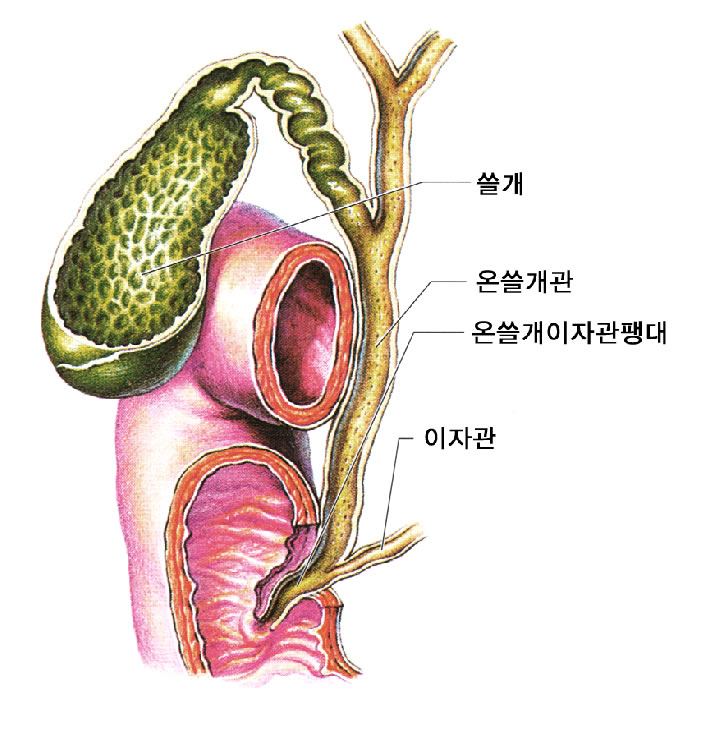 간에서 만들어진 쓸개즙을 수송하는 관조직의 일부. 간에서 만들어진 담즙은 간관, 쓸개관을 거쳐서 쓸개에 보관되었다가 온쓸개관을 통해서 샘창자로 보내진다. 이처럼 간에서 만들어진 담즙이 샘창자까지 배설되는 길로서 길이는 6~7cm 이며 간관, 쓸개관, 온쓸개관 따위로 이루어져 있다. |
||
| 영문 | urinary tract | 한글 | 요로 |
|---|---|---|---|
| 설명 | 오줌을 몸 밖으로 배출하기 위한 길. 콩팥, 요관, 방광, 요도로 이루어져 있다. |
||
| 영문 | severe acute respiratory syndrome(SARS) | 한글 | 중증급성호흡증후군 |
|---|---|---|---|
| 설명 | 중국 광동 지역에서 가장 먼저 발생한 전염성호흡기병으로 세계보건기구(WHO)에서 ‘중증급성호흡증후군(SARS)'으로 명명했다. 섭씨 38도 이상의 고열과 기침, 호흡곤란, 저산소증, X선상의 폐렴증상 중 하나 이상의 증상이 나타나며, 두통, 근육통, 식욕부진, 피로감, 발진, 설사를 동반할 수 있다. 초기 증상은 감기와 비슷하지만 폐렴으로 발전하면 치명적일 수 있다. 현재 밝혀진 감염경로는 환자가 재채기나 기침할 때 내뿜는 침방울이고, 이것이 다른 사람의 호흡기로 들어갈 때 전염된다. 침방울이 전달되는 거리는 보통 1m로 보고 있다. 공기를 통해 전염이 가능하다는 주장이 제기됐지만 아직 확인되지 않았다. 원인균은 변종 코로나바이러스로 밝혀졌다. |
||
| ECG | Electro-Cardio-Graphy(-Gram); 심전도 = EKG 1. Conducting System Structu... |
|---|---|
| LRI | lamina rara interna; lower respiratory [tract] illness; lower respiratory [tract] infection; lymphoc... |
| LRTI | lower respiratory tract illness; lower respiratory tract infection |
| ARD | absolute reaction of degeneration; acute radiation disease; acute respiratory disease; adult respira... |
| RC | an electronic circuit containing a resistor and capacitor in series; radiocarpal; reaction center; r... |
| ARI | Acute Respiratory tract Infections |
|---|---|
| ALRI | Acute lower respiratory tract infection |
| LRT | Lower respiratory tract |
| LRI | Lower respiratory tract illness |
| LRI | Lower respiratory tract infection |
| respiratory tract | The air passages from the nose to the pulmonary alveoli, through the pharynx, larynx, trachea, and bronchi. (05 Mar 2000) |
|---|---|
| respiratory tract fistula | An abnormal passage communicating between any parts of the respiratory tract or between any part of the respiratory system and other organs. (12 Dec 1998) |
| granuloma, respiratory tract | Granulomatous diseases affecting one or more sites in the respiratory tract. (12 Dec 1998) |
|---|---|
| upper respiratory tract | The nasopharynx, oral cavity, and throat. (09 Oct 1997) |
| lower respiratory tract | <anatomy> The trachea, bronchi, and lungs. (09 Oct 1997) |
| lower respiratory tract smear | A group of cytologic specimens containing material from the lower respiratory tract and consisting mainly of sputum (spontaneous, induced) and material obtained at bronchoscopy (aspirated, lavaged, brushed); used for cytologic study of cancer and other diseases of the lungs. Synonym: bronchoscopic smear, sputum smear. (05 Mar 2000) |
| acute respiratory failure | Loss of pulmonary function either acute or chronic that results in hypoxaemia or hypercarbia. (05 Mar 2000) |
| adult respiratory distress syndrome | <chest medicine, syndrome> A clinical syndrome that includes pulmonary insufficiency. It is a descriptive term that is applied to a variety of diffuse infiltrative processes in the lung. Manifestations include severe shortness of breath, rapid breathing and arterial hypoxaemia (low oxygen). Chest X-ray shows bilateral diffuse infiltrates. Treatment most often includes mechanical respiratory support. Causes include toxic gas (chlorine, NO2, smoke) exposure, severe metabolic derangement, gastric acid aspiration, pancreatitis, sepsis and trauma. Acronym: ARDS (12 Jul 2000) |
| alkalosis, respiratory | A state due to excess loss of carbon dioxide from the body. (12 Dec 1998) |
| anti-allergic and respiratory system agents | A collective term for drugs used to treat allergic reactions as well as those drugs that produce an effect on the respiratory system. (12 Dec 1998) |
| Bell's respiratory nerve | <anatomy, nerve> Arises from the fifth, sixth, and seventh cervical nerves (roots of brachial plexus), descends the neck behind the brachial plexus, and is distributed to the serratus anterior muscle; it is somewhat unusual in that it courses on the superficial aspect of the muscle is supplies; its paralysis results in "winged scapula". Synonym: nervus thoracicus longus, Bell's respiratory nerve, external respiratory nerve of Bell, posterior thoracic nerve. (05 Mar 2000) |
| bovine respiratory syncytial virus | A pneumovirus causing an emerging disease in young cattle characterised by pneumonia, interstitial pulmonary oedema, and emphysema; sheep are also susceptible to the virus. (05 Mar 2000) |
| rate, respiratory | The number of breaths per minute (or, more formally, the number of movements indicative of inspiration and expiration per unit time). In practice, the respiratory rate is usually determined by counting the number of times the chest rises (or falls) per minute. By whatever means, the aim is to determine if the respirations are normal, abnormally fast (tachypnea), abnormally slow (technically termed bradypnea), or nonexistent (apnea). (12 Dec 1998) |
| Gierke's respiratory bundle | A slender, compact fibre bundle extending longitudinally through the dorsolateral region of the medullary tegmentum, surrounded by the nucleus of the solitary tract, below the obex decussating over the central canal, and descending over some distance into the upper cervical segments of the spinal cord. It is composed of primary sensory fibres that enter with the vagus, glossopharyngeal, and facial nerves, and in part convey information from stretch receptors and chemoreceptors in the walls of the cardiovascular, respiratory, and intestinal tracts; in rostral parts of the tract impulses are generated by the receptor cells of the taste buds in the mucosa of the tongue. Its fibres are distributed to the nucleus of the solitary tract. Synonym: tractus solitarius, fasciculus rotundus, fasciculus solitarius, funiculus solitarius, Gierke's respiratory bundle, Krause's respiratory bundle, round fasciculus, solitary bundle, solitary fasciculus. (05 Mar 2000) |
| region of respiratory mucosa | The area commencing at the vestibule of the nose lined with respiratory mucosa; with the exception of the olfactory mucusa, it includes the entire nasal cavity. Synonym: regio respiratoria tunicae mucosae nasi, respiratory region of tunica mucosa of nose. (05 Mar 2000) |
| virus, respiratory syncytial | A virus that causes mild respiratory infections (colds and coughs) in adults but in young children can produce severe respiratory problems (bronchitis and pneumonia). Effective immunity against rsv requires a continuous solid level of antibodies against the virus. There is particular concern for rsv in premature babies because of their lack of maturity and lack of antibodies. (12 Dec 1998) |
| respiratory | <physiology> Pertaining to respiration. Origin: L. Spirare = to breathe (18 Nov 1997) |
Synonyms : Disease, Respiratory Tract, Diseases, Respiratory Tract, Respiratory Tract Disease, Tract Disease, Respiratory, Tract Diseases, Respiratory
Synonyms : Fistula, Respiratory Tract, Fistulas, Respiratory Tract, Respiratory Tract Fistulas
Synonyms : Infections, Respiratory, Infections, Respiratory Tract, Infections, Upper Respiratory, Respiratory Infections, Infection, Respiratory, Infection, Respiratory Tract, Infection, Upper Respiratory, Respiratory Infection, Respiratory Infection, Upper
Synonyms : Neoplasm, Respiratory Tract, Neoplasms, Respiratory Tract, Respiratory Tract Neoplasm, Tract Neoplasm, Respiratory, Tract Neoplasms, Respiratory
| respiratory tract | the passages through which air enters and leaves the body |
|---|---|
| respiratory tract | any infection of the respiratory tract |
제품명 |
판매사 |
보험코드 | 성분/함량 | 구분/보험급여 |
|---|
제품명 |
판매사 |
보험코드 | 성분/함량 | 구분/보험급여 |
|---|