
| 영문 | white matter | 한글 | 백색질 |
|---|---|---|---|
| 설명 | 1. 뇌는 두 부분으로 나뉘어져 있다. 대뇌겉질이나 뇌의 중앙부에 위치하는 핵(예를 들면 시상, 시상하부, 바닥핵 등)이 회색질이고 그 외는 백색질이다. 척수의 경우에는 바깥쪽의 하얀부분을 백색질이라 하고, 안쪽의 색깔이 어두운 부분을 회색질이라 한다. 이중 실제적으로 대부분의 신경세포의 돌기 특히 축삭과 말이집으로 구성된 것이 백색질이며, 회색질은 신경세포와 보조하는 세포들이 많은 곳이다. 또한 척수도 백색질과 회색질로 나뉘어 있다. 2. 치아에 점착된 백색 물질로서 세균 및 사상 미생물을 함유한 점액 및 상피세포로 구성된다. 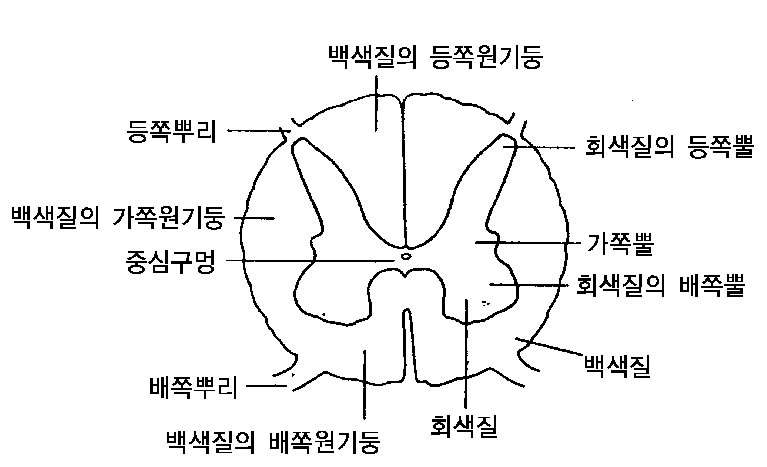 |
||
| 영문 | white blood cell(WBC), leukocyte | 한글 | 백혈구 |
|---|---|---|---|
| 설명 | 혈액내에 골수구계세포와 림프계세포, 단핵구계세포를 모두 통틀어 말한다. 백혈구의 증가가 있으면 대개 감염이 있거나, 혹은 탈수현상이 있음을 의미한다. 또한 지나친 백혈구수의 감소는 인체내 면역기능이 떨어져 있음을 의미하며, 다른 질병에 의해 나타나는 이차적인 현상이 아닌지 꼭 진단을 받아보아야 한다. |
||
| WC | ward clerk; water closet; Weber-Christian [syndrome]; wheel chair; white cell; white cell casts; whi... |
|---|---|
| TWBC | total white blood cells; total white blood count |
| WBC | well baby care/clinic; white blood cell; white blood cell count; whole blood cell count |
| WM | Waldenstrom macroglobulinemia; ward manager; warm and moist; Wernicke-Mann [hemiplegia]; wet mount; ... |
| TGA | Transposition of Great Arteries |
| W-W | white-on-white |
|---|---|
| CCTGA | Congenitally corrected transposition of the great arteries |
| CTGA | Corrected Transposition of the Great Arteries |
| D-TGA | D-transposition of the great arteries |
| GB | Great Britain |
| basking shark | <zoology> One of the largest species of sharks (Cetorhinus maximus), so called from its habit of basking in the sun; the liver shark, or bone shark. It inhabits the northern seas of Europe and America, and grows to a length of more than forty feet. It is a harmless species. Source: Websters Dictionary (01 Mar 1998) |
|---|---|
| shark | 1. <zoology> Any one of numerous species of elasmobranch fishes of the order Plagiostomi, found in all seas. Some sharks, as the basking shark and the whale shark, grow to an enormous size, the former becoming forty feet or more, and the latter sixty feet or more, in length. most of them are harmless to man, but some are exceedingly voracious. The man-eating sharks mostly belong to the genera Carcharhinus, Carcharodon, and related genera. They have several rows of large sharp teeth with serrated edges, as the great white shark (Carcharodon carcharias, or Rondeleti) of tropical seas, and the great blue shark (Carcharhinus glaucus) of all tropical and temperate seas. The former sometimes becomes thirty-six feet long, and is the most voracious and dangerous species known. The rare man-eating shark of the United States coast (Charcarodon Atwoodi) is thought by some to be a variety, or the young, of C. Carcharias. The dusky shark (Carcharhinus obscurus), and the smaller blue shark (C. Caudatus), both common species on the coast of the United States, are of moderate size and not dangerous. They feed on shellfish and bottom fishes. 2. A rapacious, artful person; a sharper. 3. Trickery; fraud; petty rapine; as, to live upon the shark. Baskin shark, Liver shark, Nurse shark, Oil shark, Sand shark, Tiger shark, etc. See Basking, Liver, etc. See also Dogfish, Houndfish, Notidanian, and Tope. Gray shark, the sand shark. Hammer-headed shark. See Hammerhead. Port Jackson shark. See Cestraciont. Shark barrow, the eggcase of a shark; a sea purse. Shark ray. Same as Angel fish, under Angel. Thrasher shark, or Thresher shark, a large, voracious shark. See Thrasher. Whale shark, a huge harmless shark (Rhinodon typicus) of the Indian Ocean. It becomes sixty feet or more in length, but has very small teeth. Origin: Of uncertain origin; perhaps through OF. Fr. Carcharus a kind of dogfish, Gr, so called from its sharp teeth, fr. Having sharp or jagged teeth; or perhaps named from its rapacity (cf. Shark, &i); cf. Corn. Scarceas. Source: Websters Dictionary (01 Mar 1998) |
| shark liver oil | Oil extracted from the livers of sharks, mainly of the species Hypoprion brevirostris; a rich source of vitamins A and D. (05 Mar 2000) |
| abductor muscle of great toe | <anatomy, muscle> Origin, medial process of calcaneal tuberosity, flexor retinaculum, and plantar aponeurosis; insertion, medial side of proximal phalanx of great toe; action, abducts great toe; nerve supply, medial plantar. Synonym: musculus abductor hallucis, abductor muscle of great toe. (05 Mar 2000) |
| adductor muscle of great toe | <anatomy, muscle> Origin, by two heads, the transverse head from the capsules of the lateral four metatarsophalangeal joints and the oblique head from the lateral cuneiform and bases of the third and fourth metatarsal bones; insertion, lateral side of base of proximal phalanx of great toe; action, adducts great toe; nerve supply, lateral plantar. Synonym: musculus adductor hallucis, adductor muscle of great toe. (05 Mar 2000) |
| bursa of great toe | The bursa between the lateral side of the base of the first metatarsal bone and the medial side of the shaft of the second metatarsal. (05 Mar 2000) |
| medial great muscle | <anatomy, muscle> Origin, medial lip of linea aspera; insertion, tibial tuberosity by way of common tendon of quadriceps femoris and ligamentum patellae; action, extends leg; nerve supply, femoral. Synonym: musculus vastus medialis, medial great muscle, medial vastus muscle, musculus vastus internus. (05 Mar 2000) |
| great adductor muscle | <anatomy, muscle> Origin, ischial tuberosity and ischiopubic ramus; insertion, linea aspera and adductor tubercle of femur; action, adducts and extends thigh; nerve supply, obturator and sciatic. Synonym: musculus adductor magnus, great adductor muscle. (05 Mar 2000) |
| great alveolar cells | Cuboidal cell's connected with the squamous pulmonary alveolar cell's and having in their cytoplasm lamellated bodies (cytosomes) that represent the source of the surfactant that coats the alveoli. Synonym: granular pneumonocytes, type II cells. (05 Mar 2000) |
| great anastomotic artery | <anatomy, artery> Origin, brachial; distribution, arm muscles at back of elbow; anastomoses, anterior and posterior ulnar recurrent, superior ulnar collateral, profunda brachii, and recurrent interosseous, as part of the articular network of the elbow. Synonym: arteria collateralis ulnaris inferior, arteria anastomotica magna, great anastomotic artery. (05 Mar 2000) |
| great auricular nerve | <anatomy, nerve> Arises from the ventral primary rami of the second and third cervical, spinal nerves, supplies the skin of part of the auricle, adjacent portion of the scalp, and that overlying the angle of the jaw; it also innervates the parotid sheath, conveying from it the pain fibres stimulated by stretching of the sheath during parotitis (mumps). Synonym: nervus auricularis magnus. (05 Mar 2000) |
| great cardiac vein | <anatomy, vein> Begins at the apex of the heart (where it anastomoses with the middle cardiac vein), runs first with the anterior interventricular artery as it ascends the anterior interventricular groove, then turns to the left as it approaches or reaches the coronary groove to run with the circumflex branch of the left coronary artery; it merges with the oblique vein of the left atrium to form the coronary sinus. Synonym: vena cordis magna, left coronary vein, vena cardiaca magna. (05 Mar 2000) |
| great cerebral vein | A large, unpaired vein formed by the junction of the two internal cerebral veins in the caudal part of the tela choroidea of the third ventricle; it passes caudally between the splenium of the corpus callosum and the pineal gland, curving dorsally to merge with the inferior sagittal sinus to form the straight sinus. Synonym: vena cerebri magna, great cerebral vein, great vein of Galen. (05 Mar 2000) |
| great cerebral vein of Galen | A large, unpaired vein formed by the junction of the two internal cerebral veins in the caudal part of the tela choroidea of the third ventricle; it passes caudally between the splenium of the corpus callosum and the pineal gland, curving dorsally to merge with the inferior sagittal sinus to form the straight sinus. Synonym: vena cerebri magna, great cerebral vein, great vein of Galen. (05 Mar 2000) |
| great foramen | <anatomy> The large hole at the base of the skull which allows passage of the spinal cord. (12 Dec 1998) |
| great white shark | large aggressive shark widespread in warm seas |
|---|
제품명 |
판매사 |
보험코드 | 성분/함량 | 구분/보험급여 |
|---|
제품명 |
판매사 |
보험코드 | 성분/함량 | 구분/보험급여 |
|---|