
| 영문 | vocal cord | 한글 | 성대 |
|---|---|---|---|
| 설명 | 목소리를 내는 데 꼭 필요한 중요한 구조물이다. 성대주위에는 작은 근육들이 존재하여, 하는 소리가 나오도록 해 주는 데, 이 근육들은 주로 되돌이후두신경의 지배를 받고 있으며, 성대의 감각신경은 위후두신경이 맡고 있다. 이중 왼쪽 반회후두신경은 신경의 주행경로상 밑으로 내려갔다 다시 올라와 분포하게 되므로 폐암으로 인한 폐수술시에 손상받기 쉬워서, 수술합병증으로 목쉰소리가 남기도 한다. 또한 성대가 막히면, 공기의 통로가 막히게 되므로 호흡곤란을 유발한다. 성대나 그 주위에서 종양이 발생할 수 있으며, 흡연이 주요한 원인이다. 성대자체에서 종양이 발생하면 목쉰소리가 나타나 쉽게 알 수 있으나, 성대이하부위나, 이상부위에서 발생하면 증상이 늦게 나타나므로, 다른 곳으로의 전이소견이나, 혹은 호흡곤란으로 나타나기도 한다. |
||
| 영문 | spermatic cord | 한글 | 정삭 |
|---|---|---|---|
| 설명 | 고환의 위쪽끝에서부터 샅고랑의 안쪽 끝까지의 사이에 있는 끈 모양의 조직. 정관, 혈관, 신경, 민무늬근, 지방조직 따위로 이루어져 있다. |
||
| 영문 | spinal cord | 한글 | 척수 |
|---|---|---|---|
| 설명 | 척추내에 위치하는 중추신경계의 일부분. 위에서부터 목척수, 등척수, 허리척수, 엉치척수로 구분됨. 내부는 바깥쪽의 백색질과 안쪽의 회색질로 구분된다. 척수의 아래끝은 척수 원뿔이라 하며 첫번째 허리뼈 높이까지 내려온다. 뇌와 말초신경사이의 신경 통로 역할을 하며 척수반사(예: 무릎반사)에서는 뇌를 통하지 않고 반사의 중추 작용을 한다. 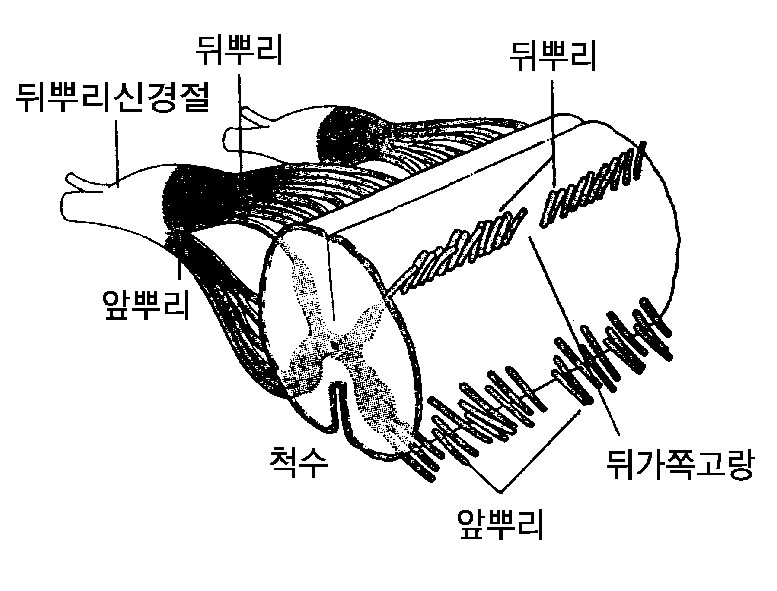 |
||
| 영문 | umbilical cord | 한글 | 탯줄, 제대 |
|---|---|---|---|
| 설명 | 태아의 배꼽을 태반과 연결시키는 유일한 구조로 2개의 탯줄동맥과 1개의 탯줄정맥이 지나간다. 신생아때에는 길이가 약 50cm이다. 태생기 발생 약 5주경에 요막경(allantoic diverticulum, body stalk)으로부터 형성되며 배꼽창자관(vitello- intestinal duct) 및 요막(allantoic membrane)을 포함하고 있다. 약 1%에서 제대동맥이 하나뿐인 경우가 있는데 이때에는 선천성기형의 동반률이 증가한다. |
||
| ANF | Atrial Natriuretic Factors |
|---|---|
| ECF | 1) Eosinophilic Chemotatic Factors 2) Extra-Cellular Fluid; 세포 외액 |
| NCF | Neutrophilic Chemotatic Factors |
| CDSRF | chronic disease and sociodemographic risk factors |
| CSPINE | corticosteroid use, seropositive RA, peripheral joint destruction, involvement of cervical nerves, n... |
| AEF | Allogeneic effect factors |
|---|---|
| APF | Anti-perinuclear factors |
| CF | Clastogenic factors |
| DMF | Dose modification factors |
| EF | Enhancement factors |
| cord factors | Trehalose-6,6'-dimycolate. A toxic glycolipid of mycobacterium tuberculosis. Induces cellular biochemical disfunction in animals; used as immunoadjuvant. (12 Dec 1998) |
|---|
| age factors | Age as a constituent element or influence contributing to the production of a result. It may be applicable to the cause or the effect of a circumstance. It is used with human or animal concepts but should be differentiated from aging, a physiological process, and time factors which refers only to the passage of time. (12 Dec 1998) |
|---|---|
| bacteriocin factors | Bacterial plasmid's responsible for the elaboration of bacteriocins. Synonym: bacteriocin factors, bacteriocinogens. (05 Mar 2000) |
| B-cell differentiation/growth factors | Various substances, usually obtained from the supernatant of T-cell cultures, such as interleukin 4, 5, and 6. These substances are necessary for B-cell growth, maturation, and differentiation into plasma cells or B memory cells. (05 Mar 2000) |
| biological factors | Compounds made by living organisms. They have biological or physiological activities. (12 Dec 1998) |
| biotic factors | Environmental factor's or influences resulting from the activities of living organisms, as contrasted to those resulting from climatic, geological, or other factor's. (05 Mar 2000) |
| blood coagulation factors | Endogenous substances, usually proteins, that participate in the blood coagulation process. (12 Dec 1998) |
| macrophage migration-inhibitory factors | Proteins released by sensitised lymphocytes and possibly other cells that inhibit the migration of macrophages away from the release site. The structure and chemical properties may vary with the species and type of releasing cell. (12 Dec 1998) |
| recognition factors | Factors which effect "recognition" of target antigens by polymorphonuclear leukocytes; apparently the Fc portion of antibody molecules and the activated third component of complement (C3), for both of which phagocytes have receptor sites. (05 Mar 2000) |
| glaucoma, risk factors | If you belong to a high-risk group for glaucoma, have your eyes examined through dilated pupils every 2 years by an eye care professional. High-risk groups include everyone with a family history of glaucoma, everyone over the age of 60 and any Black over the age of 40. (Among Blacks, studies show that glaucoma is: 5 times more likely to occur in Blacks than in Whites and about 4 times more likely to cause blindness in Blacks than in Whites). (12 Dec 1998) |
| releasing factors | Hormones produced by the hypothalamus whichstimulate the release of other hormones in the pituitary gland. (09 Oct 1997) |
| resistance factors | Plasmid's carrying genes responsible for antibiotic (or antibacterial drug) resistance among bacteria (notably Enterobacteriaceae); they may be conjugative or nonconjugative plasmid's, the former possessing transfer genes (resistance transfer factor) lacking in the latter. Synonym: R factors, R plasmids, resistance factors, resistance-transferring episomes. (05 Mar 2000) |
| peptide elongation factors | Protein factors uniquely required during the elongation phase of protein synthesis. (12 Dec 1998) |
| peptide initiation factors | Protein factors uniquely required during the initiation phase of protein synthesis. (12 Dec 1998) |
| peptide termination factors | Proteins that are exclusively involved in the termination reactions of protein synthesis on the ribosome. (12 Dec 1998) |
| C factors | Proteins that restore phosphorylating ability to mitochondria that have lost it, i.e., have become "uncoupled" so that oxidation and electron transport no longer produces ATP. Usually termed coupling factor F1, F2, etc. Synonym: C factors. (05 Mar 2000) |
Synonyms : Cord Factor, Trehalose-6, 6'-Dimycolate, Dimycolates, Trehalose, Factor, Cord, Factors, Cord, Trehalose 6, 6' Dimycolate
제품명 |
판매사 |
보험코드 | 성분/함량 | 구분/보험급여 |
|---|
제품명 |
판매사 |
보험코드 | 성분/함량 | 구분/보험급여 |
|---|