
| 영문 | vocal cord | 한글 | 성대 |
|---|---|---|---|
| 설명 | 목소리를 내는 데 꼭 필요한 중요한 구조물이다. 성대주위에는 작은 근육들이 존재하여, 하는 소리가 나오도록 해 주는 데, 이 근육들은 주로 되돌이후두신경의 지배를 받고 있으며, 성대의 감각신경은 위후두신경이 맡고 있다. 이중 왼쪽 반회후두신경은 신경의 주행경로상 밑으로 내려갔다 다시 올라와 분포하게 되므로 폐암으로 인한 폐수술시에 손상받기 쉬워서, 수술합병증으로 목쉰소리가 남기도 한다. 또한 성대가 막히면, 공기의 통로가 막히게 되므로 호흡곤란을 유발한다. 성대나 그 주위에서 종양이 발생할 수 있으며, 흡연이 주요한 원인이다. 성대자체에서 종양이 발생하면 목쉰소리가 나타나 쉽게 알 수 있으나, 성대이하부위나, 이상부위에서 발생하면 증상이 늦게 나타나므로, 다른 곳으로의 전이소견이나, 혹은 호흡곤란으로 나타나기도 한다. |
||
| 영문 | spermatic cord | 한글 | 정삭 |
|---|---|---|---|
| 설명 | 고환의 위쪽끝에서부터 샅고랑의 안쪽 끝까지의 사이에 있는 끈 모양의 조직. 정관, 혈관, 신경, 민무늬근, 지방조직 따위로 이루어져 있다. |
||
| 영문 | spinal cord | 한글 | 척수 |
|---|---|---|---|
| 설명 | 척추내에 위치하는 중추신경계의 일부분. 위에서부터 목척수, 등척수, 허리척수, 엉치척수로 구분됨. 내부는 바깥쪽의 백색질과 안쪽의 회색질로 구분된다. 척수의 아래끝은 척수 원뿔이라 하며 첫번째 허리뼈 높이까지 내려온다. 뇌와 말초신경사이의 신경 통로 역할을 하며 척수반사(예: 무릎반사)에서는 뇌를 통하지 않고 반사의 중추 작용을 한다. 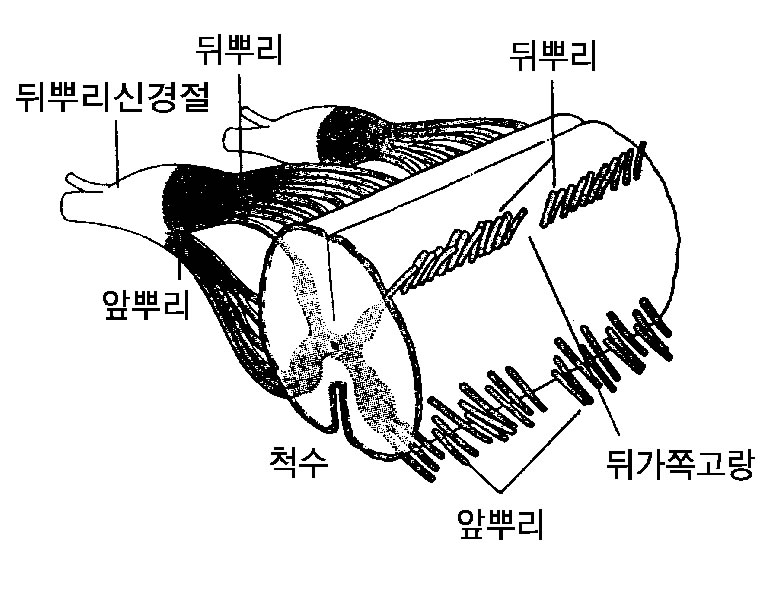 |
||
| 영문 | umbilical cord | 한글 | 탯줄, 제대 |
|---|---|---|---|
| 설명 | 태아의 배꼽을 태반과 연결시키는 유일한 구조로 2개의 탯줄동맥과 1개의 탯줄정맥이 지나간다. 신생아때에는 길이가 약 50cm이다. 태생기 발생 약 5주경에 요막경(allantoic diverticulum, body stalk)으로부터 형성되며 배꼽창자관(vitello- intestinal duct) 및 요막(allantoic membrane)을 포함하고 있다. 약 1%에서 제대동맥이 하나뿐인 경우가 있는데 이때에는 선천성기형의 동반률이 증가한다. |
||
| 영문 | testicular feminization syndrome | 한글 | 고환여성화증후군 |
|---|---|---|---|
| 설명 | 이차성장을 포함하여, 외성기의 발육은 여성이지만 고환이 존재하고, 자궁과 자궁관이 결핍되어 있는 남성 거짓남녀한몸증의 극단적 형태이다. 이것은 테스토스테론의 작용에 대한 말단기관의 저항에 기인한다. |
||
| CS | calf serum; campomelic syndrome; carcinoid syndrome; cardiogenic shock; caries-susceptible; carotid ... |
|---|---|
| CC | calcaneal-cuboid; calcium cyclamate; cardiac catheterization; cardiac contusion; cardiac cycle; card... |
| SSCCS | slow spinal cord compression syndrome |
| CC | 1) Chief Complaint; 주소(主訴), 주된 호소(불평) 2) Closing Capacity ... |
| CCT | carotid compression tomography; central conduction time; cerebrocranial trauma; chocolate-coated tab... |
| MSCC | Metastatic Spinal Cord Compression |
|---|---|
| SCC | Spinal cord compression |
| TCS | Tethered cord syndrome |
| ACD | Active compression decompression |
| CR | Compression ratios |
| acute spinal cord compression | <radiology> Signs and symptoms of cord compression show progression within 24 hours or less: pain, weakness, autonomic dysfunction, sensory loss, ataxia Diagnostic considerations: Primary or secondary malignancy of epidural space or vertebrae, Trauma, Inflammatory process, Osteoarthritis REF: MacNeil BJ, Abrams HL. Brigham and Women's Hospital Handbook of Diagnostic Imaging. Chapter 35. (12 Dec 1998) |
|---|---|
| spinal cord compression | A condition in which pressure is exerted on the spinal cord, as by a tumour, spinal fracture, etc. Its manifestations, which vary with location and degree of pressure, may include pain, paresthesias, and sensory and motor disturbances. (12 Dec 1998) |
| cervical compression syndrome | <syndrome> Pain, paresthesias, and sometimes weakness in the area of the distribution of one or more cervical roots, due to pressure of a protruded cervical intervertebral disc. Synonym: cervical compression syndrome. (05 Mar 2000) |
| compression syndrome | Trauma and ischemia of soft tissues, principally skeletal muscle, due to prolonged severe crushing of the tissues, leading to increased permeability of the cell membrane and to the release of potassium, enzymes, and myoglobin from within cells. Ischemic renal dysfunction secondary to hypotension and diminished renal perfusion results in acute tubular necrosis and uraemia. (12 Dec 1998) |
| ulnar nerve compression syndrome | <syndrome> A condition caused by compression or entrapment of the ulnar nerve. It may involve both sensory and motor problems and most often results from compression or entrapment of the ulnar nerve at the elbow (cubital tunnel syndrome). Compression of the nerve may occur during normal activities or as a complication of general anaesthesia. (12 Dec 1998) |
| central cord syndrome | <syndrome> Quadriparesis most severely involving the distal upper extremities, with or without sensory loss and bladder dysfunction, usually due to ischemia from osteophytic or traumatic compression of the central part of the cervical spinal cord and/or artery. (05 Mar 2000) |
| tethered cord syndrome | <syndrome> Abnormal low positioning (below the L2 vertebrae) of the distal spinal cord (conus medullaris) by the filum terminale. May be associated with incontinence, progressive motor and sensory impairment in the legs, pain, and scoliosis. (05 Mar 2000) |
| acute compression triad | The rising venous pressure, falling arterial pressure, and decreased heart sounds of pericardial tamponade. Synonym: Beck's triad. (05 Mar 2000) |
| adiabatic compression | <radiobiology> Compression (of a gas, plasma, etc.) not accompanied by gain or loss of heat from outside the system. For a plasma in a magnetic field, a compression slow enough that the magnetic moment and other adiabatic invariants of the plasma particles may be taken as constant. (09 Oct 1997) |
| cerebral compression | Pressure upon the intracranial tissues by an effusion of blood or cerebrospinal fluid, an abscess, a neoplasm, a depressed fracture of the skull, or an oedema of the brain. Synonym: compression of brain. (05 Mar 2000) |
| compression | Increasing physical pressure on a (vital) structure. (16 Dec 1997) |
| compression anaesthesia | Loss of sensation produced by pressure applied to a nerve. Synonym: compression anaesthesia. (05 Mar 2000) |
| compression fracture | <orthopaedics> A spinal fracture, more specifically, of a vertebral body, that results from the axial compression of the vertebra. Compression fractions result in a loss of height of the vertebral body on X-ray. May occur in any region of the spine. Compression fractures occur commonly in post-menopausal females who subject to osteoporosis. (05 Jan 1998) |
| compression molding | The act of pressing or squeezing together to form a shape in a mold, the adaptation of a plastic material to the negative form of a split mold by pressure. See: injection molding. (05 Mar 2000) |
| compression neuropathy | A focal nerve lesion produced when sustained pressure is applied to a localised portion of the nerve, either from an external or internal source; the main source of injury is the pressure differential that exists between one portion of the nerve and another. (05 Mar 2000) |
제품명 |
판매사 |
보험코드 | 성분/함량 | 구분/보험급여 |
|---|
제품명 |
판매사 |
보험코드 | 성분/함량 | 구분/보험급여 |
|---|