
| 영문 | cervix, neck | 한글 | 목, 경부 |
|---|---|---|---|
| 설명 | 목, 경부를 지칭하는 말. 특히 자궁의 목을 지칭하는데 쓰인다. 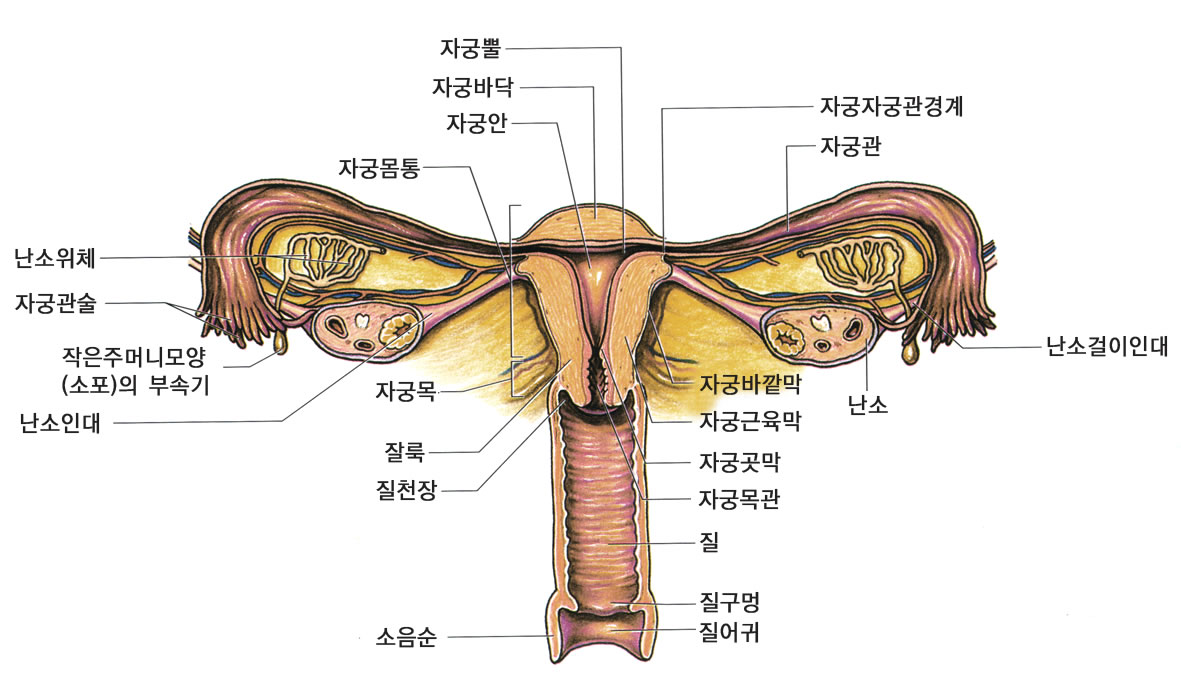 |
||
| 영문 | cervix cancer | 한글 | 자궁목암, 자궁경부암 |
|---|---|---|---|
| 설명 | 자궁의 목은 자궁이 질과 연결된 부위로 자궁의 입구에 해당하는 부위이다. 이곳의 상피세포에서 발생하는 암을 자궁목암이라고 한다. 자궁목암의 발생을 살펴보면 자궁목의 상피세포가 여러 가지 자극에 의해서 정상세포와 차이나는 암성변화를 한 세포가 생기게 된다. 이 암성변화를 한 세포는 처음에는 자궁목의 상피세포층의 일부를 이루고 있게 된다. 그러다가 점점 더 진행이 되면 암성세포가 자궁목 상피세포의 모든 층을 꽉채우게 된다. 그리고 계속 진행하면 상피세포의 맨 밑에 있는 바닥막을 뚫고 버팀조직으로 침윤해 들어가게 된다. 암성변화를 한 세포가 자궁의 상피층의 일부를 채우는 것을 자궁목형성이상(cervical dysplasia)라고 하고 암성변화를 한 세포가 자궁의 상피층을 모두 채워버려 정상적인 세포가 없는 경우를 상피내암종(carcinoma in situ)라고 한다. 그리고 바닥막을 뚫고 밑의 버팀조직으로 침범해 나가는 경우를 침윤암(invasive cancer)라고 한다. 자궁목암은 여러 명의 상대와 성관계를 가지는 여자, 그리고 첫 성경험의 나이가 어린 여자에게서 흔하고 또 사회적, 경제적 수준이 낮은 사람에게서 잘 걸리는 것으로 되어 있다. 이런 것으로 미루어 자궁목세포의 암성변화에는 성병과 같은 감염이 중요할 것으로 생각되고, 또 몇가지 바이러스의 감염이 자궁목암의 원인이라는 것이 밝혀져 있다. 자궁목암의 진단방법으로는 질세포검사, 콜포스코피, 생검(biopsy) 등이 있다. 세포검사란 조기진단 목적으로 가장 많이 사용되는 방법으로 솜봉으로 자궁목을를 문질러서 자궁목상피세포를 얻고 이것을 현미경으로 관찰하여 상피세포의 변화를 보는 것이다. 콜포스코피란 자궁의 목을 4~10배 정도 확대해서 보는 일종의 확대경검사으로 자궁목암으로 인한 자궁목의 병적변화를 관찰하여 진단하는 것이다. 생검란 진단을 위해서 직접 자궁목의 조직을 떼어 채취하여 현미경으로 관찰하여 진단하는 것으로 가장 정확한 진단법이다. 치료로는 병의 진행정도에 따라 다르겠지만 암의 진행이 거의 없어 형성이상이나 제자리암종 또는 아주 조금 침윤하였을 경우에는 수술적요법으로 자궁을 적출하는 것이 치료의 원칙이고 많은 진행을 보여 다른 조직으로 암의 침윤이 있을 경우에는 방사선 치료를 원칙으로 한다. |
||
| EA | 1) Esophageal Atresia Types 1. Esophageal Atresia with Dis... |
|---|---|
| VATER Associations | Vertebral defects Anal atresia Tracheo-Esophageal fistula ... |
| VACTERL | vertebral abnormalities, anal atresia, cardiac abnormalities, tracheoesophageal fistula and/or esoph... |
| Cx | 1) Complication 2) Cervix(= Cervical); 경(頸) |
| IIOC | Incompetent Internal Os of Cervix |
| BA | Biliary atresia |
|---|---|
| EA | Esophageal atresia |
| EHBA | Extra Hepatic Biliary Atresia |
| OA | Oesophageal atresia |
| PA | Pulmonary atresia |
| anal atresia | A congenital obstruction of the anal opening. Occurs in approximately 1 in 5,000 infants. This condition is corrected through surgery. (27 Sep 1997) |
|---|---|
| aortic atresia | Congenital absence of the normal valvular orifice into the aorta. (05 Mar 2000) |
| atresia | <medicine> Absence or closure of a natural passage or channel of the body; imperforation. Origin: NL, fr. Gr. Not perforated. Source: Websters Dictionary (01 Mar 1998) |
| atresia folliculi | A normal process affecting the primordial ovarian follicles in which death of the ovum results in cystic degeneration followed by cicatricial closure. (05 Mar 2000) |
| atresia iridis | Congenital absence of the pupillary opening. Synonym: atretopsia. (05 Mar 2000) |
| biliary atresia | <embryology> A rare condition which is caused by the abnormal development of the bile ducts inside or outside the liver. The obstruction of bile flow from the liver can lead to cirrhosis of the liver if not treated. Symptoms include jaundice in the second to third week of life along with clay-coloured stools. See: newborn jaundice. (27 Sep 1997) |
| bronchial atresia | Severe focal narrowing or obliteration of a segmental or lobar bronchus, usually associated with distal air trapping. (05 Mar 2000) |
| vaginal atresia | Congenital or acquired imperforation or occlusion of the vagina, or adhesion of the walls of the vagina. Synonym: ankylocolpos, colpatresia. (05 Mar 2000) |
| choanal atresia | Congenital bony or membranous occlusion of one or both choanae, due to failure of the embryonic bucconasal membrane to rupture. (12 Dec 1998) |
| pulmonary atresia | Congenital absence of the normal valvular orifice into the pulmonary artery. This condition is characterised by cardiomegaly, reduced pulmonary vascularity, and right ventricular atrophy. (12 Dec 1998) |
| duodenal atresia | <radiology> Double bubble sign, polyhydramnios, associated with, Down syndrome, VATER syndrome NB: annular pancreas also may cause duodenal obstruction, and is associated with VATER syndrome (12 Dec 1998) |
| intestinal atresia | Congenital obliteration of the lumen of the intestine, with the ileum involved in 50% of the cases and the jejunum and duodenum following in frequency. It is the most frequent cause of intestinal obstruction in the newborn infant. Its aetiology may be related to failure of recanalization during early development or to some impairment of blood supply during intrauterine life. (12 Dec 1998) |
| oesophageal atresia | A congenital anomaly where the upper oesophagus ends (atresia) and does not connect with the stomach and the lower oesophagus connects to the trachea (tracheoesophageal fistula). A common complication seen shortly after birth is an aspiration pneumonia. Infants will demonstrate excessive salivation, gagging and coughing with feeding, poor feeding and a bluish discolouration to the skin (cyanosis). Treatment involves the surgical repair of the oesophagus before the child can take anything by mouth. (27 Sep 1997) |
| tricuspid atresia | Absence of the orifice between the right atrium and ventricle, with the presence of an atrial defect through which all the systemic venous return reaches the left heart. As a result, there is left ventricular hypertrophy (hypertrophy, left ventricular) because the right ventricle is absent or not functional. (12 Dec 1998) |
| follicular atresia | <physiology> The degeneration and resorption of an ovarian follicle before it reaches maturity and ruptures. (12 Dec 1998) |
제품명 |
판매사 |
보험코드 | 성분/함량 | 구분/보험급여 |
|---|
제품명 |
판매사 |
보험코드 | 성분/함량 | 구분/보험급여 |
|---|