
| 영문 | Parkinson disease | 한글 | 파킨슨병 |
|---|---|---|---|
| 설명 | 나이든 사람에게 발생하는 신경계의 퇴행병이다. 주로 운동을 담당하는 중간뇌부위가 침범된다. 원인은 바이러스, 약물, 혹은 동맥경화증 등으로 알려진 경우도 있으나, 원인을 알 수 없는 경우가 많다. 증상은 가면얼굴, 쓰러질 것 같은 걸음걸이, 손떨림, 근육의 강직, 앞으로 기울어진 자세 등임. 치료는 특별한 것이 없으며, 대개 보존적 치료(완치를 목적으로 하지 않고 단지 환자의 생활을 보조해주는 정도의 치료)를 시행한다. 최근, 죽은 태아의 뇌를 이식하는 뇌 이식술에 의한 치료효과가 높다는 보고가 있다. |
||
| 영문 | white matter | 한글 | 백색질 |
|---|---|---|---|
| 설명 | 1. 뇌는 두 부분으로 나뉘어져 있다. 대뇌겉질이나 뇌의 중앙부에 위치하는 핵(예를 들면 시상, 시상하부, 바닥핵 등)이 회색질이고 그 외는 백색질이다. 척수의 경우에는 바깥쪽의 하얀부분을 백색질이라 하고, 안쪽의 색깔이 어두운 부분을 회색질이라 한다. 이중 실제적으로 대부분의 신경세포의 돌기 특히 축삭과 말이집으로 구성된 것이 백색질이며, 회색질은 신경세포와 보조하는 세포들이 많은 곳이다. 또한 척수도 백색질과 회색질로 나뉘어 있다. 2. 치아에 점착된 백색 물질로서 세균 및 사상 미생물을 함유한 점액 및 상피세포로 구성된다. 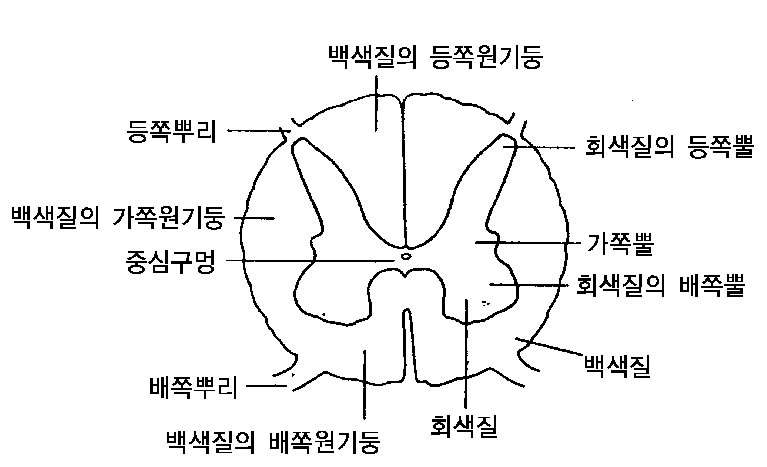 |
||
| 영문 | white blood cell(WBC), leukocyte | 한글 | 백혈구 |
|---|---|---|---|
| 설명 | 혈액내에 골수구계세포와 림프계세포, 단핵구계세포를 모두 통틀어 말한다. 백혈구의 증가가 있으면 대개 감염이 있거나, 혹은 탈수현상이 있음을 의미한다. 또한 지나친 백혈구수의 감소는 인체내 면역기능이 떨어져 있음을 의미하며, 다른 질병에 의해 나타나는 이차적인 현상이 아닌지 꼭 진단을 받아보아야 한다. |
||
| 영문 | testicular feminization syndrome | 한글 | 고환여성화증후군 |
|---|---|---|---|
| 설명 | 이차성장을 포함하여, 외성기의 발육은 여성이지만 고환이 존재하고, 자궁과 자궁관이 결핍되어 있는 남성 거짓남녀한몸증의 극단적 형태이다. 이것은 테스토스테론의 작용에 대한 말단기관의 저항에 기인한다. |
||
| 영문 | irritable bowel syndrome | 한글 | 과민성대장증후군 |
|---|---|---|---|
| 설명 | 배변장애, 복통, 복부팽만 등의 증상이 있으나 기질적인 병변이 없음이 확인된 예를 총망라한 임상 증후군이다. 가장 흔한 소화기 질환이며(전소화기 환자의 70~80%) 가장 흔한 질병(전체 인구의 약 20%)이다. 여성이 남성에 비해 2배 정도 많이 발생하며 30대 및 40대에서 호발하고 선진 공업국에서 많이 발생한다. 진단을 위해서는 병력 청취가 가장 중요하고 각종 검사로서 기질병을 제외해야 한다. 치료로는 안정요법(정신과적 면담 및 심리요법, 신경안정제), 식사요법(고섬유질 음식 섭취, 자극성 음식 피하기), 약물 요법(창자경련 진정제, 변비 완화제, 지사제) 등을 사용한다. |
||
| WC | ward clerk; water closet; Weber-Christian [syndrome]; wheel chair; white cell; white cell casts; whi... |
|---|---|
| ECG | Electro-Cardio-Graphy(-Gram); 심전도 = EKG 1. Conducting System Structu... |
| WPW Syndrome | Wolff-Parkinson-White Syndrome ? CIx 1. Drugs; AV Conduct... |
| WPW | Wolff-Parkinson-White [syndrome] |
| WHS | Werdnig-Hoffmann syndrome; Wolf-Hirschhorn syndrome |
| WPW | Wolf-Parkinson-White syndrome |
|---|---|
| WPW | Wolf-Parkinson-White |
| WHS | Wolf-Hirschhorn Syndrome |
| W-W | white-on-white |
| IPD | Idiopathic Parkinson's disease |
| Wolf Parkinson White syndrome | <cardiology, syndrome> Abnormal cardiac conduction that occurs by way of an accessory pathway between the atria and the ventricles. Baseline ECG will typically show a short P-R interval and a slurred upstroke of the QRS (delta wave). Tachyarrhythmias are common. (27 Sep 1997) |
|---|
| wolff-parkinson-white syndrome | <syndrome> A form of pre-excitation characterised by a short pr interval and a long qrs interval with a delta wave. (12 Dec 1998) |
|---|---|
| wolf | Origin: OE. Wolf, wulf, AS. Wulf; akin to OS. Wulf, D. & G. Wolf, Icel. Ulfr, Sw. Ulf, Dan. Ulv, Goth. Wulfs, Lith. Vilkas, Russ. Volk', L. Lupus, Gr. Lykos, Skr. Vrika; also to Gr. "elkein to draw, drag, tear in pieces. Cf. Lupine, Lyceum. 1. <zoology> Any one of several species of wild and savage carnivores belonging to the genus Canis and closely allied to the common dog. The best-known and most destructive species are the European wolf (Canis lupus), the American gray, or timber, wolf (C. Occidentalis), and the prairie wolf, or coyote. Wolves often hunt in packs, and may thus attack large animals and even man. 2. <zoology> One of the destructive, and usually hairy, larvae of several species of beetles and grain moths; as, the bee wolf. 3. Any very ravenous, rapacious, or destructive person or thing; especially, want; starvation; as, they toiled hard to keep the wolf from the door. 4. A white worm, or maggot, which infests granaries. 5. An eating ulcer or sore. Cf. Lupus. "If God should send a cancer upon thy face, or a wolf into thy side." (Jer. Taylor) 6. The harsh, howling sound of some of the chords on an organ or piano tuned by unequal temperament. In bowed instruments, a harshness due to defective vibration in certain notes of the scale. 7. A willying machine. Black wolf. Any one of several species of large, voracious marine fishes of the genus Anarrhichas, especially the common species (A. Lupus) of Europe and North America. These fishes have large teeth and powerful jaws. Called also catfish, sea cat, sea wolf, stone biter, and swinefish. Wolf net, a kind of net used in fishing, which takes great numbers of fish. <botany> Wolf's peach, a savage carnivorous marsupial (Thylacinus cynocephalus) native of Tasmania; called also Tasmanian wolf. Source: Websters Dictionary (01 Mar 1998) |
| Wolf, A | <person> 20th century U.S. Pathologist. See: Wolf-Orton bodies. (05 Mar 2000) |
| Wolf-Orton bodies | Intranuclear inclusion body's seen in cells of malignant neoplasms, especially those of glial cell origin. (05 Mar 2000) |
| wolf's-claw | <botany> A kind of club moss. See Lycopodium. Source: Websters Dictionary (01 Mar 1998) |
| wolf's-foot | <botany> Club moss. See Lycopodium. Source: Websters Dictionary (01 Mar 1998) |
| wolf's-milk | <botany> Any kind of spurge (Euphorbia); so called from its acrid milky juice. Source: Websters Dictionary (01 Mar 1998) |
| wolf tooth | A rudimentary first premolar tooth of the horse, usually appearing in the upper jaw. (05 Mar 2000) |
| sea wolf | <zoology> The wolf fish. The European sea perch. The sea elephant. A sea lion. Source: Websters Dictionary (01 Mar 1998) |
| parkinson disease | Progressive, degenerative disease of unknown aetiology characterised by rhythmic tremor of the limbs, stooped posture, slowness of voluntary movements, and masklike facial expression. Pathologically there is nerve cell loss in the melanin-containing cells in the brainstem and a corresponding reduction in dopamine levels in the corpus striatum. Lewy bodies are present in the substantia nigra and locus coeruleus. (12 Dec 1998) |
| parkinson disease, postencephalitic | A form of parkinson disease due to degeneration of the corpus striatum or substantia nigra, frequently occurring as a sequel of lethargic encephalitis. The early age of onset, the rapid progression of symptoms and signs of stabilization, and the presence of a variety of other neurological disorders (sociopathic behaviour, tics, spasms, oculogyric crises and other restricted motor disorders, breathing arrhythmias, hyperphagia, and bizarre movements, postures, and gaits) distinguish this disease from the one described by parkinson. (12 Dec 1998) |
| parkinson disease, symptomatic | Symptoms of parkinson disease induced by drugs, or following cerebral arteriosclerosis, brain tumour, or other central nervous system disorders except encephalitis, which is parkinson disease, postencephalitic. (12 Dec 1998) |
| Parkinson, James | <person> This English physician is chiefly remembered for his 66-page "Essay on the Shaking Palsy" (first edition is valued at |
| Parkinson's disease | <neurology> A progressive, neurological disease first described in 1817 by James Parkinson. The pathology is not completely understood, but there appears to be consistent changes in the melanin-containing nerve cells in the brainstem (substantia nigra, locus coeruleus), where there are varying degrees of nerve cell loss with reactive gliosis along with eosinophilic intracytoplasmic inclusions (Lewy bodies). Biochemical studies have shown below normal levels of dopamine in the caudate nucleus and putamen. Symptoms include shuffling gait, stooped posture, resting tremor, speech impediments, movement difficulties and an eventual slowing of mental processes and dementia. (27 Sep 1997) |
| Parkinson's facies | The expressionless or masklike facies characteristic of parkinsonism. Synonym: masklike face. (05 Mar 2000) |
제품명 |
판매사 |
보험코드 | 성분/함량 | 구분/보험급여 |
|---|
제품명 |
판매사 |
보험코드 | 성분/함량 | 구분/보험급여 |
|---|