
| 영문 | facies, face | 한글 | 얼굴, 면 |
|---|---|---|---|
| 설명 | 1. 눈, 코, 입이 있는 머리의 앞면. 즉 이마에서 턱까지를 포함. 2. 신체 전체, 그 일부 혹은 장기의 특정 표면. |
||
| 영문 | white matter | 한글 | 백색질 |
|---|---|---|---|
| 설명 | 1. 뇌는 두 부분으로 나뉘어져 있다. 대뇌겉질이나 뇌의 중앙부에 위치하는 핵(예를 들면 시상, 시상하부, 바닥핵 등)이 회색질이고 그 외는 백색질이다. 척수의 경우에는 바깥쪽의 하얀부분을 백색질이라 하고, 안쪽의 색깔이 어두운 부분을 회색질이라 한다. 이중 실제적으로 대부분의 신경세포의 돌기 특히 축삭과 말이집으로 구성된 것이 백색질이며, 회색질은 신경세포와 보조하는 세포들이 많은 곳이다. 또한 척수도 백색질과 회색질로 나뉘어 있다. 2. 치아에 점착된 백색 물질로서 세균 및 사상 미생물을 함유한 점액 및 상피세포로 구성된다. 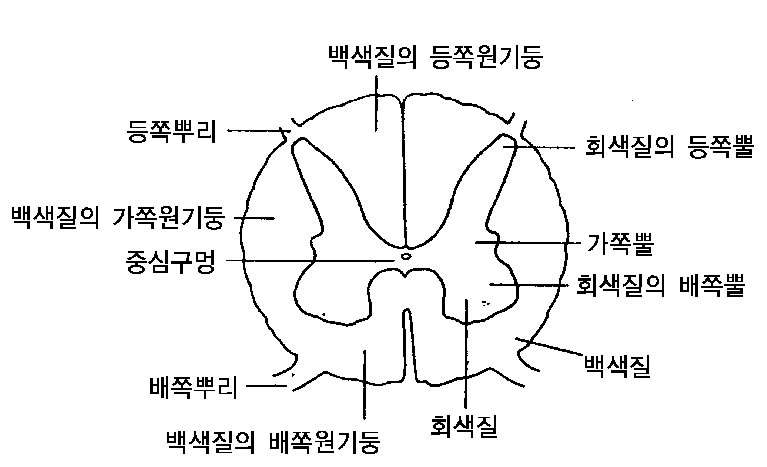 |
||
| 영문 | white blood cell(WBC), leukocyte | 한글 | 백혈구 |
|---|---|---|---|
| 설명 | 혈액내에 골수구계세포와 림프계세포, 단핵구계세포를 모두 통틀어 말한다. 백혈구의 증가가 있으면 대개 감염이 있거나, 혹은 탈수현상이 있음을 의미한다. 또한 지나친 백혈구수의 감소는 인체내 면역기능이 떨어져 있음을 의미하며, 다른 질병에 의해 나타나는 이차적인 현상이 아닌지 꼭 진단을 받아보아야 한다. |
||
| WC | ward clerk; water closet; Weber-Christian [syndrome]; wheel chair; white cell; white cell casts; whi... |
|---|---|
| F2F | face-to-face |
| inj | injection; injury, injured, injurious |
| TWBC | total white blood cells; total white blood count |
| WBC | well baby care/clinic; white blood cell; white blood cell count; whole blood cell count |
| W-W | white-on-white |
|---|---|
| FACE | Fluorophore-Assisted-Carbohydrate Electrophoresis |
| FM | face mask |
| PF | protoplasmic face |
| CFW | Calcofluor white |
| hornet | <zoology> A large, strong wasp. The European species (Vespa crabro) is of a dark brown and yellow colour. It is very pugnacious, and its sting is very severe. Its nest is constructed of a paperlike material, and the layers of comb are hung together by columns. The American white-faced hornet (V. Maculata) is larger and has similar habits. <zoology> Hornet fly, any dipterous insect of the genus Asilus, and allied genera, of which there are numerous species. They are large and fierce flies which capture bees and other insects, often larger than themselves, and suck their blood. Called also hawk fly, robber fly. To stir up a hornet's nest, to provoke the attack of a swarm of spiteful enemies or spirited critics. Origin: AS. Hyrnet; akin to OHG. Hornaz, hornuz, G. Horniss; perh. Akin to E. Horn, and named from the sound it makes as if blowing the horn; but more prob. Akin to D. Horzel, Lith. Szirszone, L. Crabo. Source: Websters Dictionary (01 Mar 1998) |
|---|---|
| hornet stings | Stings from hornets and other large stinging insects such as bees, yellow jackets and wasps can trigger allergic reactions varying greatly in severity. Avoidance and prompt treatment are essential. In selected cases, allergy injection therapy is highly effective. (the three a's of insect allergy are adrenaline, avoidance and allergist.) (12 Dec 1998) |
| bird face | bird face, abnormal shortness or recession of the mandible (27 Sep 1997) |
| masklike face | The expressionless or masklike facies characteristic of parkinsonism. Synonym: masklike face. (05 Mar 2000) |
| partial face-sparing lipodystrophy | A syndrome beginning at puberty that resembles total lipodystrophy but is inherited as an autosomal or X-linked dominant form. (05 Mar 2000) |
| regions of face | The topographical subdivisions of the face, including nasal, oral, mental, orbital, infraorbital, buccal, and zygomatic. Synonym: regiones faciales. (05 Mar 2000) |
| P face | Method of specimen preparation for the electron microscope in which rapidly frozen tissue is cracked so as to produce a fracture plane through the specimen. The surface of the fracture plane is then shadowed by heavy metal vapour, strengthened by a carbon film and the underlying specimen is digested away, leaving a replica that can be picked up on a grid and examined in the transmission electron microscope. The great advantage of the method is that the fracture plane tends to pass along the centre of lipid bilayers and it is therefore possible to get en face views of membranes that reveal the pattern of Integral membrane proteins. The E face is the outer lamella of the plasma membrane viewed as if from within the cell, the P face the inner lamella viewed from outside the cell. Fracture planes also often pass along lines of weakness such as the interface between cytoplasm and membrane, so that outer and inner membrane surfaces can be viewed. Further information about the structure can be revealed by freeze etching. Extremely rapid freezing followed by deep etching has allowed the structure of the cytoplasm to be studied without the artefacts that might be introduced by fixation. (18 Nov 1997) |
| moon face | The round, usually red face, with large jowls, seen in Cushing's disease or in exogenous hyperadrenocorticalism. Moon shaped face, moon facies. (05 Mar 2000) |
| whistling face syndrome | Congenital association of skeletal defects (ulnar deviation of hands with camptodactyly, talipes equinovarus, and frontal bone defects) and characteristic facies (protrusion of lips as in whistling, sunken eyes with hypertelorism, and small nose); autosomal dominant inheritance. Synonym: craniocarpotarsal dysplasia, Freeman-Sheldon syndrome, whistling face syndrome. (05 Mar 2000) |
| motor nerve of face | <anatomy, nerve> The facial nerve enervates the muscles of the face (facial expression). Lesion of the facial nerve cause a drooping to one side of the face, inability to wrinkle the forehead, inability to whistle, inability to close the eye and deviation of the mouth to the unaffected side. Synonym: cranial nerve VII. (27 Sep 1997) |
| cow face | The cowlike face of ocular hypertelorism; typical of craniofacial dysostosis. Synonym: cow face. (05 Mar 2000) |
| hippocratic face | Facies hippocratica, a pinched expression of the face, with sunken eyes, concavity of cheeks and temples, relaxed lips, and leaden complexion; observed in one close to death after severe and prolonged illness. Synonym: hippocratic face. (05 Mar 2000) |
| dish face | A facial malformation characterised by protuberant forehead, depressed nose and maxilla, and prominent chin. Synonym: dish face. (05 Mar 2000) |
| E face | In freeze fracture the plasma membrane cleaves between the acyl tails of membrane phospholipids, leaving a monolayer on each half of the specimen. The E face is the inner face of the outer lipid monolayer. From within the cell this is the view that you would have of the outer half of the plasma membrane if the inner layer could be removed. The complementary surface is the P face (the inner surface of the inner leaflet of the bilayer). E stands for ectoplasmic, P for protoplasmic: not terms that are in common usage! (18 Nov 1997) |
| transverse vein of face | <anatomy, vein> A tributary of the superficial temporal or retromandibular veins, anastomosing with the facial vein. Synonym: vena transversa faciei, transverse vein of face. (05 Mar 2000) |
제품명 |
판매사 |
보험코드 | 성분/함량 | 구분/보험급여 |
|---|
제품명 |
판매사 |
보험코드 | 성분/함량 | 구분/보험급여 |
|---|