
| 영문 | umbilical cord | 한글 | 탯줄, 제대 |
|---|---|---|---|
| 설명 | 태아의 배꼽을 태반과 연결시키는 유일한 구조로 2개의 탯줄동맥과 1개의 탯줄정맥이 지나간다. 신생아때에는 길이가 약 50cm이다. 태생기 발생 약 5주경에 요막경(allantoic diverticulum, body stalk)으로부터 형성되며 배꼽창자관(vitello- intestinal duct) 및 요막(allantoic membrane)을 포함하고 있다. 약 1%에서 제대동맥이 하나뿐인 경우가 있는데 이때에는 선천성기형의 동반률이 증가한다. |
||
| 영문 | vocal cord | 한글 | 성대 |
|---|---|---|---|
| 설명 | 목소리를 내는 데 꼭 필요한 중요한 구조물이다. 성대주위에는 작은 근육들이 존재하여, 하는 소리가 나오도록 해 주는 데, 이 근육들은 주로 되돌이후두신경의 지배를 받고 있으며, 성대의 감각신경은 위후두신경이 맡고 있다. 이중 왼쪽 반회후두신경은 신경의 주행경로상 밑으로 내려갔다 다시 올라와 분포하게 되므로 폐암으로 인한 폐수술시에 손상받기 쉬워서, 수술합병증으로 목쉰소리가 남기도 한다. 또한 성대가 막히면, 공기의 통로가 막히게 되므로 호흡곤란을 유발한다. 성대나 그 주위에서 종양이 발생할 수 있으며, 흡연이 주요한 원인이다. 성대자체에서 종양이 발생하면 목쉰소리가 나타나 쉽게 알 수 있으나, 성대이하부위나, 이상부위에서 발생하면 증상이 늦게 나타나므로, 다른 곳으로의 전이소견이나, 혹은 호흡곤란으로 나타나기도 한다. |
||
| 영문 | spermatic cord | 한글 | 정삭 |
|---|---|---|---|
| 설명 | 고환의 위쪽끝에서부터 샅고랑의 안쪽 끝까지의 사이에 있는 끈 모양의 조직. 정관, 혈관, 신경, 민무늬근, 지방조직 따위로 이루어져 있다. |
||
| 영문 | spinal cord | 한글 | 척수 |
|---|---|---|---|
| 설명 | 척추내에 위치하는 중추신경계의 일부분. 위에서부터 목척수, 등척수, 허리척수, 엉치척수로 구분됨. 내부는 바깥쪽의 백색질과 안쪽의 회색질로 구분된다. 척수의 아래끝은 척수 원뿔이라 하며 첫번째 허리뼈 높이까지 내려온다. 뇌와 말초신경사이의 신경 통로 역할을 하며 척수반사(예: 무릎반사)에서는 뇌를 통하지 않고 반사의 중추 작용을 한다. 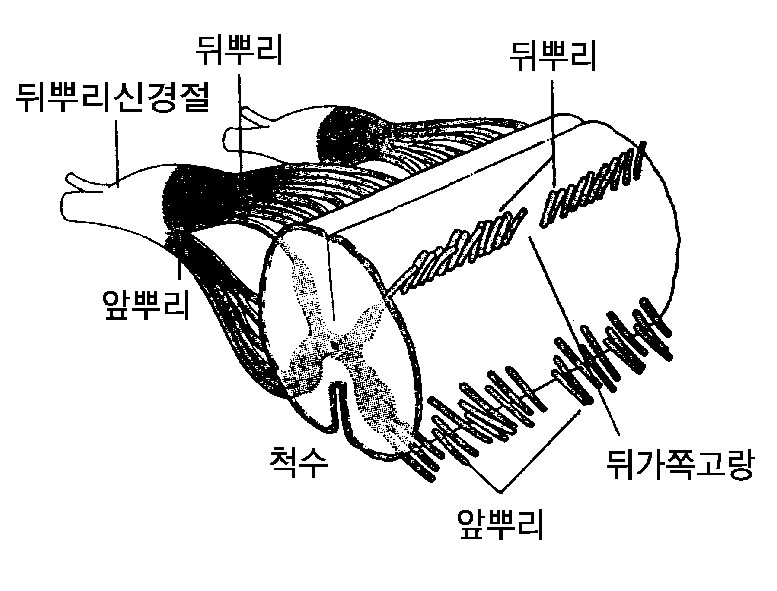 |
||
| UC | ulcerative colitis; ultracentrifugal; umbilical cord; unchanged; unclassifiable; unconscious; undiff... |
|---|---|
| UCBC | umbilical cord blood culture |
| ins | insertion; insulin; insurance, insured |
| inv | ins inverted insertion |
| IS | ileal segment; immediate sensitivity; immune serum; immunosuppression; impingement syndrome; incenti... |
| HUCB | Human umbilical cord blood |
|---|---|
| HUVEC | Human umbilical cord vein endothelial cell |
| UCB | Umbilical cord blood |
| UC | umbilical cord |
| I | D)-insertion |
| velamentous insertion | A form of insertion of the foetal blood vessels into the placenta, in which the vessels separate before reaching the placenta and develop toward it in a fold of amnion, somewhat like the ribs of an open parasol. Synonym: parasol insertion. (05 Mar 2000) |
|---|---|
| prolapse of umbilical cord | Presentation of part of the umbilical cord ahead of the foetus; it may cause foetal death due to compression of the cord between the presenting part of the foetus and the maternal pelvis. (05 Mar 2000) |
| umbilical cord | The flexible structure, giving passage to the umbilical arteries and vein, which connects the embryo or foetus to the placenta. (12 Dec 1998) |
| velamentous | Expanded in the form of a sheet or veil. Synonym: veliform. (05 Mar 2000) |
| aponeurosis of insertion | A tendinous sheet serving for the insertion of a broad muscle. (05 Mar 2000) |
| gastrostomy tube insertion | A surgical procedure to insert a tube into the stomach for purposes of nutrition. In this procedure, a small incision is made in the left upper quadrant of the abdomen while the patient is under general anaesthesia (can also be performed with a local anaesthetic). A thin flexible catheter is inserted into the stomach and then stitched in place. (27 Sep 1997) |
| gene insertion | The addition of one or more genesinto a genome from an externalsource. (09 Oct 1997) |
| parasol insertion | A form of insertion of the foetal blood vessels into the placenta, in which the vessels separate before reaching the placenta and develop toward it in a fold of amnion, somewhat like the ribs of an open parasol. Synonym: parasol insertion. (05 Mar 2000) |
| path of insertion | The direction in which a dental prosthesis is placed upon or removed from the supporting tissues or abutment teeth. (05 Mar 2000) |
| harrington rod insertion | <orthopaedics> A procedure that involves fusing together two or more vertebrae in the spine using either bone grafts or metal rods (Harrington rods). This procedure may be used to correct kyphosis or scoliosis. It is also used in those who require spine stabilisation due to vertebral damage from ruptures discs, fractures, osteomyelitis, osteoarthritis or tumour. (27 Sep 1997) |
| promoter insertion | <molecular biology> Activation of a gene by the nearby integration of a virus. The long-terminal repeat acts as a promoter for the host gene. A form of insertional mutagenesis. (18 Nov 1997) |
| DNA insertion elements | Discrete transposable segments of DNA which can insert into chromosomal, phage, and plasmid DNA. Some insert at random while others are site-specific; most have not been found to exist except in the inserted state. Their insertion into a genome always produces a mutation ("insertion mutation"), and their excision frequently results in a loss of host genetic information. Types of transposable elements include is elements (insertion sequence elements), which are composed of between 700 and 1400 bases and contain no genes unrelated to insertion function and tn elements (transposon elements), which are generally larger than 1400 bases and contain genes unrelated to insertion function. The concept also includes the delta element of saccharomyces cerevisiae and the integration site. (12 Dec 1998) |
| immediate insertion denture | A complete or partial denture constructed for insertion immediately following the removal of natural teeth. Synonym: immediate insertion denture. (05 Mar 2000) |
| insertion | 1. <anatomy> The place of attachment, as of a muscle to the bone which it moves. 2. <genetics> A rare nonreciprocal translocation involving three breaks in which a segment is removed from one chromosome and then inserted into a broken region of a nonhomologous chromosome. Origin: L. Inserere = to join to (18 Nov 1997) |
| insertion mutation | A mutation caused by the insertion of at least one extra nucleotide basein a DNA sequence. (09 Oct 1997) |
제품명 |
판매사 |
보험코드 | 성분/함량 | 구분/보험급여 |
|---|
제품명 |
판매사 |
보험코드 | 성분/함량 | 구분/보험급여 |
|---|