
| 영문 | injury | 한글 | 손상 |
|---|---|---|---|
| 설명 | 1. 일반적으로 외부에서 힘으로 신체에 손상을 주는 장애를 가리킨다. 2. 물체가 깨지거나 상하는 것. |
||
| 영문 | Dilatation and Curettage(D & C) | 한글 | 자궁긁어냄술, 자궁목확장 |
|---|---|---|---|
| 설명 | 자궁이란 태아가 수태되어서 분만전까지 발육하고 성장하는 공간이다. 자궁속에 병변이 있어 임신이 계속될 수 없거나 아니면 다른 이유로 임신되어 있는 태아를 제거하고자 할 경우에 사용되는 방법이다. 여기서 긁어내기 위하여는 우선 자궁의 입구에 해당하는 자궁목을 확장시켜야 한다. 여기에는 급속히 확장을 시도하는 법과 서서히 확장을 시도하는 2가지 방법이 있다. 자궁목을 급속히 확장할 때는 헤가르 목관확장기(Hegar's dilatator)를 사용한다. 이것은 작은 금속막대로 작은 크기부터 큰 크기까지 다양한 크기가 있어서 우선 작은 막대로 시작하여 점점 큰 크기의 막대를 자궁목에 넣어서 자궁목을 확장시킨다. 서서히 확장시킬 때는 Laminaria tent를 목관에 삽입하는 방법을 사용한다. Laminaria tent란 해초로 만든 작은 막대로 수분을 흡수하면 점점 늘어나는 성질이 있다. 이것을 자궁의 목에 넣으면 이것이 수분을 흡수하여 늘어나므로 천천히 자궁의 목이 늘어난다. 자궁목이 충분히 늘어나면 그 속으로 끝이 숟가락처럼 생긴 기구를 넣어서 자궁속의 병변이나 임신된 태아를 긁어내는데 여기에 사용되는 숟가락처럼 생긴 기구를 큐렛이라고 한다. 초기 임신중절 즉 유산과 같은 임신과 관련된 경우뿐만 아니라, 비임신 자궁의 자궁내막조직의 채취 및 제거를 위해서도 행해지는 수기이다. 이는 원칙적으로 마취하에 실시되는 것으로 자궁목관을 확장하고 기구로 자궁 내용물을 제거하고 큐렛으로 자궁내벽을 깨끗이 한다. 자궁천공이나 자궁목의 파열 등의 위험이 따르며, 수술후 감염 또는 출혈 등에 대한 주의가 필요하다. |
||
| 영문 | torticollis, wry neck | 한글 | 기운목, 사경 |
|---|---|---|---|
| 설명 | 목근육이 수축된 상태로, 목이 비틀어져서 머리가 한쪽으로 기우는 증상. 또는 그 증상을 보이는 목. 목 근육이 선천적으로 짧아서 그런 경우가 많으며 후천적으로는 류마치스, 뼈의 이상, 사시나 심인 반응도 원인이 된다. |
||
| 영문 | cervix, neck | 한글 | 목, 경부 |
|---|---|---|---|
| 설명 | 목, 경부를 지칭하는 말. 특히 자궁의 목을 지칭하는데 쓰인다. 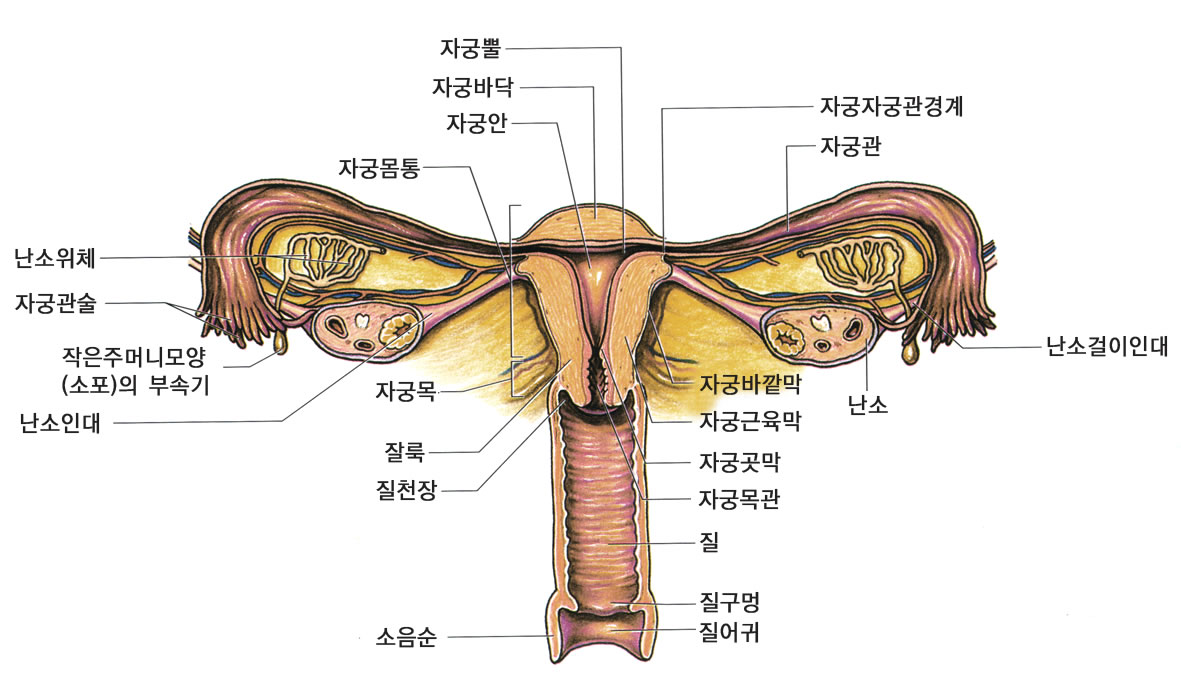 |
||
| BI | background interval; bacterial or bactericidal index; base-in [prism]; basilar impression; Billroth ... |
|---|---|
| STANDOUT | soft thresholding and depth cueing of unspecified techniques |
| PRICES | protection, rest, ice, compression, elevation, support [primary treatment of tendinitis and overuse ... |
| HAT | Halsted Aphasia Test; head, arm, trunk; heparin-associated thrombocytopenia; heterophil antibody tit... |
| URD | unspecified respiratory disease; upper respiratory disease |
| CST | cervical sympathetic trunk |
|---|---|
| LMT | Left main trunk |
| PT | pulmonary trunk |
| AAO-HNS | American Academy of Otolaryngology Head and Neck Surgery |
| H&N | Head and Neck |
| sequelae | A condition following as a consequence of a disease. (16 Dec 1997) |
|---|---|
| neck injury | Any injury to the soft tissues or bony structures (cervical spine) of the neck. (27 Sep 1997) |
| head and neck neoplasms | Neoplasms of the head and neck. (12 Dec 1998) |
| abbreviated injury scale | Classification system for assessing impact injury severity developed and published by the american association for automotive medicine. It is the system of choice for coding single injuries and is the foundation for methods assessing multiple injuries or for assessing cumulative effects of more than one injury. These include maximum ais (mais), injury severity score (iss), and probability of death score (pods). (12 Dec 1998) |
| axillary nerve injury | <neurology> A condition involving dysfunction of the axillary nerve which normally supplies the deltoid and teres minor muscles and sensation to the lateral aspect of the shoulder. This condition is a type of peripheral neuropathy that may manifest as the result of a variety of disease processes or injuries. Conditions associated with axillary nerve dysfunction include mononeuritis multiplex, fracture of the humerus, abduction injury to the shoulder, pressure to the armpit from a cast, splint or crutches. Symptoms include numbness over the outer portion of the shoulder, shoulder weakness and difficulty lifting arm or objects over your head. An EMG, nerve conduction study or muscle biopsy can be helpful in making the diagnosis. Recovery is generally spontaneous if the underlying cause can be corrected and shoulder mobility is preserved. Corticosteroid injections may be indicated in some instances. (02 Jan 1998) |
| blast injury | Tearing of lung tissue or rupture of abdominal viscera without external injury, as by the force of an explosion. (05 Mar 2000) |
| brain injury | Acute injuries to the brain, general or unspecified. (12 Dec 1998) |
| reperfusion injury | Functional, metabolic, or structural changes, including necrosis, in ischemic tissues thought to result from reperfusion to ischemic areas of the tissue. The most common instance is myocardial reperfusion injury. (12 Dec 1998) |
| closed head injury | A head injury in which continuity of the scalp and mucous membranes is maintained. (05 Mar 2000) |
| cold injury | Cold injuries include chilblains, trench foot, and frostbite. Cold injuries occur with and without freezing of body tissues. The young and the elderly are especially prone to cold injury. Alcohol increases the risk of cold injury which can lead to loss of body parts and even to death. It is important not to thaw an extremity if there is a risk of it re-freezing. (12 Dec 1998) |
| whiplash injury | Popular term for hyperextension-hyperflexion injury. (05 Mar 2000) |
| pneumatic tire injury | Separation of the skin and subcutaneous tissue from the underlying fascia, classically occurring when an extremity is crushed and rolled over by the tire of a vehicle but may be incurred through other mechanisms that produce shear forces; may occur particularly in cases of obesity. (05 Mar 2000) |
| contrecoup injury of brain | An injury occurring beneath the skull opposite to the area of impact. (05 Mar 2000) |
| myocardial reperfusion injury | Functional, metabolic, or structural changes in ischemic heart muscle thought to result from reperfusion to the ischemic areas. Changes can be fatal to muscle cells and may include oedema with explosive cell swelling and disintegration, sarcolemma disruption, fragmentation of mitochondria, contraction band necrosis, enzyme washout, and calcium overload. Other damage may include haemorrhage and ventricular arrhythmias. One possible mechanism of damage is thought to be oxygen free radicals. Treatment currently includes the introduction of scavengers of oxygen free radicals, and injury is thought to be prevented by warm blood cardioplegic infusion prior to reperfusion. (12 Dec 1998) |
| coup injury of brain | An injury occurring directly beneath the skull at the area of impact. (05 Mar 2000) |
제품명 |
판매사 |
보험코드 | 성분/함량 | 구분/보험급여 |
|---|
제품명 |
판매사 |
보험코드 | 성분/함량 | 구분/보험급여 |
|---|