
| 영문 | joint capsule | 한글 | 관절주머니, 관절낭 |
|---|---|---|---|
| 설명 | 관절의 종류 중에서 윤활관절은 두 뼈 사이가 약간의 간격을 두고 떨어져 있으며 관절면에는 얇은 유리 연골의 판이 덮여 있는 형태인데, 두 뼈 사이의 간격을 관절강이라고 하며 이 관절강 속은 연골이 덮여 있는 관절면을 제외하고는 윤활막에 의해 덮여 있고 이 윤활막은 다시 밖에서 질긴 섬유로 된 막으로 덮여 있다. 이 섬유막을 관절주머니라고 한다. |
||
| 영문 | Bowman capsule | 한글 | 보우만 주머니 |
|---|---|---|---|
| 설명 | 콩팥은 혈액속에 불순물을 제거하는 역할을 하는 부분이다. 콩팥의 역할은 콩팥단위(nephron)라는 것에 의해서 이루어진다. 이것은 콩팥기능의 단위로 콩팥에는 수많은 네프론이 존재한다. 네프론은 다음과 같은 구조로 이루어져 있다. 토리(glomerulus): 콩팥의 모세혈관의 실타래모양을 이루며 모여 있는 것을 말한다. 콩팥으로 들어온 혈액은 모세혈관을 통해서 사구체를 지나간다. 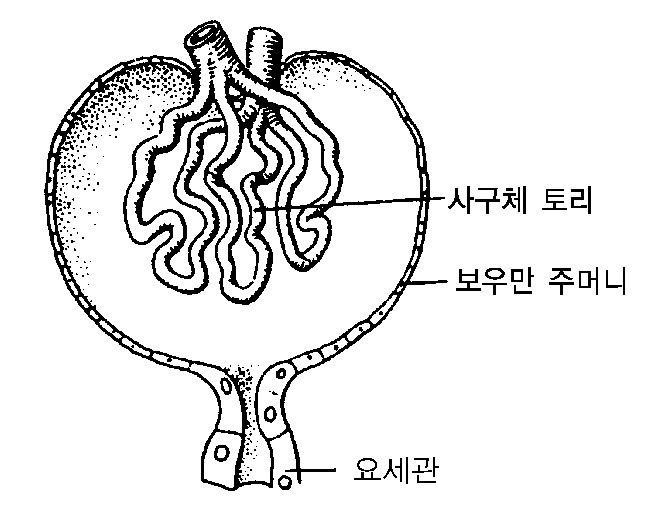 |
||
| HIV | Human Immunodeficiency Virus |
|---|---|
| CD4 | HIV helper cell count |
| CD8 | HIV suppressor cell count |
| HIV | human immunodeficiency virus |
| HIV | Ag human immunodeficiency virus antigen |
| HIV AN | HIV associated nephropathy |
|---|---|
| HIV- | HIV negative |
| HIV+ | HIV positive |
| HIV Pr | HIV protease |
| HIV- | HIV sero-negative |
| meeting report | A published record of the presentations at a meeting of a society, association, or similar body or of transactions at a symposium, colloquium, seminar, workshop, round table, conference, or congress. Mere notification of the date and place of the meeting is not within the scope of this publication type. It is to be used, rather, for the proceedings or transactions of the sessions, often with presentation of papers. (12 Dec 1998) |
|---|---|
| technical report | A formal report giving details of the investigation and results of a medical or other scientific problem. When issued by a government agency or comparable official body, its contents may be classified, unclassified, or declassified with regard to security clearance. This publication type may also cover a scientific paper or article that records the current state or current position of scientific research and development. If so labelled by the editor or publisher, this publication type may be properly used for journal articles. (12 Dec 1998) |
| anti-HIV agents | Agents used to treat aids and/or stop the spread of the HIV infection. These do not include drugs used to treat symptoms or opportunistic infections associated with aids. (12 Dec 1998) |
| receptors, HIV | Cellular receptors that bind the human immunodeficiency virus that causes aids. Included are CD4 antigens, found on t4 lymphocytes, and monocytes/macrophages, which bind to the HIV envelope protein gp120. (12 Dec 1998) |
| chronic symptomatic HIV infection | This refers to an HIV infection that is characterised by signs and symptoms of HIV that are not life-threatening. Examples include oral thrush, gingivitis, seborrheic dermatitis, molluscum contangiosum, fevers, fatigue, lymph node swelling, malaise and weight loss. This stage can be a signal for the conversion from asymptomatic HIV disease to HIV disease (moe pronouced symptoms include joint pains). AIDS is diagnosed after HIV disease has started to manifest life-threatening oppotunistic infections (for example pneumocystis, cryptosporidium, toxoplasmosis, etc). (27 Sep 1997) |
| middle stage HIV disease | <disease> This refers to an HIV infection that is characterised by signs and symptoms of HIV that are not life-threatening. Examples include oral thrush, gingivitis, seborrheic dermatitis, molluscum contangiosum, fevers, fatigue, lymph node swelling, malaise and weight loss. This stage can be a signal for the conversion from asymptomatic HIV disease to HIV disease (moe pronouced symptoms include joint pains). AIDS is diagnosed after HIV disease has started to manifest life-threatening oppotunistic infections (for example pneumocystis, cryptosporidium, toxoplasmosis, etc). (27 Sep 1997) |
| primary HIV infection | <infectious disease> The flu-like syndrome that oc immediately after a person contracts HIV. This mini infection precedes seroconversion and is characterised fever, sore throat, headache, skin rash and swollen glands. (06 Mar 1998) |
| HIV | <virology> A type of retrovirus (human immunodeficiency virus) that is responsible for the fatal illness acquired immunodeficiency syndrome. Two strains have been identified. Type 1: the retrovirus recognised as the agent that induces AIDS. Type 2: a virus closely related to HIV-1 that also leads to immune suppression. HIV-2 is not as virulent as HIV-1 and is epidemic only in West Africa. Acronym: HIV (11 Nov 1997) |
| HIV-1 | The type species of lentivirus and widely recognised as the aetiologic agent of acquired immunodeficiency syndrome (aids). It is characterised by its cytopathic effect and affinity for the t4-lymphocyte. (12 Dec 1998) |
| HIV-1 reverse transcriptase | <enzyme> HIV-1 enzyme responsible for the synthesis of DNA from genomic RNA of the virus. It is encoded by the pol gene of HIV-1. Registry number: EC 2.7.7.- (12 Dec 1998) |
| HIV-2 | An HIV species related to HIV-1 but carrying different antigenic components and with differing nucleic acid composition. It shares serologic reactivity and sequence homology with the simian lentivirus siv and infects only t4-lymphocytes expressing the CD4 phenotypic marker. (12 Dec 1998) |
| HIV-2 protease | <enzyme> Processes hiv-1pr53(gag) and analogous junction peptides in vitro; less than 60% amino acid identity to hiv-1 protease Registry number: EC 3.4.23.- Synonym: hiv2 protease (26 Jun 1999) |
| HIV-2 reverse transcriptase | <enzyme> Responsible for synthesis of double-stranded DNA from the genomic RNA of the virus; has rnase h and DNA-dependent DNA polymerase activities; was indexed as reverse transcriptase (87-91) Registry number: EC 2.7.7.- (26 Jun 1999) |
| HIV antibodies | Antibodies reactive with human immunodeficiency virus (HIV, previously called HTLV-III/lav) antigens of aids. This includes HIV-1 antibodies and HIV-2 antibodies. (12 Dec 1998) |
| HIV antigens | Antigens associated with specific proteins of the human adult T-cell immunodeficiency virus (HIV); also called HTLV-III-associated and lymphadenopathy-associated virus (lav) antigens. (12 Dec 1998) |
제품명 |
판매사 |
보험코드 | 성분/함량 | 구분/보험급여 |
|---|
제품명 |
판매사 |
보험코드 | 성분/함량 | 구분/보험급여 |
|---|