
| 영문 | Dilatation and Curettage(D & C) | 한글 | 자궁긁어냄술, 자궁목확장 |
|---|---|---|---|
| 설명 | 자궁이란 태아가 수태되어서 분만전까지 발육하고 성장하는 공간이다. 자궁속에 병변이 있어 임신이 계속될 수 없거나 아니면 다른 이유로 임신되어 있는 태아를 제거하고자 할 경우에 사용되는 방법이다. 여기서 긁어내기 위하여는 우선 자궁의 입구에 해당하는 자궁목을 확장시켜야 한다. 여기에는 급속히 확장을 시도하는 법과 서서히 확장을 시도하는 2가지 방법이 있다. 자궁목을 급속히 확장할 때는 헤가르 목관확장기(Hegar's dilatator)를 사용한다. 이것은 작은 금속막대로 작은 크기부터 큰 크기까지 다양한 크기가 있어서 우선 작은 막대로 시작하여 점점 큰 크기의 막대를 자궁목에 넣어서 자궁목을 확장시킨다. 서서히 확장시킬 때는 Laminaria tent를 목관에 삽입하는 방법을 사용한다. Laminaria tent란 해초로 만든 작은 막대로 수분을 흡수하면 점점 늘어나는 성질이 있다. 이것을 자궁의 목에 넣으면 이것이 수분을 흡수하여 늘어나므로 천천히 자궁의 목이 늘어난다. 자궁목이 충분히 늘어나면 그 속으로 끝이 숟가락처럼 생긴 기구를 넣어서 자궁속의 병변이나 임신된 태아를 긁어내는데 여기에 사용되는 숟가락처럼 생긴 기구를 큐렛이라고 한다. 초기 임신중절 즉 유산과 같은 임신과 관련된 경우뿐만 아니라, 비임신 자궁의 자궁내막조직의 채취 및 제거를 위해서도 행해지는 수기이다. 이는 원칙적으로 마취하에 실시되는 것으로 자궁목관을 확장하고 기구로 자궁 내용물을 제거하고 큐렛으로 자궁내벽을 깨끗이 한다. 자궁천공이나 자궁목의 파열 등의 위험이 따르며, 수술후 감염 또는 출혈 등에 대한 주의가 필요하다. |
||
| 영문 | antefletxio uteri | 한글 | 자궁전굴, 자궁앞굽이 |
|---|---|---|---|
| 설명 | 정상적으로 자궁은 앞으로 굽어 있다. 이런 상태를 자궁앞굽이라고 한다. 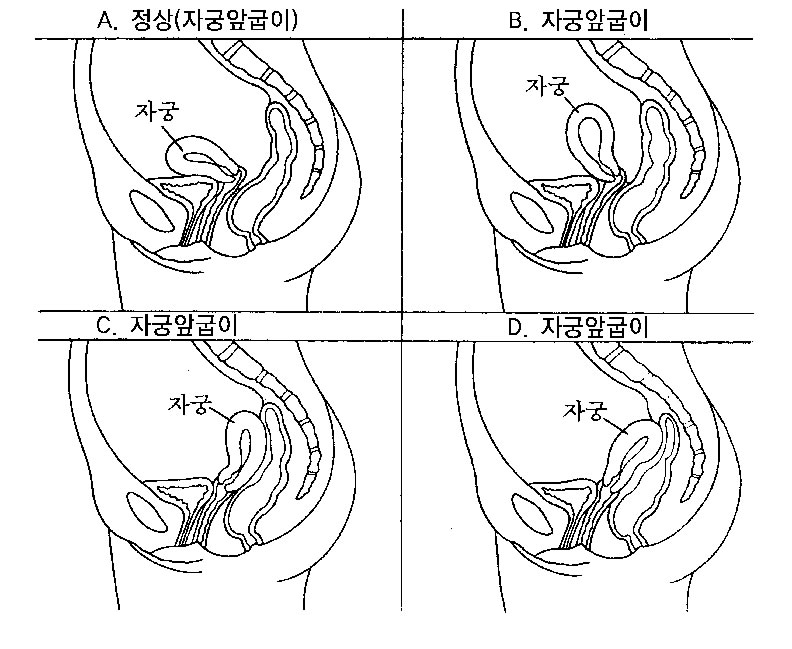 |
||
| 영문 | erosion | 한글 | 까짐, 진무름 |
|---|---|---|---|
| 설명 | 피부의 표층에 국한되는 조직결손을 말한다. 치유후에 흉터를 남기지 않고 완전히 치유가 된다. 즉 표피까지 얕은 수준의 궤양을 말한다. 고름딱지나 단순헤르페스 등에서 물집이 터진 후 표피만 떨어져 나가 생기며 이곳은 딱지가 형성되거나 형성되지 않을 수도 있으나 흉터없이 치유되는 것이 특징이다. |
||
| 영문 | cervix, neck | 한글 | 목, 경부 |
|---|---|---|---|
| 설명 | 목, 경부를 지칭하는 말. 특히 자궁의 목을 지칭하는데 쓰인다. 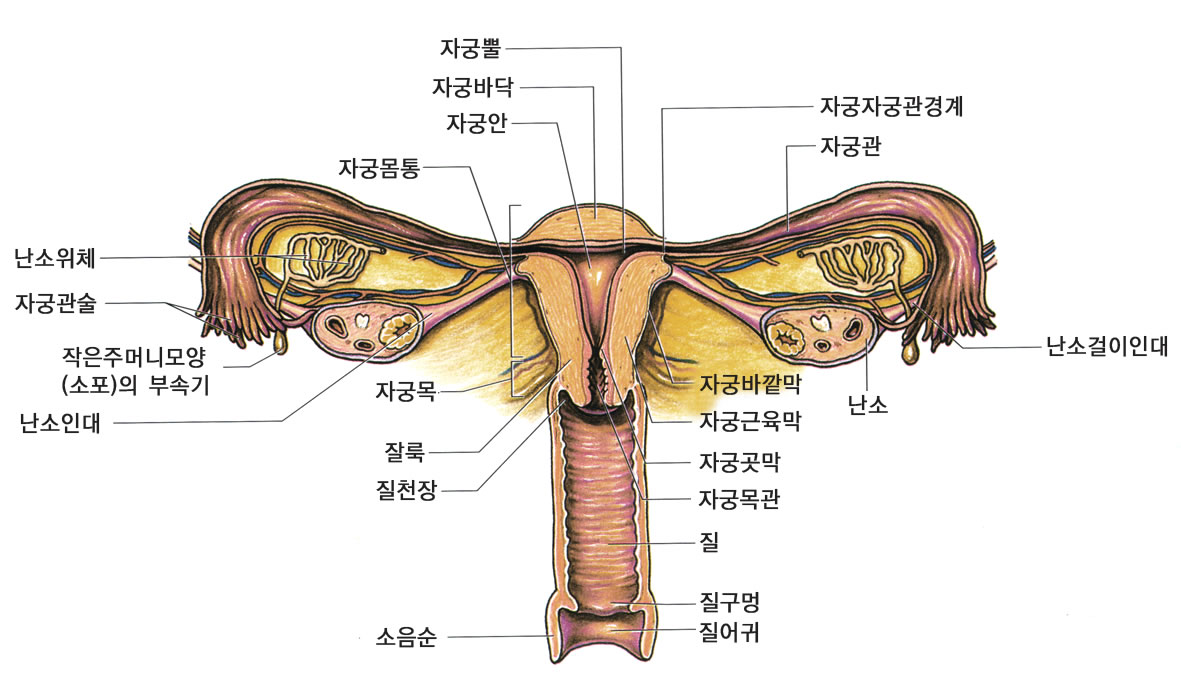 |
||
| 영문 | erosion | 한글 | 미란 |
|---|---|---|---|
| 설명 | 피부의 표층에 국한되는 조직결손을 말한다. 치유후에 흉터를 남기지 않고 완전히 치유가 된다. 표피까지 얕은 수준의 궤양을 말하며 반흔을 남기지 않는다. 고름딱지나 단순헤르페스 등에서 물집이 터진 후 표피만 떨어져 나가 생기며 이곳은 딱지가 형성되거나 형성되지 않을 수도 있으나 흉터없이 치유된다. |
||
| ASE | acute stress erosion; American Society of Electrocardiography; axilla, shoulder, and elbow |
|---|---|
| CEU | congenital ectropion uveae; continuing education unit |
| HCU | homocystinuria; hyperplasia cystica uteri |
| HIU | hyperplasia interstitialis uteri |
| Cx | 1) Complication 2) Cervix(= Cervical); 경(頸) |
| ACCESS | Access to Community Care and Effective Services and Support |
|---|---|
| EPSDT | Early and Periodic Screening Diagnosis and Treatment |
| SUPPORT | Study to Understand Prognoses and Preferences for Outcomes and Risks of Treatment |
| 14C | 1) [3H]cholesterol and |
| cervix uteri | The lower part of the uterus extending from the isthmus of the uterus into the vagina. It is divided into supravaginal and vaginal parts by its passage through the vaginal wall. Synonym: cervix uteri, cervix, neck of uterus, neck of womb. (05 Mar 2000) |
|---|---|
| recurrent corneal erosion | Repeated vesiculation followed by exfoliation of the corneal epithelium. (05 Mar 2000) |
| cervical erosion | A partial or complete absence of the mucosa which normally covers the cervix. These lesions or ulcers, may occur as the result of trauma (for example intercourse, tampon insertion), infection or chemicals (for example spermicidal creams or foams, douches). There appears to be a increased risk of cervical erosion with vaginal use of chemical agents or those with multiple sex partners. Symptoms of cervical erosion include vaginal bleeding and post-coital bleeding. Often there may be no symptoms at all. Erosions or ulcerations of the cervix are generally noted on the pelvic examination and can be an indicator of cervical cancer. For this reason a PAP smear will be recommended. most cervical erosions will heal spontaneously without intervention. (27 Sep 1997) |
| subluxation without erosion | <radiology> Systemic lupus erythematosis, Jaccoud's (12 Dec 1998) |
| Dieulafoy's erosion | Acute ulcerative gastroenteritis complicating pneumonia, possibly caused by overproduction of adrenal steroid hormones. (05 Mar 2000) |
| tooth erosion | Progressive loss of the hard substance of a tooth by chemical processes that do not involve bacterial action. (12 Dec 1998) |
| erosion | 1. An eating away, destruction of the surface of a tissue, material or structure. 2. Progressive loss of the hard substance of a tooth by chemical processes that do not involve bacterial action. See: abrasion. 3. A gradual breakdown or very shallow ulceration of the skin which involves only the epidermis and heals without scarring. Origin: L. Erosio, from erodere = to eat out (18 Nov 1997) |
| atonic ectropion | Ectropion of the lower eyelid following paralysis of the orbicularis oculi muscle. Synonym: flaccid ectropion, paralytic ectropion. (05 Mar 2000) |
| paralytic ectropion | Ectropion of the lower eyelid following paralysis of the orbicularis oculi muscle. Synonym: flaccid ectropion, paralytic ectropion. (05 Mar 2000) |
| cicatricial ectropion | Ectropion of the eyelids after burns, lacerations, or skin infection. (05 Mar 2000) |
| spastic ectropion | Ectropion of the lower eyelid as a result of ocular irritation. (05 Mar 2000) |
| ectropion | Eversion or turning outward of the border of the eyelid against the eyeball. Common with aging this condition can interfere with the normal tearing process in the eye. May also be seen in individuals with Down's syndrome. (27 Sep 1997) |
| ectropion uveae | Eversion of the pigmented posterior epithelium of the iris at the pupillary margin. (05 Mar 2000) |
| flaccid ectropion | Ectropion of the lower eyelid following paralysis of the orbicularis oculi muscle. Synonym: flaccid ectropion, paralytic ectropion. (05 Mar 2000) |
| cancer, cervix | Cancer of the entrance to the womb (uterus). Regular pelvic exams and Pap testing can detect precancerous changes in the cervix. Precancerous changes in the cervix may be treated with cryosurgery, cauterization, or laser surgery. The most common symptom of cancer of the cervix is abnormal bleeding. Cancer of the cervix can be diagnosed using a Pap test or other procedures that sample the cervix tissue. Cancer of the cervix requires different treatment than cancer that begins in other parts of the uterus. (12 Dec 1998) |
제품명 |
판매사 |
보험코드 | 성분/함량 | 구분/보험급여 |
|---|
제품명 |
판매사 |
보험코드 | 성분/함량 | 구분/보험급여 |
|---|