
| 영문 | Dilatation and Curettage(D & C) | 한글 | 자궁긁어냄술, 자궁목확장 |
|---|---|---|---|
| 설명 | 자궁이란 태아가 수태되어서 분만전까지 발육하고 성장하는 공간이다. 자궁속에 병변이 있어 임신이 계속될 수 없거나 아니면 다른 이유로 임신되어 있는 태아를 제거하고자 할 경우에 사용되는 방법이다. 여기서 긁어내기 위하여는 우선 자궁의 입구에 해당하는 자궁목을 확장시켜야 한다. 여기에는 급속히 확장을 시도하는 법과 서서히 확장을 시도하는 2가지 방법이 있다. 자궁목을 급속히 확장할 때는 헤가르 목관확장기(Hegar's dilatator)를 사용한다. 이것은 작은 금속막대로 작은 크기부터 큰 크기까지 다양한 크기가 있어서 우선 작은 막대로 시작하여 점점 큰 크기의 막대를 자궁목에 넣어서 자궁목을 확장시킨다. 서서히 확장시킬 때는 Laminaria tent를 목관에 삽입하는 방법을 사용한다. Laminaria tent란 해초로 만든 작은 막대로 수분을 흡수하면 점점 늘어나는 성질이 있다. 이것을 자궁의 목에 넣으면 이것이 수분을 흡수하여 늘어나므로 천천히 자궁의 목이 늘어난다. 자궁목이 충분히 늘어나면 그 속으로 끝이 숟가락처럼 생긴 기구를 넣어서 자궁속의 병변이나 임신된 태아를 긁어내는데 여기에 사용되는 숟가락처럼 생긴 기구를 큐렛이라고 한다. 초기 임신중절 즉 유산과 같은 임신과 관련된 경우뿐만 아니라, 비임신 자궁의 자궁내막조직의 채취 및 제거를 위해서도 행해지는 수기이다. 이는 원칙적으로 마취하에 실시되는 것으로 자궁목관을 확장하고 기구로 자궁 내용물을 제거하고 큐렛으로 자궁내벽을 깨끗이 한다. 자궁천공이나 자궁목의 파열 등의 위험이 따르며, 수술후 감염 또는 출혈 등에 대한 주의가 필요하다. |
||
| 영문 | burn | 한글 | 화상 |
|---|---|---|---|
| 설명 | 화상이란 열에 의한 신체조직의 손상을 말한다. 1. 화상의 정도 피부는 신체의 가장 겉에서 신체를 보호하는 역할을 하는 것이므로 대부분의 화상은 피부를 손상시킨다. 피부는 해부학적으로 진피, 표피, 그리고 피하조직의 3개의 층으로 나뉜다. 화상의 정도는 피부의 손상정도에 따라 1, 2, 3, 4도 화상을 분류한다. -1도화상-표피만이 열로 손상을 받은 경우를 말한다. 화상을 입은 피부는 붉은 색을 뛰고 매우 아프다. 대개 1주일 이내로 완전 회복이다. -2도화상-표피의 전층과 일부분의 진피가 손상을 받은 경우를 말한다. 화상부위가 아프며 붉은 색을 띠고 물집이 생긴다. 대개 2주이내에 완전 회복이 된다. -3도화상-진피의 전층과 피하조직의 대부분이 손상을 받은 경우를 말한다. 피부의 감작을 느끼는 신경의 말단은 진피층에 존재하고 있으므로 이 경우에는 화상을 입은 부위에 감각이 없고 아프지도 않다. 그리고 피부의 혈액을 공급하는 혈관도 역시 피하지방층과 진피층의 사이에 존재하므로 이 경우에 혈관도 손상을 받아서 화상을 입은 부위가 매우 건조하게 보인다. 그리고 피부이식이 있기 전에는 완전 회복이 있을 수가 없다. -4도화상-피하조직의 전층과 피하지방층 아래에 존재하는 부분의 손상이 있는 경우를 말한다. 이 경우 화상의 부위의 특징은 거의 3도 화상과 같고 피부이하 부위의 손상에 의한 증상이 보태질 수 있다. 2. 화상의 범위 화상의 범위를 결정하는 것은 화상의 치료법과 예후를 결정하는 데에 아주 중요한 역할을 한다. 화상의 범위를 정하는 방법은 여러 가지가 있으나 9의 규칙(rule of nine)이 간단하고 보편적으로 많이 쓰인다. 머리부위-9%, 팔한쪽-9%, 몸통의 앞면-18%, 몸통의 뒷면-18%, 다리가 각각-18% 해당한다. 즉 머리전체와 한쪽 다리가 화상을 입을 경우의 화상의 범위는 몸 전체의 27%가 화상을 입은 것이다. |
||
| 영문 | torticollis, wry neck | 한글 | 기운목, 사경 |
|---|---|---|---|
| 설명 | 목근육이 수축된 상태로, 목이 비틀어져서 머리가 한쪽으로 기우는 증상. 또는 그 증상을 보이는 목. 목 근육이 선천적으로 짧아서 그런 경우가 많으며 후천적으로는 류마치스, 뼈의 이상, 사시나 심인 반응도 원인이 된다. |
||
| 영문 | cervix, neck | 한글 | 목, 경부 |
|---|---|---|---|
| 설명 | 목, 경부를 지칭하는 말. 특히 자궁의 목을 지칭하는데 쓰인다. 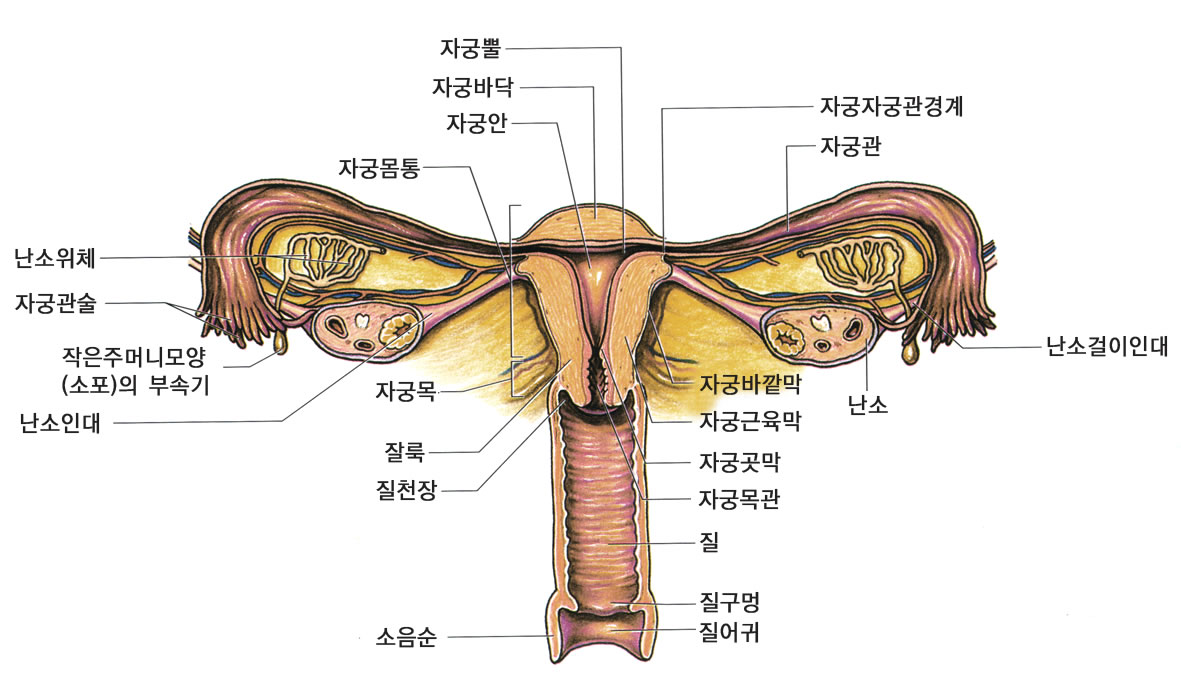 |
||
| ECG | Electro-Cardio-Graphy(-Gram); 심전도 = EKG 1. Conducting System Structu... |
|---|---|
| C3 | third cervical nerve; third cervical vertebra; third component of complement |
| HN | head and neck; head nurse; hemagglutinin neuraminidase; hematemesis neonatorum; hemorrhage of newbor... |
| ACO-HNS | American Council of Otolaryngology-Head and Neck Surgery |
| H&N | head and neck |
| AAO-HNS | American Academy of Otolaryngology Head and Neck Surgery |
|---|---|
| H&N | Head and Neck |
| HNSCC | Head and Neck Squamous Cell Carcinoma |
| HNC | Head and neck cancer |
| HNSCC | Head and neck squamous cell cancers |
| third degree burn | A burn involving destruction of the entire skin; deep third-degree burns extend into subcutaneous fat, muscle, or bone and often cause much scarring. Synonym: full-thickness burn. (05 Mar 2000) |
|---|---|
| second degree burn | A burn involving the epidermis and dermis and usually forming blisters that may be superficial, or by deep dermal necrosis, followed by epithelial regeneration extending from the skin appendages. Synonym: partial-thickness burn. (05 Mar 2000) |
| first degree burn | A burn involving only the epidermis and causing erythema and oedema without vesiculation. Synonym: superficial burn. (05 Mar 2000) |
| burns, third degree | In third degree burns the damage has progressed to the point of skin death. The skin is white and without sensation. (12 Dec 1998) |
| head and neck neoplasms | Neoplasms of the head and neck. (12 Dec 1998) |
| Burn and Rand theory | That stimulation of sympathetic fibres results first in the production of acetylcholine in the postganglionic nerve endings, which then release norepinephrine to act on the active site of the effector cell. (05 Mar 2000) |
| slash, burn, and poison | Brutal medical slang term for surgery, radiation, and chemotherapy (as approaches to the treatment of cancer). (12 Dec 1998) |
| syndrome, third and fourth pharyngeal pouch | See syndrome, digeorge. (12 Dec 1998) |
| third and fourth pharyngeal pouch syndrome | <syndrome> Also called the digeorge syndrome (dgs), this disorder is characterised by (1) low blood calcium levels (hypocalcaemia) due to underdevelopment (hypoplasia) of the parathyroid glands which control calcium; (2) underdevelopment (hypoplasia) of the thymus, an organ behind the breastbone in which lymphocytes mature and multiply; and (3) defects of the heart involving the outflow tracts more than from the heart. most cases of dgs are due to a microdeletion in chromosome band 22q11.2. A small number of cases have defects in other chromosomes, notably 10p13. Named after the american paediatric endocrinologist angelo digeorge. Another name for dgs is hypoplasia of the thymus and parathyroids. (12 Dec 1998) |
| burns, first degree | A first degree burn is superficial and has similar characteristics to a typical sun burn. The skin is red in colour and sensation is intact. In fact, it is usually somewhat painful. (12 Dec 1998) |
| burns, second degree | Second degree burns look similar to the first degree burns in that it is red and sensation is intact; however, the damage is severe enough to cause blistering of the skin and the pain is usually somewhat more intense. (12 Dec 1998) |
| second degree A-V block | See: atrioventricular block. (05 Mar 2000) |
| degree | 1. A step, stair, or staircase. "By ladders, or else by degree." (Rom. Of R) 2. One of a series of progressive steps upward or downward, in quality, rank, acquirement, and the like; a stage in progression; grade; gradation; as, degrees of vice and virtue; to advance by slow degrees; degree of comparison. 3. The point or step of progression to which a person has arrived; rank or station in life; position. "A dame of high degree." . "A knight is your degree." . "Lord or lady of high degree." 4. Measure of advancement; quality; extent; as, tastes differ in kind as well as in degree. "The degree of excellence which proclaims genius, is different in different times and different places." (Sir. J. Reynolds) 5. Grade or rank to which scholars are admitted by a college or university, in recognition of their attainments; as, the degree of bachelor of arts, master, doctor, etc. In the United States diplomas are usually given as the evidence of a degree conferred. In the humanities the first degree is that of bachelor of arts (B. A. Or A. B); the second that of master of arts (M. A. Or A. M). The degree of bachelor (of arts, science, divinity, law, etc) is conferred upon those who complete a prescribed course of undergraduate study. The first degree in medicine is that of doctor of medicine (M. D). The degrees of master and doctor are sometimes conferred, in course, upon those who have completed certain prescribed postgraduate studies, as doctor of philosophy (Ph. D); but more frequently the degree of doctor is conferred as a complimentary recognition of eminent services in science or letters, or for public services or distinction (as doctor of laws (LL. D) or doctor of divinity (D. D), when they are called honorary degrees. "The youth attained his bachelor's degree, and left the university." (Macaulay) 5. A certain distance or remove in the line of descent, determining the proximity of blood; one remove in the chain of relationship; as, a relation in the third or fourth degree. "In the 11th century an opinion began to gain ground in Italy, that third cousins might marry, being in the seventh degree according to the civil law." (Hallam) 7. <mathematics> Three figures taken together in numeration; thus, 140 is one degree, 222,140 two degrees. 8. <mathematics> State as indicated by sum of exponents; more particularly, the degree of a term is indicated by the sum of the exponents of its literal factors; thus, a^2b^2c is a term of the sixth degree. The degree of a power, or radical, is denoted by its index, that of an equation by the greatest sum of the exponents of the unknown quantities in any term; thus, ax^4 + bx^2 = c, and mx^2y^2 + nyx = p, are both equations of the fourth degree. 9. <mathematics> A 360th part of the circumference of a circle, which part is taken as the principal unit of measure for arcs and angles. The degree is divided into 60 minutes and the minute into 60 seconds. 10. A division, space, or interval, marked on a mathematical or other instrument, as on a thermometer. 11. A line or space of the staff. The short lines and their spaces are added degrees. Accumulation of degrees. <geometry> On the earth, the distance on a meridian between two parallels of latitude whose latitudes differ from each other by one degree. This distance is not the same on different parts of a meridian, on account of the flattened figure of the earth, being 68.702 statute miles at the equator, and 69.396 at the poles. Degree of longitude, the distance on a parallel of latitude between two meridians that make an angle of one degree with each other at the poles a distance which varies as the cosine of the latitude, being at the equator 69.16 statute miles. To a degree, to an extreme; exceedingly; as, mendacious to a degree. "It has been said that Scotsmen . . . Are . . . Grave to a degree on occasions when races more favored by nature are gladsome to excess." (Prof. Wilson) Origin: F. Degre, OF. Degret, fr. LL. Degradare. See Degrade. Source: Websters Dictionary (01 Mar 1998) |
| zero degree teeth | Prosthetic teeth having no cusp angles in relation to the horizontal. (05 Mar 2000) |
| first degree A-V block | See: atrioventricular block. (05 Mar 2000) |
제품명 |
판매사 |
보험코드 | 성분/함량 | 구분/보험급여 |
|---|
제품명 |
판매사 |
보험코드 | 성분/함량 | 구분/보험급여 |
|---|