
| 영문 | urinary tract | 한글 | 요로 |
|---|---|---|---|
| 설명 | 오줌을 몸 밖으로 배출하기 위한 길. 콩팥, 요관, 방광, 요도로 이루어져 있다. |
||
| 영문 | spinal cord | 한글 | 척수 |
|---|---|---|---|
| 설명 | 척추내에 위치하는 중추신경계의 일부분. 위에서부터 목척수, 등척수, 허리척수, 엉치척수로 구분됨. 내부는 바깥쪽의 백색질과 안쪽의 회색질로 구분된다. 척수의 아래끝은 척수 원뿔이라 하며 첫번째 허리뼈 높이까지 내려온다. 뇌와 말초신경사이의 신경 통로 역할을 하며 척수반사(예: 무릎반사)에서는 뇌를 통하지 않고 반사의 중추 작용을 한다. 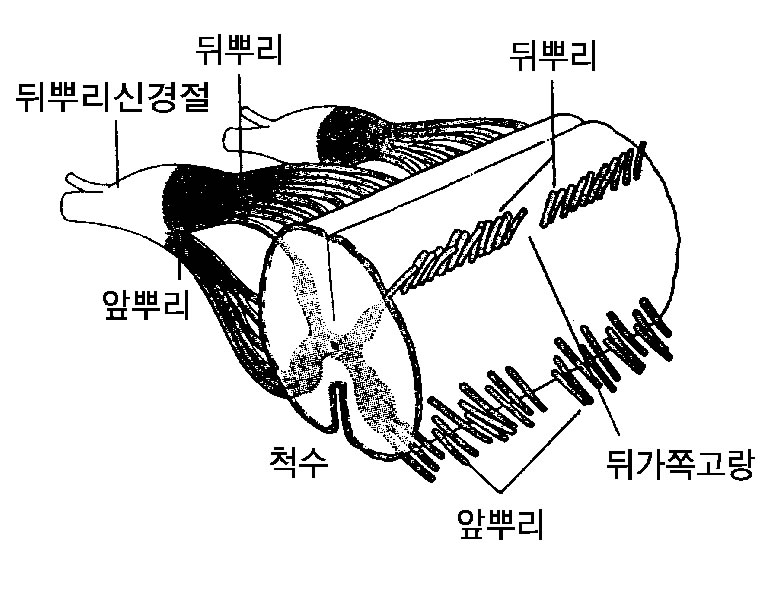 |
||
| 영문 | sensory nerve | 한글 | 감각신경 |
|---|---|---|---|
| 설명 | 감각세포가 받은 자극을 중추신경에 전달하는 신경. 눈이나 피부 등에 있는 감각기가 외부로부터 자극을 받으면 감각신경을 거쳐 척수와 대뇌겉질까지 감각이 전달된다. 이와 같이 외부로부터 내부를 향해 전달되는 감각신경은 구심성 신경계통이며, 원심성 운동신경계통 및 자율신경계통에 필적하는 말초신경의 하나이다. 이 감각신경에는 후각신경(뇌신경Ⅰ)-시각신경(뇌신경Ⅱ)-눈돌림신경(뇌신경Ⅲ)-삼차신경(뇌신경Ⅴ)-얼굴신경(뇌신경Ⅶ)-청각신경(뇌신경Ⅷ)-혀인두신경(뇌신경Ⅸ)-미주신경(뇌신경Ⅹ) 및 척수신경이 있다. 감각신경 중 미주신경을 제외하면 모두 두부에 분포되어 있고, 후각신경-시각신경-청각신경의 세가지는 특히 분화된 감각상피를 지배한다. 혀인두신경은 미각의 말단장치와 그 밖의 부분에 연결되고 미주신경은 흉강과 복강의 기관에 분포되어 구심성 충격을 중추에 전달하며 삼차신경은 척수의 각 마디에 있는 신경에 해당하여(머리의 피부-점막 등의 표면감각과 심부감각을 관장한다. 척수의 감각신경계통에도 피부와 심부, 내장의 분포에 따른 구별이 있다. |
||
| 영문 | cranial nerve | 한글 | 뇌신경 |
|---|---|---|---|
| 설명 | 대부분의 신경은 척수를 통해서 나간다. 그러나 몇몇의 신경은 뇌에서 바로 나간다. 이렇게 뇌에서 바로 나가는 신경을 뇌신경이라고 한다. 이 뇌신경은 12개로 모두 대칭적인 쌍으로 존재한다. 이 뇌신경은 주로 특수감각(시각, 청각, 후각, 미각)과 얼굴 등의 일부 근육을 지배하고 심장이나 내장의 지배도 일부 담당하고 있다. 12개의 신경은 각각 다음과 같은 이름과 고유번호를 가지고 있다. -후각신경(olfactory nerve)-후각을 담당하는 신경, -시각신경(optic nerve)-시각을 담당하는 신경. -눈돌림신경(oculomotor nerve)-운동을 담당하는 신경, -도르래신경(trochlear nerve)-눈의 운동을 담당하는 신경. -삼차신경(trigeminal nerve)-3개의 가지를 가지는 신경으로 얼굴의 감각과 씹기를 위한 근육을 움직이는 역할을 한다. -가돌림신경(abducent nerve)-눈의 운동을 담당하는 신경. -얼굴신경(facial nerve)-얼굴 근육의 운동을 담당하는 신경. 즉 얼굴이 여러 가지 표정을 내는 것은 이 신경의 작용이다. 그리고 혀의 앞부분의 미각을 담당하는 역할도 한다. -안뜰달팽이신경(vestibulocochlear nerve)-안뜰신경과 달팽이신경의 2가지 신경으로 이루어진 신경으로 모두 귀를 지배하는 신경이다. 안뜰신경은 평형감각을 담당하는 곳인 귀의 안뜰에서 나오는 신경으로 평형감각의 정보를 뇌에 전하는 역할을 한다. 그리고 달팽이신경은 청각을 감지하는 달팽이껍질의 모양을 가진 달팽이에서 기원하는 신경으로 청각의 정보를 뇌에 전달하는 역할을 한다. -혀인두신경(glossopharyngeal nerve)-말 그대로 혀와 인두부에 분포하는 신경으로 인후부의 움직임과 혀의 뒷부분의 미각을 담당한다. -미주신경(vagus nerve)-말 그대로 아주 여러 곳에 분포하여 분포영역이 모호한 신경이다(vagus란 모호한 이란 뜻을 가진다). 대부분의 내장에 분포하고 또 심장에 분포하여 심장의 박동수를 조정하는 역할도 한다. -더부신경(accessory nerve)-등의 근육과 목의 근육의 일부를 지배하는 신경. -혀밑신경(hypoglossal nerve)-혀의 움직임을 관장하는 신경. |
||
| 영문 | afferent nerve | 한글 | 들신경 |
|---|---|---|---|
| 설명 | 몸의 중심으로 들어오는 신경, 즉 감각신경을 지칭하는 말이다. |
||
| CTA | Canadian Tuberculosis Association; chemotactic activity; chromotropic acid; Committee on Thrombolyti... |
|---|---|
| TG | tendon graft; testosterone glucuronide; tetraglycine; thioglucose; thioglycolate; thioguanine; throm... |
| LRI | lamina rara interna; lower respiratory [tract] illness; lower respiratory [tract] infection; lymphoc... |
| LRTI | lower respiratory tract illness; lower respiratory tract infection |
| PSA | parasternal short axis; pleomorphic salivary gland adenoma; polyethylene sulfonic acid; polysacchari... |
| spinal nucleus of the trigeminus | The long sensory nucleus extending from the caudal border of the pontine sensory nucleus of the trigeminus down through the lateral region of the rhombencephalon into the upper three segments of the spinal cord's dorsal horn; it receives the fibres of the sensory root of the trigeminal nerve which descend along its lateral border as the spinal tract of trigeminal nerve. Synonym: nucleus tractus spinalis nervi trigemini, descending nucleus of the trigeminus, spinal nucleus of the trigeminus. (05 Mar 2000) |
|---|---|
| nerve tract | A bundle or group of nerve fibres in the brain or spinal cord. (05 Mar 2000) |
| accessory portion of spinal accessory nerve | <anatomy, nerve> The roots of the accessory nerve which arise from the medulla; the nerve fibres of the cranial root join the intracranial portion of the vagus nerve and are distributed to the pharyngeal plexus, providing the motor innervation of the soft palate (except the tensor veli palati) and the pharynx. Synonym: pars vagalis nervi accessorii, radices craniales, accessory portion of spinal accessory nerve, cranial roots, vagal part of accessory nerve, vagal part. (05 Mar 2000) |
| ventral primary ramus of spinal nerve | <anatomy, nerve> The larger, anterolaterally-directed major terminal branch (with the dorsal primary ramus) of all 31 pairs of mixed spinal nerves, formed at the intervertebral foramen. Most ventral primary rami, especially those involved in the innervation of the limbs, participate in the formation of the major nerve plexuses (cervical, brachial, and lumbosacral) and lose their identities. Most in the thoracic region, however, remain separate from adjacent rami to become the intercostal and subcostal nerves. Ventral primary rami provide innervation to the anterolateral body wall and trunk. Nomina Anatomica lists ventral primary rami as "rami ventrales" for each group of spinal nerves: 1) cervical (nervorum cervicalium ), 2) thoracic (nervorum thoracicorum ), 3) lumbar (nervorum lumbalium ), 4) sacral (nervorum sacralium )m, and 5) coccygeal (nervi coccygei ). Synonym: ramus ventralis nervi spinalis, anterior primary division. (05 Mar 2000) |
| groove for spinal nerve | <anatomy, nerve> The laterally directed groove on the superior surface of the transverse processes of typical cervical vertebrae between the anterior and posterior tubercles along which the emerging spinal nerve passes. Synonym: sulcus nervi spinalis. (05 Mar 2000) |
| spinal accessory nerve | <anatomy, nerve> The eleventh cranial nerve enervates the sternocleidomastoid muscles and the trapezius muscles. Lesions of the eleventh result in drooping of the shoulder and inability to rotate the head away from the affected side. (27 Sep 1997) |
| spinal nerve roots | The paired bundles of nerve fibres entering and leaving the spinal cord at each segment. The dorsal and ventral nerve roots join to form the mixed segmental spinal nerves. The dorsal roots are generally afferent, formed by the central projections of the spinal (dorsal root) ganglia sensory cells, and the ventral roots efferent, comprising the axons of spinal motor and autonomic preganglionic neurons. There are, however, some exceptions to this afferent/efferent rule. (12 Dec 1998) |
| spinal part of accessory nerve | <anatomy, nerve> Originates from the upper five or six cervical spinal segments, emerges from the lateral surface of the spinal cord and ascends through the foramen magnum to join the cranial root. Synonym: radices spinales nervi accessorii, ramus externus nervi accessorii, pars spinalis nervi accessorii, spinal part of accessory nerve. (05 Mar 2000) |
| spinal root of accessory nerve | <anatomy, nerve> Originates from the upper five or six cervical spinal segments, emerges from the lateral surface of the spinal cord and ascends through the foramen magnum to join the cranial root. Synonym: radices spinales nervi accessorii, ramus externus nervi accessorii, pars spinalis nervi accessorii, spinal part of accessory nerve. (05 Mar 2000) |
| dorsal primary ramus of spinal nerve | <anatomy, nerve> The smaller, posteriorly-directed major terminal branch (with the ventral primary ramus) of all 31 pairs of mixed spinal nerves, formed at the intervertebral foramen and turning abruptly posteriorly to divide into lateral and medial branches, both of which will supply the deep (true) muscles of the back. The medial branch (rami medialis ) of the dorsal primary ramus also supplies articular branches to the zygopophyseal joints and the periosteum of the vertebral arch. In the neck and upper back, the medial branch continues through the deep and superficial back muscles to supply overlying skin; in the lower back, the lateral branch does this. Nomina Anatomica lists dorsal primary rami as "rami dorsales" for each group of spinal nerves: 1) cervical (nervorum cervicalium ), 2) thoracic (nervorum thoracicorum ), 3) lumbar (nervorum lumbalium ), 4) sacral (nervorum sacralium ), and 5) coccygeal (nervi coccygei ). Synonym: ramus dorsalis nervorum spinalium, ramus dorsalis, rami posteriores nervorum spinalium, dorsal branch, posterior primary division. (05 Mar 2000) |
| atypical trigeminal neuralgia | Periodic pain in any region of the face, teeth, tongue, and occasionally in the occipital or shoulder area, which lasts several minutes to several days but has no trigger point and lacks the paroxysmal character of tic douloureux. Synonym: atypical facial neuralgia. (05 Mar 2000) |
| branch to trigeminal ganglion | Ganglionic branch of internal carotid artery. (05 Mar 2000) |
| trigeminal | <anatomy> Of, pertaining to, or designating, the fifth pair of cranial nerves, which divide on each side of the head into three main branches distributed to the orbits, jaws, and parts of the mouth; trifacial. See: Trigeminous. Source: Websters Dictionary (01 Mar 1998) |
| trigeminal cave | The cleft in the meningeal layer of dura of the middle cranial fossa near the tip of the petrous part of the temporal bone; it encloses the roots of the trigeminal nerve and the trigeminal ganglion. Synonym: cavum trigeminale, Meckel's cavity, Meckel's space, trigeminal cavity. (05 Mar 2000) |
| trigeminal cavity | The cleft in the meningeal layer of dura of the middle cranial fossa near the tip of the petrous part of the temporal bone; it encloses the roots of the trigeminal nerve and the trigeminal ganglion. Synonym: cavum trigeminale, Meckel's cavity, Meckel's space, trigeminal cavity. (05 Mar 2000) |