
| 영문 | congenital heart disease | 한글 | 선천심장병 |
|---|---|---|---|
| 설명 | 선천적으로 심장의 구조에 이상이 있는 병. |
||
| 영문 | heart | 한글 | 심장 |
|---|---|---|---|
| 설명 | 심장은 가슴의 중앙에 위치하며 오른쪽과 왼쪽반으로 나눌 수 있다. 각각은 정맥에서 피가 들어오는 방과 동맥으로 피를 내보내는 실이 있다. 심장은 정중앙선에서 왼쪽에 놓여 있다. 심장의 2개의 심방과 2개의 심실, 그리고 심방사이의 심방중격, 심실사이의 심실중격이 존재한다. 심실은 혈액을 주로 순환시키는 힘을 내는 곳으로 강한 근육층이 존재를 한다. 반면에 심방은 심실에 들어가기전에 일시적으로 피가 모이는 곳으로 근육층의 발달이 미약하다. 심방과 심실사이에 삼첨판과 승모판, 심실의 유출로에 대동맥판과 폐동맥판이 있다. 이것들은 혈액이 흐르는 방향에 거슬러 진행하는 것을 막는 기능을 한다. 그리고 심장에는 심장의 근육에 혈액을 공급하는 관상동맥이 있다. 이 심장동맥은 심장을 쌓듯이 존재한다. 심장박동의 신호는 특수한 장치에 의해서 발생이 되고 특수한 전도계를 통해서 전체의 심장으로 전도된다. 심장박동의 신호는 우선 우심방에 위치하는 동방결절(SA node)라는 곳에서 우선 생긴다. 여기에서 보내는 전기적 신호가 바로 심장을 뛰게하는 신호인 것이다. 이 신호로 말미암아 심방이 우선 수축을 한다. 그리고는 심방과 심실사이에 위치하는 방실결절(AV node)라는 곳에 일정하게 정해진 통로없이 전체의 심방을 통해서 전달이 되고 이 신호를 받은 방실결절(AV node)는 히스 다발(His bundle)과 심장전도근육섬유를 통해서 심실의 심장근육에게 이 신호를 보내주어 심실근육을 수축하게 한다. 히스다발과 심장전도근육섬유는 전체의 심실의 심근섬유에 동시에 전기적 신호를 보내어 줄 수 있게 하는 일종의 전기줄과 같은 역할을 한다. 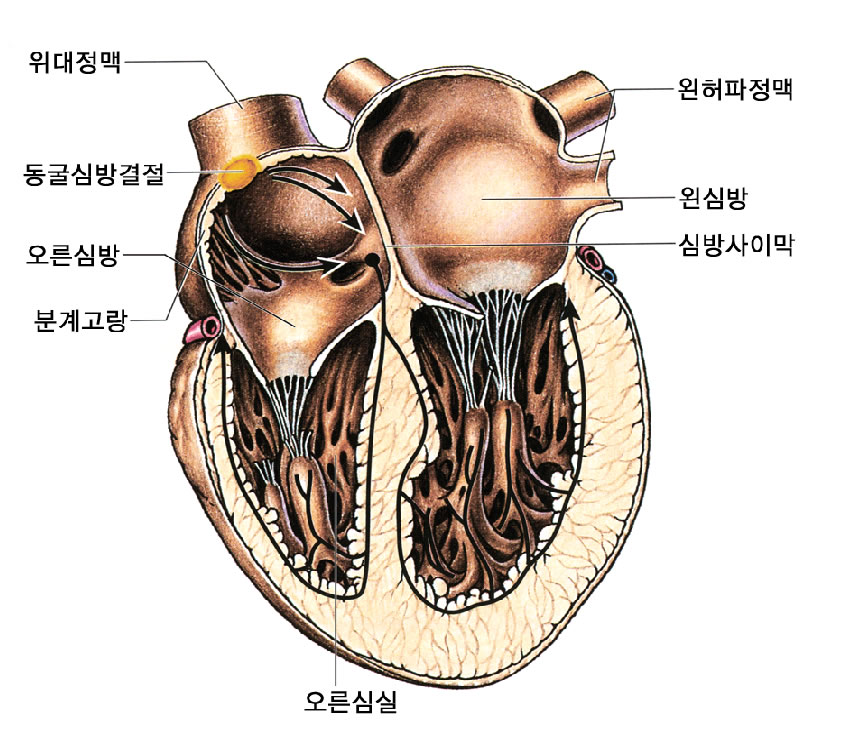 |
||
| 영문 | pacemaker(of heart) | 한글 | 심장박동기 |
|---|---|---|---|
| 설명 | 심장의 전기적 자극이 병적인 상태로 발생하지 않거나, 혹은 심실로 잘 전해지지 않을 때 사용한다. 일시적 심장박동기와 영구적 심장박동기가 있으며, 각기 쓰이는 용도는 병에 따라 다르다. 요즘에 나오는 심장 박동기는 건전지의 수명도 반영구적이며, 밖에서 조정할 수 있고, 운동이나 스트레스 상황에 대한 심장의 빠른 운동에도 잘 적응할 수 있도록 만들어져 있다. |
||
| 영문 | heart disease | 한글 | 심장병 |
|---|---|---|---|
| 설명 | 순환기 질환 중 심장의 병. 일반적으로 심장혈관이나 심장의 병도 포함된다. 병터의 부위에 의한 병리해부학적 분류와 병인에 의한 분류가 있다. 전자는 수 십 년 전부터 쓰여져 왔으나 근년에 와서 본질적인 원인요법이 가능하게 된 이후는 후자의 분류가 의의가 있어서 많이 쓰이게 되었다. 병터 부위로는 심내막(판막)-심장근-심장막, 그 밖의 것을 들 수 있으며, 각각 심내막염-심장판막증-심근염-심근경색-심장막염-선천성 심장병(심장기형) 등이포함된다. 병인별에서는 심장기형을 비롯하여 류마치스 심장병-매독성 심장병-고혈압성 심장병-심장동맥경화성 심장병-폐성심장-세균성 심내막염-심장신경증 등으로 나누어지며, 부정맥이나 방실차단 등의 자극전도계의 장애에 의한 것도 증세의 하나로 볼 수 있다. 심장병은 자각적으로는 무증세인 것에서부터 심장기능상실로 호흡곤란까지 있다. |
||
| 영문 | septal defects of heart | 한글 | 심장의 중격 결손 |
|---|---|---|---|
| 설명 | 선천적으로 심장 내의 심방사이중격(interatrial septum)이나 심실사이중격(interventricular septum)이 결손되어 혈류가 정상적으로 흐르지 않는 경우. 정상적인 경우 혈류는 정맥에서 우심방으로 모여 우심실을 거친뒤 폐로 가서 산소를 공급받고 다시 왼심방, 왼심실을 차례로 거쳐 대동맥으로 간다. 하지만, 이 경우는 혈류가 압력이 높은 왼심방이나 왼심실에서 압력이 낮은 우심방이나 우심실로 흐르게 된다. 따라서 동맥피와 정맥피가 섞이게 되고, 환자는 호흡곤란, 성장발육장애, 심잡음 등이 나타나고, 심한 경우 청색증으로 발전하기도 한다. 치료는 수술적으로 이 결손부위를 막아 주어야 한다. |
||
| LVF | left ventricular failure; left ventricular function; left visual field; low-voltage fast; low-voltag... |
|---|---|
| LF | labile factor; lactoferrin; laryngofissure; Lassa fever; latex fixation; left foot; left forearm; le... |
| LFD | lactose-free diet; large for date [fetus]; late fetal death; lateral facial dysplasia; least fatal d... |
| LFT | latex fixation test; latex flocculation test; left fronto-transverse [fetal position]; liver functio... |
| BAO | basal acid output; brachial artery output |
| stroke output | <physiology> The amount of blood pumped out of one ventricle of the heart as the result of a single contraction. A measure of the effectiveness of ventricular contraction. (16 Dec 1997) |
|---|---|
| output | 1. The amount of coal or ore put out from one or more mines, or the quantity of material produced by, or turned out from, one or more furnaces or mills, in a given time. 2. <physiology> That which is thrown out as products of the metabolic activity of the body; the egesta other than the faeces. See Income. The output consists of: (a) The respiratory products of the lungs, skin, and alimentary canal, consisting chiefly of carbonic acid and water with small quantities of hydrogen and carbureted hydrogen. (b) Perspiration, consisting chiefly of water and salts. (c) The urine, which is assumed to contain all the nitrogen truly excreted by the body, besides a large quantity of saline matters and water. Source: Websters Dictionary (01 Mar 1998) |
| environmental output | Environmental outputs are the desired or anticipated measurable products or results of restoration measures and plans. (09 Oct 1997) |
| acute kidney failure | <nephrology> A sudden decline in renal function may be triggered by a number of acute disease processes. Examples include sepsis (infection), shock, trauma, kidney stones, kidney infection, drug toxicity (aspirin or lithium), poisons or toxins (drug abuse) or after injection with an iodinated contrast dye (adverse effect). Chronic renal failure represents a slow decline in kidney function over time. Chronic renal failure may be caused by a number of disorders which include long-standing hypertension, diabetes, congestive heart failure, lupus or sickle cell anaemia. Both forms of renal failure result in a life-threatening metabolic derangement. (27 Sep 1997) |
| acute renal failure | <nephrology> A sudden decline in renal function may be triggered by a number of acute disease processes. Examples include sepsis (infection), shock, trauma, kidney stones, kidney infection, drug toxicity (aspirin or lithium), poisons or toxins (drug abuse) or after injection with an iodinated contrast dye (adverse effect). Chronic renal failure represents a slow decline in kidney function over time. Chronic renal failure may be caused by a number of disorders which include long-standing hypertension, diabetes, congestive heart failure, lupus or sickle cell anaemia. Both forms of renal failure result in a life-threatening metabolic derangement. (27 Sep 1997) |
| acute respiratory failure | Loss of pulmonary function either acute or chronic that results in hypoxaemia or hypercarbia. (05 Mar 2000) |
| cardiac failure | A condition where there is ineffective pumping of the heart leading to an accumulation of fluid in the lungs. Typical symptoms include shortness of breath with exertion, difficulty breathing when lying flat and leg or ankle swelling. Causes include chronic hypertension, cardiomyopathy and myocardial infarction. (27 Sep 1997) |
| pacemaker failure | Failure of an artificial pacemaker to generate or deliver effective stimuli to the myocardium. (05 Mar 2000) |
| renal failure | Chronic renal failure represents a slow decline in kidney function over time. Chronic renal failure may be caused by a number of disorders which include long-standing hypertension, diabetes, congestive heart failure, lupus or sickle cell anaemia. If renal function declines to a low enough level (end-stage renal disease) kidney dialysis may be necessary. A sudden decline in renal function may be triggered by a number of acute disease processes. Examples include sepsis (infection), shock, trauma, kidney stones, kidney infection, drug toxicity (aspirin or lithium), poisons or toxins (drug abuse) or after injection with an iodinated contrast dye (adverse effect). Both forms of renal failure result in a life-threatening metabolic derangement. (27 Sep 1997) |
| respiratory failure | A clinical syndrome that is defined either by the inability to rid the body of C02 or establish an adequate blood oxygen level (PAO2). See: arterial blood gas. (27 Sep 1997) |
| right ventricular failure | An weakening of the right ventricle that results in the back up of blood in the venous system, liver, gastrointestinal tract and extremities. The causes of this condition include left-sided congestive heart failure, emphysema, valvular heart disease, cardiomyopathy, anaemia, hyperthyroidism, cor pulmonale and congenital heart disease. Risk factors include diabetes, alcoholism, obesity and smoking. Symptoms include swelling of the feet and ankles, nocturia, increased distention of neck veins, fatigue, weakness and fainting, Ascites, arrhythmias and pleural effusions are complications of right ventricular failure. (27 Sep 1997) |
| chronic kidney failure | Chronic renal failure represents a slow decline in kidney function over time. Chronic renal failure may be caused by a number of disorders which include long-standing hypertension, diabetes, congestive heart failure, lupus or sickle cell anaemia. If renal function declines to a low enough level (end-stage renal disease) kidney dialysis may be necessary. A sudden decline in renal function may be triggered by a number of acute disease processes. Examples include sepsis (infection), shock, trauma, kidney stones, kidney infection, drug toxicity (aspirin or lithium), poisons or toxins (drug abuse) or after injection with an iodinated contrast dye (adverse effect). Both forms of renal failure result in a life-threatening metabolic derangement. (27 Sep 1997) |
| chronic renal failure | <nephrology> Chronic renal failure represents a slow decline in kidney function over time. Chronic renal failure may be caused by a number of disorders which include long-standing hypertension, diabetes, congestive heart failure, lupus or sickle cell anaemia. If renal function declines to a low enough level (end-stage renal disease) kidney dialysis may be necessary. A sudden decline in renal function may be triggered by a number of acute disease processes. Examples include sepsis (infection), shock, trauma, kidney stones, kidney infection, drug toxicity (aspirin or lithium), poisons or toxins (drug abuse) or after injection with an iodinated contrast dye (adverse effect). Both forms of renal failure result in a life-threatening metabolic derangement. (27 Sep 1997) |
| multiple organ failure | A progressive condition usually characterised by combined failure of the lungs, liver, kidney, and clotting mechanisms, usually postinjury or postoperative. (12 Dec 1998) |
| coronary failure | Acute coronary insufficiency. (05 Mar 2000) |