
| 영문 | spinal cord | 한글 | 척수 |
|---|---|---|---|
| 설명 | 척추내에 위치하는 중추신경계의 일부분. 위에서부터 목척수, 등척수, 허리척수, 엉치척수로 구분됨. 내부는 바깥쪽의 백색질과 안쪽의 회색질로 구분된다. 척수의 아래끝은 척수 원뿔이라 하며 첫번째 허리뼈 높이까지 내려온다. 뇌와 말초신경사이의 신경 통로 역할을 하며 척수반사(예: 무릎반사)에서는 뇌를 통하지 않고 반사의 중추 작용을 한다. 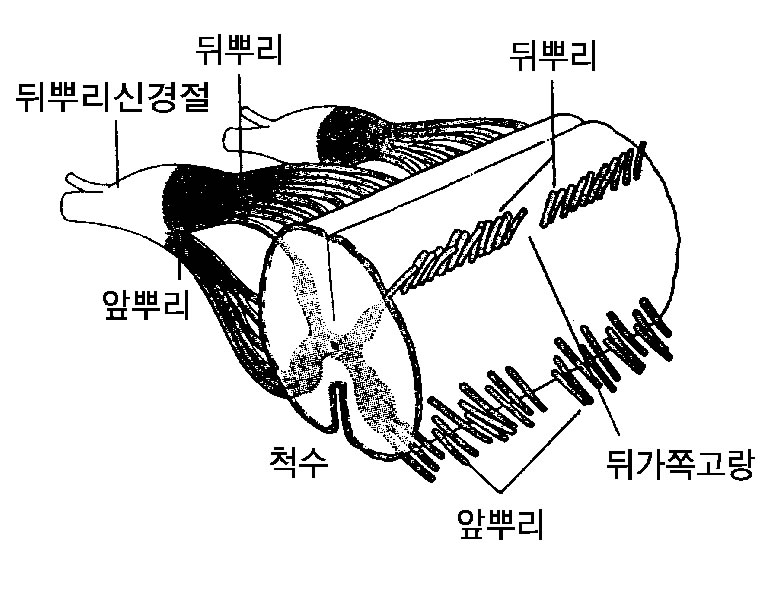 |
||
| 영문 | umbilical cord | 한글 | 탯줄, 제대 |
|---|---|---|---|
| 설명 | 태아의 배꼽을 태반과 연결시키는 유일한 구조로 2개의 탯줄동맥과 1개의 탯줄정맥이 지나간다. 신생아때에는 길이가 약 50cm이다. 태생기 발생 약 5주경에 요막경(allantoic diverticulum, body stalk)으로부터 형성되며 배꼽창자관(vitello- intestinal duct) 및 요막(allantoic membrane)을 포함하고 있다. 약 1%에서 제대동맥이 하나뿐인 경우가 있는데 이때에는 선천성기형의 동반률이 증가한다. |
||
| HCPCS | Health Care Financing Administration common procedural collecting system; Health Care Financing Admi... |
|---|---|
| AFP | Alpha(α) Feto-Protein [HP 1826, 1858, 1859, 2265] ; Oncofetal Antigens &nbs... |
| CT | calcitonin; calf testis; cardiac tamponade; cardiothoracic [ratio]; carotid tracing; carpal tunnel; ... |
| FTS | family tracking system; feminizing testis syndrome; fetal tobacco syndrome; fissured tongue syndrome... |
| NSGCTT | nonseminomatous germ-cell tumor of the testis |
| external spermatic artery | <anatomy, artery> Origin, inferior epigastric; distribution, coverings of spermatic cord; anastomoses, external pudendal, spermatic, and perineal arteria. Synonym: arteria cremasterica, external spermatic artery. (05 Mar 2000) |
|---|---|
| external spermatic fascia | The outer fascial covering of the spermatic cord; it is continuous at the superficial inguinal ring with the fascia covering the external oblique muscle. See: aponeurosis of external abdominal oblique muscle. Synonym: fascia spermatica externa. (05 Mar 2000) |
| external spermatic nerve | <anatomy, nerve> Branch of genitofemoral nerve distributed to skin of anterior scrotum (male) or labia majora (female) and adjacent thigh and supplying a motor branch to the cremaster muscle. Usually passes through deep inguinal ring and canal. Synonym: ramus genitalis nervi genitofemoralis, external spermatic nerve, nervus spermaticus externus. (05 Mar 2000) |
| carotid artery, common | The two principal arteries supplying the structures of the head and neck. They ascend in the neck, one on each side, and at the level of the upper border of the thyroid cartilage, each divides into two branches, the external (carotid artery, external) and internal (carotid artery, internal) carotid arteries. (12 Dec 1998) |
| migraine, common | Migraine without aura. The most frequent type, accounting for about 80-85% of migraines. See migraine. (12 Dec 1998) |
| cold, common | A viral upper respiratory tract infection. A contagious illness caused by a number of different types of viruses. Because of the great number of viruses that can cause a cold, the body never builds up resistance (immune) against all of them. For this reason, colds are a frequent and recurring problem. In fact, preschool children average 9 colds a year; those in kindergarten, 12 colds a year; and adolescents and adults, 7 colds per year. Going out into the cold weather has no effect on the spread of a cold. Antibiotics do not help the common cold. (12 Dec 1998) |
| common acute lymphoblastic leukaemia | <haematology, oncology> A sub-type of acute lymphoblastic leukaemia affecting cells early in the B lymphocyte lineage which accounts for about 80% of all acute lymphoblastic leukaemia. Origin: Gr. Haima = blood (13 Nov 1997) |
| common antigen | Cross reacting antigen (epitope), a common antigen that occurs in 2 or more different molecules/organisms. Synonym: heterogenic enterobacterial antigen. (05 Mar 2000) |
| common baldness | Hair loss in women that may be associated with aging, hormones (androgens) or genetic predisposition. The pattern of baldness in women is different from that of men. In women there is thinning of the hair all over the scalp, but the frontal hairline is maintained. The hair loss is usually permanent. Treatment has been successful with topical minoxidil in some cases. (27 Sep 1997) |
| common basal vein | <anatomy, vein> The tributary to the inferior pulmonary vein (right and left) that receives blood from the superior and inferior basal veins. Synonym: vena basalis communis. (05 Mar 2000) |
| common bile duct | <anatomy> A duct that carries bile from the liver and gallbladder to the duodenum (first part of the small intestine). (27 Sep 1997) |
| common bile duct calculi | The presence of gallstones in the common bile duct. It is usually the result of passage of gallstones formed in the gallbladder into the common duct. Less commonly, stones form in a duct behind an obstruction caused by a stricture or ampullary stenosis. Stone type helps to determine site of origin: cholesterol or black pigment stones more likely form in the gallbladder, while almost all brown pigment stones in patients from western countries form in the bile ducts. (12 Dec 1998) |
| common bile duct diseases | Diseases of the common bile duct, vater's ampulla, or oddi's sphincter. (12 Dec 1998) |
| common bile duct neoplasms | Neoplasms of the common bile duct including vater's ampulla and oddi's sphincter. (12 Dec 1998) |
| common carotid artery | <anatomy, artery> Origin, right from brachiocephalic, left from arch of aorta; runs upward in the neck and divides opposite upper border of thyroid cartilage (C-4 vertebral level) into terminal branches, external and internal carotid. Synonym: arteria carotis communis. (05 Mar 2000) |