¼±Åà - È­»ìǥŰ/¿£ÅÍŰ ´Ý±â - ESC

 
"cell surface receptor"¿¡ ´ëÇÑ °Ë»ö °á°úÀÔ´Ï´Ù. °Ë»ö °á°ú º¸´Â µµÁß¿¡ Tab ۸¦ ´©¸£½Ã¸é °Ë»ö âÀÌ ¼±Åõ˴ϴÙ.
À̰ÍÀ» ¿øÇϼ̽À´Ï±î?
¾Ë±â½¬¿î ÀÇÇпë¾îÇ®ÀÌÁý, ¼­¿ïÀÇ´ë ±³¼ö ÁöÁ¦±Ù, °í·ÁÀÇÇÐ ÃâÆÇ À¯»ç °Ë»ö °á°ú : 5 ÆäÀÌÁö: 2
¿µ¹® cell ÇÑ±Û ¼¼Æ÷
¼³¸í   
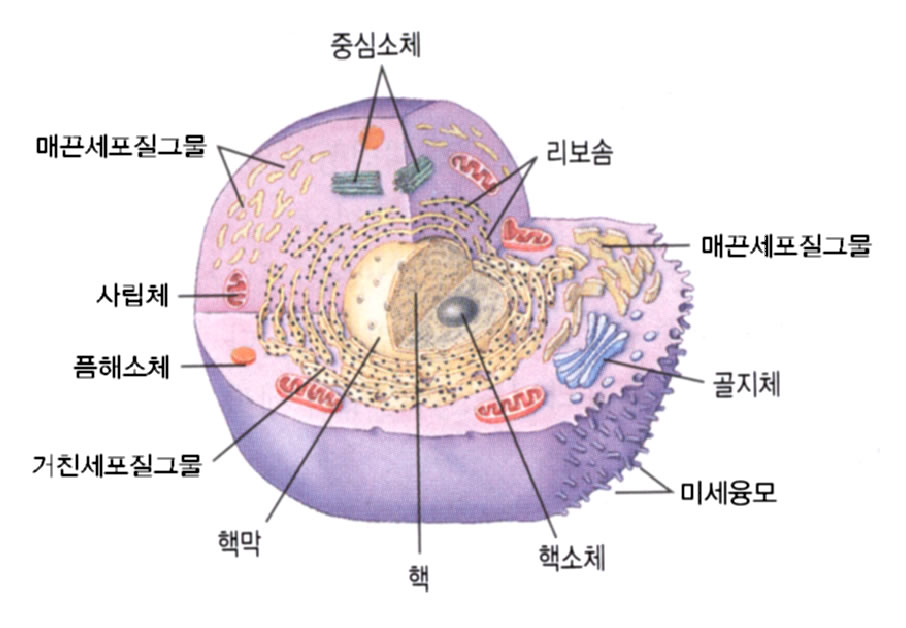
  »ý¸íü¸¦ ÀÌ·ç´Â ±¸Á¶Àû, ±â´ÉÀû ´ÜÀ§.
  
  ÇÙÀÇ À¯¹«¿¡ µû¶ó¼­ À¯ÇÙ¼¼Æ÷¿Í ¹«ÇÙ¼¼Æ÷·Î ³ª´­ ¼ö°¡ ÀÖ´Ù. ¹«ÇÙ¼¼Æ÷¶õ ÇÙÀÌ ¾ø´Â ¼¼Æ÷¸¦ ¸»ÇÑ´Ù. ÇÙÀ̶õ À¯ÀüÁ¤º¸¸¦ °¡Áö°í Àִ ¿°»öü¸¦ º¸°üÇϴ °÷Àε¥ ¹«ÇÙ¼¼Æ÷¿¡¼­´Â ¿°»öü°¡ ¼¼Æ÷¼Ó¿¡ ±×³É ³ëÃâµÇ¾î ÀÖ´Ù. ´ë°³ ¼¼Æ÷ ÇϳªÇϳª°¡ µ¶¸³µÈ »ý¸íüÀÇ ¿ªÇÒÀ» Çϴ ´Ü¼¼Æ÷»ý¹°·Î¼­ ¿ÜºÎȯ°æÀ¸·ÎºÎÅÍ ÀÚ½ÅÀ» º¸È£ÇÒ ¼ö Àִ °ß°íÇÑ ¼¼Æ÷º®À» °¡Áö°í ÀÖ´Ù. À¯ÇÙ¼¼Æ÷¶õ ÇÙÀ» °¡Áö°í À־ À¯ÀüÁ¤º¸°¡ Àִ ¿°»öü°¡ ¼¼Æ÷ÀÇ ´Ù¸¥ ºÎºÐ°ú ±¸ºÐµÇ¾î ÇÙ¼Ó¿¡ µé¾îÀÖ´Ù. ¼¼Æ÷¼Ó¿¡¼­ ÇÙ¿ÜÀÇ ºÎºÐ(À̸¦ ¼¼Æ÷ÁúÀ̶ó ÇÑ´Ù)¿¡´Â ¿©·¯ °¡Áö ¼¼Æ÷ÀÇ ¼Ò±â°üÀÌ À־ ¼¼Æ÷ÀÇ ´Ù¾çÇÑ ±â´ÉÀ» ºÐ´ãÇÑ´Ù.
  
  ¢ÂÀ¯ÇÙ¼¼Æ÷ÀÇ ±âº» ±¸Á¶
  
  1.¼¼Æ÷¸·-¼¼Æ÷¸¦ µÑ·¯½Î¼­ ÁÖÀ§È¯°æ°ú ºÐ¸®ÇÏ¿© ¼¼Æ÷ÀÇ ³»È¯°æÀ» À¯ÁöÇÑ´Ù.
  
  2.ÇüÁú³»¼¼¸Á(endoplasmic reticulum)-´ÜÀ§¸·À¸·Î µÑ·¯½×¿© Àִ ºÒ±ÔÄ¢ÇÑ ¸Á»ó±¸Á¶ÀÌ´Ù. ÀÌ ¸Á»ó±¸Á¶ÀÇ ³»ºÎ¸¦ ¼Ò°­, ¼ÒÁ¶¶ó°í ºÎ¸¥´Ù. ¿©±â¿¡´Â Ç¥¸éÀÌ ¸Å²öÇÑ ¹«°ú¸³ÇüÁú³»¼¼¸Á°ú Ç¥¸éÀÌ ºÒ±ÔÄ¢ÇÑ °ú¸³ÇüÁú³»¼¼¸ÁÀÇ µÎ °¡Áö°¡ ÀÖ´Ù. °ú¸³ÇüÁú³»¼¼¸ÁÀÇ °æ¿ì´Â Ç¥¸é¿¡ ´Ü¹éÁúÀ» ÇÕ¼ºÇϴ ¸®º¸¼ØÀ̶ó´Â °ÍÀÌ ºÎÂøµÇ¾î ÀÖ´Ù. À̰÷Àº ÁַΠ¼¼Æ÷¹ÛÀ¸·Î ºÐºñÇÒ ´Ü¹éÁúÀ» ÇÕ¼ºÇϴ Àå¼ÒÀÌ´Ù. ¹«°ú¸³ÇüÁú³»¼¼¸ÁÀº Ç¥¸é¿¡ ¸®º¸¼ØÀÌ ºÎÂøµÇ¾î ÀÖÁö ¾ÊÀº °ÍÀ» ¸»Çϸç, À̰÷¿¡¼­´Â ÁÖ·Î ÇØµ¶ÀÛ¿ë, ±Û¸®ÄÚ°ÕÀÇ ÇÕ¼º, ½ºÅ×·ÎÀ̵åÈ£¸£¸óÀÇ ÇÕ¼º µîÀÌ ÀϾ´Ù.
  
  3.¸®º¸¼Ø-´Ü¹éÁúÀ» ÇÕ¼ºÇϴ ¿ªÇÒÀ» Çϴ °÷ÀÌ´Ù.À̰ÍÀº ¼¼Æ÷Áú¿¡ Á¸ÀçÇϴ ÀÚÀ¯¸®º¸¼Ø°ú °ú¸³ÇüÁú³»¼¼¸Á¿¡ ºÎÂøÀÌ µÇ¾î Á¸ÀçÇϴ ºÎÂø¸®º¸¼ØÀÇ µÎ °¡Áö·Î ³ª´«´Ù. ÀÚÀ¯¸®º¸¼ØÀº ÁַΠ¼¼Æ÷³»¿¡¼­ ÇÊ¿äÇÑ ´Ü¹éÁúÀ» ¸¸µå´Â ¿ªÇÒÀ» Ç졒ʼÎÂø¸®º¸¼ØÀº ¼¼Æ÷¹ÛÀ¸·Î ºÐºñÇÒ ´Ü¹éÁúÀ» ¸¸µå´Â ¿ªÇÒÀ» ÇÑ´Ù.
  
  4.°ñÁöÀåÄ¡(Golgi apparatus)-ÇÙÁÖÀ§¿¡ ºÐÆ÷Çϴ ³³ÀÛÇØÁø ÁָӴϸð¾çÀÇ °ÍÀÌ ÁßøµÇ¾î Çü¼ºµÈ ÃþÆÇ ¸ð¾çÀÇ ±¸Á¶¹°·Î °ú¸³ÇüÁú³»¼¼¸Á¿¡¼­ »ý¼ºµÇ¾î ¿ÜºÎ·Î ºÐºñµÉ ´Ü¹éÁúÀ» ¸ð¾Æ¼­ ³óÃà, Æ÷ÀåÇÏ¿© °ú¸³À» ¸¸µå´Â ¿ªÇÒÀ» ÇÑ´Ù.
  
  5.»ç¸³Ã¼(mitochondria)-±¸Çü, ³­ÇüÀÇ ±ä ¸·´ë±â ¸ð¾çÀ¸·Î Å©±â°¡ ´Ù¾çÇÑ ±¸Á¶¹°. »ý¹°Ã¼ÀÇ ¿¡³ÊÁö ÀúÀå¹°ÁúÀΠATP¸¦ »ý»êÇϴ ¿ªÇÒÀ» ÇÑ´Ù. ¶Ç ¼¼Æ÷¿Í ´Ù¸¥ ÀڽŸ¸ÀÇ À¯ÀüÁ¤º¸¸¦ °¡Áø DNA, RNA¸¦ °¡Áö°í ÀÖ´Ù. ¸ð¾ç, Å©±â°¡ ¼¼±Õ°ú ºñ½ÁÇϸç ÀÚüÁõ½Ä¼º µî µ¶¸³µÈ »ý¸íü·Î¼­ ÇÊ¿äÇÑ ¿ä°ÇÀ» °®Ãß°í À־ ¼¼Æ÷¿Í °ø»ý°ü°è¸¦ °¡Áø µ¶¸³µÈ ¼¼Æ÷·Î »ý°¢Çϰí ÀÖ´Ù.
  
  6.¿ëÇØ¼Òü(lysosome)-ÀÛÀº ±¸ÇüÀÇ ¼Òü·Î ¿©·¯ °¡Áö ºÐÇØÈ¿¼Ò¸¦ °¡Áø´Ù. ¼¼Æ÷¿Ü°è¿¡¼­ µé¾î¿Â ¹°Áú°ú °áÇÕÇÏ¿© ±× ¹°ÁúµéÀ» ¿ëÇØÇϴ ¿ªÇÒÀ» Çϰí, ¿À·¡µÈ ¼¼Æ÷¼Ò±â°üµéÀ» Á¦°ÅÇϴ ¿ªÇÒµµ ÇÑ´Ù.
  
  7.¼¼Æ÷ÇÙ(nucleus)-±¸Çü, ³­ÇüÀ¸·Î ¼¼Æ÷ÀÇ Á߽ɿ¡ À§Ä¡ÇÑ´Ù. ÇÙ³»¿¡´Â À¯ÀüÁ¤º¸°¡ Àִ ¹°ÁúÀΠ¿°»öü°¡ Á¸ÀçÇÑ´Ù.
  
  8.Á߽ɼÒü(centrosome)-ÇÙÁÖÀ§¿¡ Á¸ÀçÇϸ鼭 ÇÙÀÇ ºÐ¿­½Ã¿¡ ¾çÂÊÀÇ ¿°»öü¸¦ ´ç±â´Â ÀÛÀº ¼¶À¯¸¦ ¸¸µå´Â ¿ªÇÒÀ» Çϴ °÷.
  
  ¼¼Æ÷
¿µ¹® cell-mediated immunity ÇÑ±Û ¼¼Æ÷¸Å°³¸é¿ª
¼³¸í   
  ¸é¿ªÀ̶õ ½Åü¸¦ ¿ÜºÎÀÇ ¹°Áú·ÎºÎÅÍ º¸È£Çϴ ÇàÀ§¸¦ ¸»ÇÑ´Ù. ¿©±â¿¡´Â Æ¯ÀÌÀû ¸é¿ª°ú ºñƯÀÌÀû ¸é¿ªÀÇ µÎ °¡Áö°¡ ÀÖ´Ù.
  
  ºñƯÀÌÀû ¸é¿ªÀ̶óÇÔÀº Æ¯Á¤ÇÑ ¹°Áú¿¡ °ü°èÇϴ ¸é¿ªÀÌ ¾Æ´Ï¶ó Æ¯Á¤ ´ë»óÀÌ ¾øÀÌ ¸ðµç ¿ÜºÎ ¹°Ã¼¿¡ ÀÛ¿ëÇÒ ¼ö Àִ ¸é¿ªÀ» ¸»ÇÑ´Ù. ¿©±â¿¡´Â ¼Òº¯ÀÇ È帧, ´«¹°ÀÇ È帧, ÇǺÎÀÇ ºñÅõ°ú¼º µîÀÇ ±â°èÀûÀΠ°Íµµ Æ÷ÇԵǰí ÇǼӿ¡ µ¹¾Æ´Ù´Ï´Â ¼¼Æ÷ Áß¿¡¼­ ºñƯÀÌÀûÀ¸·Î ¿ÜºÎÀÇ ¹°ÁúÀ» Æ÷½ÄÇϴ ¼¼Æ÷µé(¿¹¸¦ µé¸é Å«Æ÷½Ä¼¼Æ÷(macrophage)ÀǠȰµ¿µµ Æ÷ÇÔÀÌ µÈ´Ù. ¼¼Æ÷¸Å°³¸é¿ªÀ̶õ Æ¯ÀÌÇÑ ¹°ÁúÀ» °¨ÁöÇÒ ¼ö Àִ ¼¼Æ÷¸¦ »ý¼ºÇϰԠÇÏ¿© ±×°ÍÀ¸·Î ÇÏ¿©±Ý ±× ¹°ÁúÀ» Æ÷½ÄÇϰԠÇϴ °ÍÀ» ¸»ÇÑ´Ù.
¿µ¹® nerve cell ÇÑ±Û ½Å°æ¼¼Æ÷
¼³¸í   
  ½Å°æ¼¼Æ÷´Â ¿Ã¹Ù¸¥ ½Å°æÀü´ÞÀ» À§ÇÑ °¢ ºÎºÐº°·Î ³ª´µ¾îÁ® ÀÖ´Ù. ½Å°æ¼¼Æ÷¿¡¼­´Â ÀüÇØÁ®¿À´Â ÀÚ±ØÀ» Àü±âÀûÀΠ½ÅÈ£·Î ¹Ù²î¾î º¸³»°Å³ª ¹Þ°Ô µÈ´Ù. ÀÌ·± Àü±âÀûÀΠÇö»óÀº °¢ ½Å°æ¼¼Æ÷³»¿¡ Á¸ÀçÇϴ °¢ ÀÌ¿Âä³Î(ion channel: ionÀ̶õ ³ªÆ®·ý, Ä®·ý µîÀ» ÁöĪÇϴ ¸»µé·Î½á, À̵éÀÌ ¼¼Æ÷¸·¿¡ ÀÇÇØ ³ª´µ¾îÁú ¶§ »ý±â´Â Àü¾ÐÂ÷°¡ Àü±âÀû ÀÚ±ØÀ» ÀÏÀ¸Å°°í À¯ÁöÇϴµ¥ °áÁ¤ÀûÀΠ¿ªÇÒÀ» ÇÑ´Ù)µéÀÇ ÀÛ¿ë¿¡ ÀÇÇØ ÀÌ·ç¾îÁö°Ô µÈ´Ù.
¿µ¹® glia cell ÇÑ±Û ¾Æ±³¼¼Æ÷
¼³¸í   
  ½Å°æ¼¼Æ÷ »çÀÌ¿¡¼­ ±×¹°±¸Á¶¸¦ ÀÌ·ç¸ç À̸¦ ÁöÁöÇϴ Á¶Á÷. ½Å°æ¾Æ±³¼¼Æ÷´Â ½Å°æ¸ð¼¼Æ÷¿Í °¥¶óÁø ¾Æ±³¸ð¼¼Æ÷°¡ ´Ù½Ã ¿©·¯ ÇüÅ·ΠºÐÈ­-¼ºÀåÇÑ °ÍÀÌ´Ù. ³ú½ÇÀ̳ª Ã´¼öÁ߽ɰüÀÇ º®À» µ¤°í ¿øÁÖ»ó ¶Ç´Â ÀÔ¹æÇüÀ̸ç, Ãʱ⿡´Â À¯¸®¸é¿¡ ¼¶¸ð°¡ ÀÖ´Ù. ´ëÇü¼¼Æ÷´Â º°³ú½Ç¸·¼¼Æ÷´Â ¾Æ±³¼¼Æ÷¶ó°í Çϸç, ½Å°æ¼¼Æ÷³ª ½Å°æ¼¶À¯ »çÀÌ¿¡ »êÀçÇÑ´Ù. ±× ¿Ü¿¡ Èñ¼Òµ¹±â¾Æ±³¼¼Æ÷µµ Æ÷ÇԵȴÙ.
¿µ¹® reserve cell ÇÑ±Û ¿¹ºñ¼¼Æ÷
¼³¸í   
  ÀϹÝÀûÀ¸·Î »óÇÇÁ¶Á÷¿¡¼­ À̹̠ÀÖ´ø »óÇǼ¼Æ÷°¡ ¼Õ»óÀ» ¹Þ¾Æ »ç¸êÇϸ頸ŲãÁö´Â ±× ¹Ø¿¡ Àִ ¹ÌºÐÈ­¼¼Æ÷ ¿¹¸¦ µé¸é, ±â°üÁö ³»Ç¥¸éÀ» µ¤´Â ÁßÃþ ¿øÁÖ »óÇÇÀÇ ±âÀú¿¡ Àִ ÀÛÀº ¹ÌºÐÈ­ »óÇÇ ¼¼Æ÷.
´ëÇÑÀÇÇù ÀÇÇпë¾î »çÀü °Ë»ö À¯»ç °Ë»ö °á°ú : 15 ÆäÀÌÁö: 2
  • ¿µ¹®
    ÇѱÛ
  • proximate surface
    ÀÎÁ¢¸é
  • quadratic surface
    ÀÌÂ÷°î¸é
  • root surface cavity
    Ä¡¾Æ»Ñ¸®¸é°ø°£
  • source-surface distance
    ¿øÃµÇ¥¸é»çÀ̰Ÿ®, ¿øÃµÇ¥¸é°£°Å¸®
  • surface
    1. Ç¥¸é 2. ¸é
  • surface anesthesia
    Ç¥¸é¸¶Ãë
  • surface antigen
    Ç¥¸éÇ׿ø
  • surface area
    Ç¥¸éÀû
  • surface caries
    Ç¥¸é¿ì½Ä
  • surface catalysis
    Ç¥¸éÃ˸ÅÀÛ¿ë
  • surface characteristic
    Ç¥¸éƯ¼º
  • surface chemistry
    Ç¥¸éÈ­ÇÐ
  • surface coil
    Ç¥¸éÄÚÀÏ, Ç¥¸é°ËÃâ±â
  • surface coupling
    Ç¥¸é°áÇÕ
  • surface electrode
    Ç¥¸éÀü±Ø
´ëÇÑÀÇÇù Çʼö ÀÇÇпë¾îÁý »çÀü °Ë»ö À¯»ç °Ë»ö °á°ú : 15 ÆäÀÌÁö: 2
  • ¿µ¹®
    ÇѱÛ
  • lateral surface
    °¡Âʸé, ¿ÜÃø¸é
  • potential surface
    ÀüÀ§¸é
  • proximate surface
    ÀÎÁ¢¸é
  • surface tension
    Ç¥¸éÀå·Â
  • sickle cell anemia
    ³´ÀûÇ÷±¸ºóÇ÷
  • cell
    ¼¼Æ÷
  • accessory cell
    º¸Á¶¼¼Æ÷, µ¡¼¼Æ÷
  • acinar cell
    »ù²Ê¸®¼¼Æ÷
  • amacrine cell
    ¹«Ãà»è¼¼Æ÷
  • balloon cell
    dz¼±¼¼Æ÷
  • basal cell
    ¹Ù´Ú¼¼Æ÷, ±âÀú¼¼Æ÷
  • basal cell carcinoma
    ¹Ù´Ú¼¼Æ÷¾ÏÁ¾, ±âÀú¼¼Æ÷¾ÏÁ¾
  • basket cell
    ¹Ù±¸´Ï¼¼Æ÷
  • basophilic cell
    È£¿°±â¼¼Æ÷
  • beta cell
    º£Å¸¼¼Æ÷
¿¾ ´ëÇÑÀÇÇù ÀÇÇпë¾î »çÀü °Ë»ö À¯»ç °Ë»ö °á°ú : 15 ÆäÀÌÁö: 2
  • ¿µ¹®
    ÇѱÛ
  • surface catalysis
    Ç¥¸éÃ˸ÅÀÛ¿ë
  • surface characteristic
    Ç¥¸éƯ¼º
  • surface chemistry
    °è¸éÈ­ÇÐ
  • surface coil
    Ç¥¸éÄÚÀÏ, Ç¥¸é°ËÃâ±â
  • surface cooling
    Ç¥¸é³Ã°¢
  • surface coupling
    Ç¥¸é°áÇÕ
  • depth resolved surface coil spectroscopy
    ±íÀÌÇØ°áÇ¥¸éÄÚÀϺб¤¹ý
  • dorsal surface
    µîÂʸé, µÚ¸é
  • source-surface distance
    ¼±¿øÇ¥¸é°£°Å¸®
  • surface tension depressant
    Ç¥¸éÀå·ÂÀúÇÏÁ¦
  • surface-active disinfectant
    Ç¥¸éȰ¼º¼Òµ¶Á¦, °è¸éȰ¼º¼Òµ¶Á¦
  • exposed surface
    ³ëÃâ¸é
  • external surface
    ¹Ù±ù¸é
  • extraplasmic surface
    ÇüÁú¸·¹Ù±ù¸é
  • surface electrode
    Ç¥¸éÀü±Ø
¿¾ ´ëÇÑÀÇÇù 2 ÀÇÇпë¾î »çÀü °Ë»ö À¯»ç °Ë»ö °á°ú : 15 ÆäÀÌÁö: 2
  • ¿µ¹®
    ÇѱÛ
  • approximal surface
    Á¢Ã˸é
  • articular surface
    °üÀý ¸é(¡­Øü).
  • articular surface
    °üÀý¸é
  • articular surface for cuboid bone
    ÀÔ¹æ°üÀý¸é
  • articular surface for fibula
    Á¾¾Æ¸®°üÀý¸é
  • articular surface for navicular bone
    ¹ß¹è°üÀý¸é
  • articular surface of fibular head
    Á¾¾Æ¸®»À¸Ó¸®°üÀý¸é
  • articular surface of head of rib
    °¥ºñ»À¸Ó¸®°üÀý¸é
  • articular surface of tubercle
    °¥ºñ»À°áÀý°üÀý¸é
  • gastric surface
    À§¸é
  • glenoid surface
    °üÀý¿Í¸é(μï½èÀØü).
  • glenoid surface
    °üÀý¿Í ¸é(μï½èÀØü).
  • gluteal surface
    µÐºÎ±Ù¸é, µÐ±Ù¸é(ÔëÐÉØü).
  • gluteal surface
    º¼±â±Ù¸é
  • gluteal surface
    µÐ ¸é, µÐºÎ±Ù ¸é, µÐ±Ù ¸é(ÔëÐÉØü).
¿¾ ´ëÇÑÀÇÇù 3 ÀÇÇпë¾î »çÀü °Ë»ö À¯»ç °Ë»ö °á°ú : 15 ÆäÀÌÁö: 2
  • ¿µ¹®
    ÇѱÛ
  • antigen binding receptor
    Ç׿ø°áÇÕ¼ö¿ëü
  • antigen receptor
    Ç׿ø¼ö¿ëü.
  • benzodiazepine receptor agonists(s)
    º¥Á¶´ÙÀ̾ÆÁ¦ÇÉ ¼ö¿ëü ÀÛ¿ëÁ¦
  • benzodiazepine receptor antagonist(s)
    º¥Á¶´ÙÀ̾ÆÁ¦ÇÉ ¼ö¿ëü ±æÇ×Á¦
  • benzodiazepine receptor(s)
    º¥Á¶´ÙÀ̾ÆÁ¦ÇÉ ¼ö¿ëü
  • beta adrenergic receptor
    º£Å¸¾Æµå·¹³¯¸°¼º ¼ö¿ëü(¼ö¿ë±â, °¨¼öü)
  • beta receptor
    º£Å¸ ¼ö¿ëü(¼ö¿ë±â, °¨¼öü, °¨¼ö±â)
  • beta receptor blocker
    º£Å¸¼ö¿ëü Â÷´ÜÁ¦( -áôé»ô÷ ó´Ó¨ð¥)
  • beta receptor stimulating agent
    º£Å¸¼ö¿ëü ÀÚ±ØÁ¦( -áôé»ô÷ í©Ð½ð¥)
  • beta-ARK : beta-adrenergic receptor kinase
    º£Å¸-¾Æµå·¹³¯¸°(¼º)¼ö¿ëü ÀλêÈ­È¿¼Ò.
  • beta-adrenergic receptor
    º£Å¸ ¾Æµå·¹³¯¸°¼º ¼ö¿ëü
  • cardiac receptor
    ½ÉÀå¼ö¿ëü(ãýíôáôé»ô÷)
  • cholinergic receptor
    Äݸ°(ÀÛµ¿)¼º ¼ö¿ëü(¼ö¿ë±â, °¨¼ö±â)
  • cold receptor
    ³Ã°¢¼ö¿ëü(Ò²ÊÆáôé»ô÷)(¼ö¿ë±â, °¨¼ö±â)
  • complement receptor
    º¸Ã¼¼ö¿ëü
´ëÇÑÇØºÎÇÐȸ ÀÇÇпë¾î »çÀü °Ë»ö À¯»ç °Ë»ö °á°ú : 15 ÆäÀÌÁö: 2
  • ¿µ¹®
    ÇѱÛ
  • Supporting cell [Sertoli cell]
    ¹öÆÀ¼¼Æ÷
    [¿¾ ¿ë¾î] ÁöÁÖ¼¼Æ÷
  • Supporting cell [Type II glomus cell]
    ¹öÆÀ¼¼Æ÷
    [¿¾ ¿ë¾î] ÁöÁö¼¼Æ÷
  • Supporting cell [Type II glomus cell]
    ¹öÆÀ¼¼Æ÷
    [¿¾ ¿ë¾î] ÁöÁö¼¼Æ÷(Á¦2Çü»ç±¸¼¼Æ÷)
  • Diaphragmatic surface
    °¡·Î¸·¸é
    [¿¾ ¿ë¾î] Ⱦ°Ý¸é
  • Lateral surface
    °¡Âʸé
    [¿¾ ¿ë¾î] ¿ÜÃø¸é
  • Lateral surface
    °¡Âʸé
    [¿¾ ¿ë¾î] ¿ÜÃø¿¬
  • Malleolar articular surface
    °¡Âʺ¹»ç°üÀý¸é
    [¿¾ ¿ë¾î] ¿Ü°ú°üÀý¸é
  • Lateral malleolar surface
    °¡Âʺ¹»ç¸é
    [¿¾ ¿ë¾î] ¿Ü°ú¸é
  • Costal surface
    °¥ºñ¸é
    [¿¾ ¿ë¾î] ´Á°ñ¸é
  • Articular surface of tubercle
    °¥ºñ»À°áÀý°üÀý¸é
    [¿¾ ¿ë¾î] ´Á°ñ°áÀý°üÀý¸é
  • Articular surface of head of rib
    °¥ºñ»À¸Ó¸®°üÀý¸é
    [¿¾ ¿ë¾î] ´Á°ñµÎ°üÀý¸é
  • Pelvic surface
    °ñ¹Ý¸é
    [¿¾ ¿ë¾î] Àü¸é
  • Temporal surface
    °üÀÚ¸é
    [¿¾ ¿ë¾î] ÃøµÎ¸é
  • Infratemporal surface
    °üÀھƷ¡¸é
    [¿¾ ¿ë¾î] ÃøµÎÇϸé
  • Articular surface
    °üÀý¸é
    [¿¾ ¿ë¾î] °üÀý¸é
´ëÇÑ»ýÈ­ÇкÐÀÚ»ý¹°ÇÐȸ ¿ë¾î »çÀü °Ë»ö À¯»ç °Ë»ö °á°ú : 15 ÆäÀÌÁö: 2
  • ¿µ¹®
    ÇѱÛ
  • adrenergic receptor
    ¾Æµå·¹³¯¸°ÀÛµ¿(íÂÔÑ) ¼ö¿ëü(áôé»ô÷)
  • alpha adrenergic receptor
    ¾ËÆÄ¾Æµå·¹³ª¸°ÀÛµ¿¼º(íÂÔÑàõ) ¼ö¿ëü(áôé»ô÷)
  • alpha receptor
    ¾ËÆÄ¼ö¿ëü(áôé»ô÷)
  • beta adrenergic receptor
    º£Å¸ ¾Æµå·¹³¯¸° ¼ö¿ëü(áôé»ô÷)
  • beta receptor
    º£Å¸ ¼ö¿ëü(áôé»ô÷)
  • cyclic AMP receptor protein
    °í¸®AMP ¼ö¿ëü ´Ü¹éÁú(áôé»ô÷Ó±ÛÜòõ)
  • dopamine adrenergic receptor
    "µµÆÄ¹Î ¾Æµå·¹³¯¸°ÀÛµ¿¼º(íÂÔÑàõ) ¼ö¿ëü(áôé»ô÷), (ÔÒ) adrenergic receptor"
  • Ehrlich's receptor theory
    ¿¡¸¦¸®È÷ ¼ö¿ëüÀÌ·Ð(áôé»ô÷×âÖå)
  • Fc receptor
    Fc ¼ö¿ëü(áôé»ô÷)
  • floating receptor model
    ºÎÀ¯ ¼ö¿ëü(Ý©ë´áôé»ô÷) ¸ðµ¨
  • glucocorticoid receptor
    ±Û·çÄÚÄÚ¸£Æ¼ÄÚÀÌµå ¼ö¿ëü(áôé»ô÷)
  • H1 receptor
    H1 ¼ö¿ëü(áôé»ô÷)
  • H2 receptor
    H2 ¼ö¿ëü(áôé»ô÷)
  • LDL receptor
    LDL ¼ö¿ëü(áôé»ô÷)
  • ligand-receptor internalization
    ¸®°£µå-¼ö¿ëü(áôé»ô÷) ³»ÀÔ(Ò®ìý)
KI ÀÇÇпë¾î »çÀü °Ë»ö À¯»ç °Ë»ö °á°ú : 15 ÆäÀÌÁö: 2
  • ¿µ¹®
    ÇѱÛ
  • ventromedial surface
    ³»ÃøÀü¸é, º¹³»Ãø
  • wound surface
    â¸é
  • acinar cell
    Æ÷»ó¼¼Æ÷
  • air cell
    ÇԱ⵿
  • alveolar cell carcinoma
    ÆóÆ÷¼¼Æ÷¾ÏÁ¾
  • basal cell carcinoma
    ±âÀú¼¼Æ÷¾ÏÁ¾
  • blast cell
    ¸ð¼¼Æ÷
  • blood cell
    Ç÷±¸
  • cell
    ¼¼Æ÷, ¹úÁý, ºÀ¼Ò, °ÇÀüÁö
  • chromaffin cell
    Å©·Òģȭ¼¼Æ÷
  • clear cell
    Åõ¸í ¼¼Æ÷
  • columnar cell
    ¿øÁÖ¼¼Æ÷
  • cuboidal cell
    ÀԹ漼Æ÷
  • daughter cell
    µþ¼¼Æ÷, ³¶¼¼Æ÷
  • dendrite cell
    ³ª¹«°¡Áö¼¼Æ÷, ¼ö»ó¼¼Æ÷
KMLE ÀÇÇоà¾î »çÀü À¯»ç °Ë»ö °á°ú : 5 ÆäÀÌÁö: 2
ER efficiency ratio; epigastric region; ejection rate; electroresection; emergency room; endoplasmic re...
RAR rapidly adapting receptor; rat insulin receptor; retinoic acid receptor; right arm reclining; right ...
ESA Electrolysis Society of America; endocardial surface area; epidermal surface antigen; esterase; este...
SSD shaded surface display; single saturating dose; Social Security disability; source-skin distance; so...
RCC radiological control center; rape crisis center; ratio of cost to charges; receptor-chemoeffector co...
KMLE ÀÚµ¿ÃßÃâ ÀÇÇоà¾î »çÀü À¯»ç °Ë»ö °á°ú : 5 ÆäÀÌÁö: 2
anti HBs Antibody to hepatitis B surface antigen
BSPM body surface potential map
BSPM Body surface potential mapping
ESD Entrance surface dose
HBs Ag HB surface antigen
°æºÏ´ë Ä¡°ú´ëÇÐ ±¸°­³»°ú ±³½Ç »çÀü À¯»ç °Ë»ö °á°ú : 15 ÆäÀÌÁö: 2
  • ¿µ¹®
    ÇѱÛ
    ¼³¸í
  • Fc receptor
    Fc ¼ö¿ëü
    Ç×üÀÇ Fc ºÐÀý°ú °áÇÕÇÏ´Â ¼¼Æ÷ Ç¥¸é ¼ö¿ëüÀ̸ç B ¼¼Æ÷, macro
  • free receptor
    À¯¸® ¼ö¿ëü
  • image receptor
    »ó ¼ö¿ë±â
  • k receptor
    k ¼ö¿ë±â
  • kapa receptor
    Ä«ÆÄ ¼ö¿ëü
  • ligand receptor binding
    ¸®°£µå ¼ö¿ë±â °áÇÕ
  • multiple somatic receptor
    ´Ù¹ß¼º ü ¼ö¿ëü, ´Ù¹ß¼º ü ¼ö¿ë±â
  • opiate analgesia receptor
    ¾ÆÆí¼º ÁøÅë ¼ö¿ëü, ¾ÆÆí¼º ÁøÅë ¼ö¿ë±â
  • opiate receptor
    ¾ÆÆí ¼ö¿ëü, ¾ÆÆí ¼ö¿ë±â
    1. ¥ì : ¥ì1Àº µ¿Åë Á¶Àý ¾àÁ¦°¡ °áÇÕ, ¥ì2¿Í °áÇսô ȣÈíÀÌ ¾ïÁ¦µÈ´Ù. 2. ¥ê¿Í °áÇÕ ½Ã Â÷ºÐÇØÁø´Ù. 3. ¥ä : ¸ö¿¡¼­ »ý¼ºµÇ´Â ³»Àμº o
  • peripheral receptor
    ¸»ÃÊ ¼ö¿ëü, ¸»ÃÊ ¼ö¿ë±â
  • pressure receptor
    ¾Ð¼ö¿ë±â, ¾Ð·Â¼ö¿ëü
    µ¿ÀǾî=
  • receptor
    ¼ö¿ë±â, ¼ö¿ëü, °¨¼öü
    1. ¼¼Æ÷Áú ³» ¶Ç´Â ¼¼Æ÷ Ç¥¸é¿¡ Á¸ÀçÇÏ´Â ºÐÀÚ ±¸Á¶·Î¼­
  • receptor activation
    ¼ö¿ëü Ȱ¼ºÈ­, ¼ö¿ë±â Ȱ¼ºÈ­
  • receptor blocking agent
    ¼ö¿ëü Â÷´ÜÁ¦
  • receptor complex
    ¼ö¿ëü º¹ÇÕü, ¼ö¿ë±â º¹ÇÕü
CancerWEB ¿µ¿µ ÀÇÇлçÀü À¯»ç °Ë»ö °á°ú : 15 ÆäÀÌÁö: 2
amino acid receptor <biochemistry> Ligand gated ion channels with specific receptors for amino acid transmitters. An extended protein superfamily that also includes subunits of the nicotinic acetylcholine receptor.
(18 Nov 1997)
AMPA receptor <cell biology> Glutamate operated ion channel.
See: excitatory amino acid receptor channels.
(05 Feb 1998)
ANP receptor <molecular biology> Family of 3 receptors for atrial natriuretic peptide. ANP A and ANP B have intracellular guanylate cyclase and protein kinase like domains. ANP C, shares the extracellular ligand binding and transmembrane domains, but lacks the functional intracellular domains and is not thought to be involved in signal transduction.
(18 Nov 1997)
asialoglycoprotein receptor A surface receptor found in hepatocytes that binds galactose-terminal glycoproteins; thus, this receptor removes those proteins from circulation and they are in turn acted upon by hepatocyte lysosomes.
(05 Mar 2000)
auditory receptor cells Columnar cell's in the epithelium of the organ of Corti, having hairs (stereocilia) on their apical ends.
See: Corti's cells.
(05 Mar 2000)
beta-adrenergic receptor blocking agent A class of drugs that compete with beta-adrenergic agonists for available receptor sites; some compete for both b1 and b2 receptors (e.g., propranolol) while others are primarily either b1 (e.g., metoprolol) or b2 blockers; used in the treatment of a variety of cardiovascular diseases where beta-adrenergic blockade is desirable.
Synonym: beta-adrenergic receptor blocking agent, beta-adrenoreceptor antagonist, beta-blocker.
(05 Mar 2000)
beta-adrenergic receptor kinase <enzyme> Cyclic-AMP protein kinase which specifically phosphorylates the agonist-occupied form of beta-adrenergic receptor
Registry number: EC 2.7.1.-
Synonym: beta-ar kinase, beta-adrenergic receptor kinase 1, g-protein-coupled receptor kinase 2, grk2 (kinase), beta-adrenergic receptor kinase 2, beta-ar kinase 2
(26 Jun 1999)
cAMP receptor protein catabolite (gene) activator protein
GABA receptor <physiology> Ligand gated chloride ion channel forming receptor opened by gamma aminobutyric acid. Two distinct types: A and B.
A receptor: One of a family of neurotransmitter receptors with fast intrinsic ion channels that includes the glycine receptor and the nicotinic acetylcholine receptor. Distinct from another major receptor family, the muscarininc acetylcholine receptor and rhodopsin, with no intrinsic ion channel. The A receptor is specifically blocked by bicuculline. It consists of two pairs of protein chains forming an A2B2 complex, the A chains bind benzodiazepine and the B chains bind GABA. The 4 subunits are thought to form a tight group with the chloride channel in the middle. There is considerable similarity between the amino acid sequences of the receptor subunits and those of the nicotinic acetylcholine receptor suggesting that both receptors are derived from some evolutionary ancestor.
See: amino acid receptor superfamily.
B receptor: Brain receptor (80 kD) for the inhibitory neurotransmitter gamma amino butyric acid. Differs from the A receptor both in agonist specificity (baclofen is a specific agonist) and its effects on cells. It modulates intracellular calcium levels through a Go mediated effect on N type calcium channels and also lowers intracellular cAMP levels by an effect on adenylyl cyclase, thereby reducing the secretion of catecholamines.
(05 Jan 1998)
p60 tumour necrosis factor receptor-associated kinase <enzyme> Interacts with and causes phosphorylation of the cytoplasmic domain of the tnf receptor
Registry number: EC 2.7.10.-
Synonym: p60 tnf receptor-associated kinase, p60-trak
(26 Jun 1999)
gamma aminobutyric acid receptor <physiology> Ligand gated chloride ion channel forming receptor opened by gamma aminobutyric acid. Two distinct types: A and B.
A receptor: One of a family of neurotransmitter receptors with fast intrinsic ion channels that includes the glycine receptor and the nicotinic acetylcholine receptor. Distinct from another major receptor family, the muscarininc acetylcholine receptor and rhodopsin, with no intrinsic ion channel. The A receptor is specifically blocked by bicuculline. It consists of two pairs of protein chains forming an A2B2 complex, the A chains bind benzodiazepine and the B chains bind GABA. The 4 subunits are thought to form a tight group with the chloride channel in the middle. There is considerable similarity between the amino acid sequences of the receptor subunits and those of the nicotinic acetylcholine receptor suggesting that both receptors are derived from some evolutionary ancestor.
See: amino acid receptor superfamily.
B receptor: Brain receptor (80 kD) for the inhibitory neurotransmitter gamma amino butyric acid. Differs from the A receptor both in agonist specificity (baclofen is a specific agonist) and its effects on cells. It modulates intracellular calcium levels through a Go mediated effect on N type calcium channels and also lowers intracellular cAMP levels by an effect on adenylyl cyclase, thereby reducing the secretion of catecholamines.
(05 Jan 1998)
GAP-1 receptor tyrosine kinase <enzyme> Similar to rasGTPase-activating proteins; inhibits signaling activity of let-60; amino acid sequence given in first source
Registry number: EC 2.7.1.-
Synonym: gap-1 gene product, gap-1 protein
(26 Jun 1999)
receptor 1. A molecular structure within a cell or on the surface characterised by selective binding of a specific substance and a specific physiologic effect that accompanies the binding, for example, cell surface receptors for peptide hormones, neurotransmitters, antigens, complement fragments and immunoglobulins and cytoplasmic receptors for steroid hormones.
2. A sensory nerve terminal that responds to stimuli of various kinds.
(18 Nov 1997)
receptor aggregation Chemically stimulated aggregation of cell surface receptors, which potentiates the action of the effector cell.
(12 Dec 1998)
receptor agonist A substance that mimics a specificneurotransmitter, is able to attach to that neurotransmitter's receptor and thereby produces the same action that theneurotransmitter usually produces. Drugs are often designed as receptor agonists to treat a variety of diseases and disorders whenthe original chemical substance is missing or depleted.
(22 May 1997)
ÇÑ¿µ/¿µÇÑ »çÀü À¯»ç °Ë»ö °á°ú : 15 ÆäÀÌÁö: 2
  • ¿µ¹®
    ÇѱÛ
  • blood cell
    Ç÷±¸
  • brain cell
    ³ú½Å°æ¼¼Æ÷
  • cadmium cell
    Ä«µå¹Å ÀüÁö
  • cell
    ÀÛÀº¹æ;¾ÏÀÚ(¼öµµ¿ø ºÎ¼ÓÀÇ);»ç½Ç;¿ÀµÎ¸·Áý;¹«´ý;(±³µµ¼ÒÀÇ)µ¶¹æ;(¹úÁýÀÇ)±¸¸Û;²É°¡·çÁÖ¸Ó´Ï;ÀüÁö;¼¼Æ÷;(Á¶Á÷³»ÀÇ)ÀÛÀº °øµ¿;¼¼Æ÷(°ø»ê´ç µîÀÇ);°¡½ºÅë(±â±¸ÀÇ);ºñÆ®ÀÇ ±â¾ï¼ÒÀÚ;µ¶¹æ»ìÀÌÇÏ´Ù;ÀÛÀº ¹æ¿¡ Ʋ¾î¹ÚÈ÷´Ù
  • cell body
    ¼¼Æ÷ÀÇ
  • cell cycle
    ¼¼Æ÷ÁÖ±â;ºÐ¿­ÁÖ±â
  • cell division
    ¼¼Æ÷ºÐ¿­
  • cell fusion
    ¼¼Æ÷À¶ÇÕ
  • cell lysis
    ¼¼Æ÷¿ëÇØ
  • cell membrane
    ¼¼Æ÷¸·;¿øÇüÁú¸·;=CELL WALL
  • cell sorter
    ¼¼Æ÷ ºÐº°±â
  • cell therapy
    ¼¼Æ÷¿ä¹ý(¾çÀÇ °«³­»õ³¢ÀÇ ¼¼Æ÷¸¦ ÁÖÀÔÇϴ ȸÃá¹ý ('
  • cell wall
    ¼¼Æ÷º®
  • cell-mediated immunity
    ¼¼Æ÷(¸Å°³)¼º ¸é¿ª(¼¼Æ÷¸·¿¡ ºÎÂøÇÏ´Â Ç×üÀÇ Á߻꿡 ÀÇÇÑ
  • closed-cell
    µ¶¸³±âÆ÷ÀÇ;¹ÐÆó±âÆ÷ÀÇ(¼ÒÀç´Â ÇÃ¶ó½ºÆ½µî)
ÀÌ ¾Æ·¡ ºÎÅÍ´Â °á°ú°¡ ¾ø½À´Ï´Ù.
KMLE ¾àǰ/ÀǾàǰ ¸ÂÃã °Ë»ö °á°ú : 0 ÆäÀÌÁö: 2
  • Á¦Ç°¸í
    ¼ººÐ/ÇÔ·®
    ±¸ºÐ/º¸Çè±Þ¿©
KMLE ¾àǰ/ÀǾàǰ À¯»ç °Ë»ö °á°ú : 0 ÆäÀÌÁö: 2
  • Á¦Ç°¸í
    ¼ººÐ/ÇÔ·®
    ±¸ºÐ/º¸Çè±Þ¿©
¾Ë±â½¬¿î ÀÇÇпë¾îÇ®ÀÌÁý, ¼­¿ïÀÇ´ë ±³¼ö ÁöÁ¦±Ù, °í·ÁÀÇÇÐ ÃâÆÇ ¸ÂÃã °Ë»ö °á°ú : 0 ÆäÀÌÁö: 2
´ëÇÑÀÇÇù ÀÇÇпë¾î »çÀü °Ë»ö ¸ÂÃã °Ë»ö °á°ú : 0 ÆäÀÌÁö: 2
  • ¿µ¹®
    ÇѱÛ
´ëÇÑÀÇÇù Çʼö ÀÇÇпë¾îÁý »çÀü °Ë»ö ¸ÂÃã °Ë»ö °á°ú : 0 ÆäÀÌÁö: 2
  • ¿µ¹®
    ÇѱÛ
¿¾ ´ëÇÑÀÇÇù ÀÇÇпë¾î »çÀü °Ë»ö ¸ÂÃã °Ë»ö °á°ú : 0 ÆäÀÌÁö: 2
  • ¿µ¹®
    ÇѱÛ
¿¾ ´ëÇÑÀÇÇù 2 ÀÇÇпë¾î »çÀü °Ë»ö ¸ÂÃã °Ë»ö °á°ú : 0 ÆäÀÌÁö: 2
  • ¿µ¹®
    ÇѱÛ
¿¾ ´ëÇÑÀÇÇù 3 ÀÇÇпë¾î »çÀü °Ë»ö ¸ÂÃã °Ë»ö °á°ú : 0 ÆäÀÌÁö: 2
  • ¿µ¹®
    ÇѱÛ
´ëÇÑÇØºÎÇÐȸ ÀÇÇпë¾î »çÀü °Ë»ö ¸ÂÃã °Ë»ö °á°ú : 0 ÆäÀÌÁö: 2
  • ¿µ¹®
    ÇѱÛ
´ëÇѽŰæ¿Ü°úÇÐȸ ÀÇÇпë¾î »çÀü °Ë»ö ¸ÂÃã °Ë»ö °á°ú : 0 ÆäÀÌÁö: 2
  • ¿µ¹®
    ÇѱÛ
    ÇÑÀÚ
´ëÇѽŰæ¿Ü°úÇÐȸ ÀÇÇпë¾î »çÀü °Ë»ö À¯»ç °Ë»ö °á°ú : 0 ÆäÀÌÁö: 2
  • ¿µ¹®
    ÇѱÛ
    ÇÑÀÚ
´ëÇѱâ»ýÃæÇÐȸ ÀÇÇпë¾î »çÀü °Ë»ö ¸ÂÃã °Ë»ö °á°ú : 0 ÆäÀÌÁö: 2
  • ¿µ¹®
    ÇѱÛ
´ëÇѱâ»ýÃæÇÐȸ ÀÇÇпë¾î »çÀü °Ë»ö À¯»ç °Ë»ö °á°ú : 0 ÆäÀÌÁö: 2
  • ¿µ¹®
    ÇѱÛ
´ëÇÑ»ýÈ­ÇкÐÀÚ»ý¹°ÇÐȸ ¿ë¾î »çÀü °Ë»ö ¸ÂÃã °Ë»ö °á°ú : 0 ÆäÀÌÁö: 2
  • ¿µ¹®
    ÇѱÛ
KI ÀÇÇпë¾î »çÀü °Ë»ö ¸ÂÃã °Ë»ö °á°ú : 0 ÆäÀÌÁö: 2
  • ¿µ¹®
    ÇѱÛ
KMLE ÀÇÇоà¾î »çÀü ¸ÂÃã °Ë»ö °á°ú : 0 ÆäÀÌÁö: 2
KMLE ÀÚµ¿ÃßÃâ ÀÇÇоà¾î »çÀü ¸ÂÃã °Ë»ö °á°ú : 0 ÆäÀÌÁö: 2
ÀÇÇÐ³í¹® ¾àÀÚ(Pubmed/Entrez) °Ë»ö ¸ÂÃã °Ë»ö °á°ú : 0 ÆäÀÌÁö: 2
Çѱ¹Ç¥ÁØÁúº´»çÀκзù ¾àÀÚ ¸ÂÃã °Ë»ö °á°ú : 0 ÆäÀÌÁö: 2
  • ÄÚµå
    ¿µ¹®
    ÇѱÛ
Çѱ¹Ç¥ÁØÁúº´»çÀκзù ¾àÀÚ À¯»ç °Ë»ö °á°ú : 0 ÆäÀÌÁö: 2
  • ÄÚµå
    ¿µ¹®
    ÇѱÛ
°æºÏ´ë Ä¡°ú´ëÇÐ ±¸°­³»°ú ±³½Ç »çÀü ¸ÂÃã °Ë»ö °á°ú : 0 ÆäÀÌÁö: 2
  • ¿µ¹®
    ÇѱÛ
    ¼³¸í
CancerWEB ¿µ¿µ ÀÇÇлçÀü ¸ÂÃã °Ë»ö °á°ú : 0 ÆäÀÌÁö: 2
MeSH(Medical Subject Headings) ¸ÂÃã °Ë»ö (http://www.nlm.nih.gov) °á°ú : 0 ÆäÀÌÁö: 2
MeSH(Medical Subject Headings) À¯»ç °Ë»ö (http://www.nlm.nih.gov) °á°ú : 0 ÆäÀÌÁö: 2
¿ÜºÎ ¸µÅ© - Merriam-Webster's ÀÇÇлçÀü ¸ÂÃã °Ë»ö (https://www.merriam-webster.com) °á°ú: 0 ÆäÀÌÁö: 2
¿ÜºÎ ¸µÅ© - Merriam-Webster's ÀÇÇлçÀü À¯»ç °Ë»ö (https://www.merriam-webster.com) °á°ú: 0 ÆäÀÌÁö: 2
¿ÜºÎ ¸µÅ© - A.D.A.M. Medical Encyclopedia ¸ÂÃã °Ë»ö (http://www.nlm.nih.gov) °á°ú: 0 ÆäÀÌÁö: 2
¿ÜºÎ ¸µÅ© - A.D.A.M. Medical Encyclopedia À¯»ç °Ë»ö (http://www.nlm.nih.gov) °á°ú: 0 ÆäÀÌÁö: 2
¿ÜºÎ ¸µÅ© - MedlinePlus Health Topics ¸ÂÃã °Ë»ö (http://www.nlm.nih.gov) °á°ú: 0 ÆäÀÌÁö: 2
¿ÜºÎ ¸µÅ© - MedlinePlus Health Topics À¯»ç °Ë»ö (http://www.nlm.nih.gov) °á°ú: 0 ÆäÀÌÁö: 2
¿ÜºÎ ¸µÅ© - µå·¯±×ÀÎÆ÷ ¾àÇÐ Á¤º¸ ¸ÂÃã °Ë»ö (http://www.druginfo.co.kr) °á°ú: 0 ÆäÀÌÁö: 2
Á¦Ç°¸í
ÆÇ¸Å»ç
º¸ÇèÄÚµå ¼ººÐ/ÇÔ·®
±¸ºÐ/º¸Çè±Þ¿©
¿ÜºÎ ¸µÅ© - µå·¯±×ÀÎÆ÷ ¾àÇÐ Á¤º¸ À¯»ç °Ë»ö (http://www.druginfo.co.kr) °á°ú: 0 ÆäÀÌÁö: 2
Á¦Ç°¸í
ÆÇ¸Å»ç
º¸ÇèÄÚµå ¼ººÐ/ÇÔ·®
±¸ºÐ/º¸Çè±Þ¿©
¿ÜºÎ ¸µÅ© - WebMD.com Drug Reference ¸ÂÃã °Ë»ö (http://www.webmd.com) °á°ú: 0 ÆäÀÌÁö: 2
¿ÜºÎ ¸µÅ© - WebMD.com Drug Reference À¯»ç °Ë»ö (http://www.webmd.com) °á°ú: 0 ÆäÀÌÁö: 2
¿ÜºÎ ¸µÅ© - Drug.com Drugs by Medical Condition ¸ÂÃã °Ë»ö (http://www.drugs.com) °á°ú: 0 ÆäÀÌÁö: 2
¿ÜºÎ ¸µÅ© - Drug.com Drugs by Medical Condition À¯»ç °Ë»ö (http://www.drugs.com) °á°ú: 0 ÆäÀÌÁö: 2
KMLE À¥ ¿ë¾î ¸ÂÃã °Ë»ö °á°ú : 0 ÆäÀÌÁö: 2
KMLE À¥ ¿ë¾î À¯»ç °Ë»ö °á°ú : 0 ÆäÀÌÁö: 2
ÇÑ¿µ/¿µÇÑ »çÀü ¸ÂÃã °Ë»ö °á°ú : 0 ÆäÀÌÁö: 2
  • ¿µ¹®
    ÇѱÛ
WordNet ÀÏ¹Ý ¿µ¿µ »çÀü °Ë»ö °á°ú : 0 ÆäÀÌÁö: 2
¿ÜºÎ ¸µÅ© - American Heritage Dictionary ¿µ¿µ»çÀü ¸ÂÃã °Ë»ö (https://www.ahdictionary.com) °á°ú: 0 ÆäÀÌÁö: 2
¿ÜºÎ ¸µÅ© - American Heritage Dictionary ¿µ¿µ»çÀü À¯»ç °Ë»ö (https://www.ahdictionary.com) °á°ú: 0 ÆäÀÌÁö: 2
ÅëÇÕ°Ë»ö ¿Ï·á