
| 영문 | transplantation | 한글 | 이식(술) |
|---|---|---|---|
| 설명 | 같은 개체 또는 다른 개체로부터 떼어낸 조직의 이식을 말함. 이때, 이식물을 주는 쪽과 이식을 당하는 쪽의 서로간의 항원이 같아야 하며, 그렇지 않으면 거부반응이 일어난다. 하지만, 실제로 항원이 완전히 같은 경우는 드물며, 대개 이식을 받은 사람에게 계속적인 면역억제제를 투여함으로써 거부반응의 발생을 막는다. |
||
| 영문 | renal transplantation | 한글 | 콩팥이식 |
|---|---|---|---|
| 설명 | 콩팥병을 가지고 있으나 치료가 불가능한 만성콩팥기능상실 등의 질병을 가진 환자의 신장을 떼어내고 환자와 항원성이 유사한 사람의 콩팥을 이식해주는 것. 이 때 서로간의 항원성의 유사점이 많아야 거부반응이 일어나지 않는다. 그리고 일단 콩팥이식을 받은 사람은 오랜기간 동안 면역억제제를 투여하여 거부반응을 줄여야 한다. 대개 이식된 콩팥은 엉덩뼈오목에 위치하게 된다. |
||
| 영문 | vocal cord | 한글 | 성대 |
|---|---|---|---|
| 설명 | 목소리를 내는 데 꼭 필요한 중요한 구조물이다. 성대주위에는 작은 근육들이 존재하여, 하는 소리가 나오도록 해 주는 데, 이 근육들은 주로 되돌이후두신경의 지배를 받고 있으며, 성대의 감각신경은 위후두신경이 맡고 있다. 이중 왼쪽 반회후두신경은 신경의 주행경로상 밑으로 내려갔다 다시 올라와 분포하게 되므로 폐암으로 인한 폐수술시에 손상받기 쉬워서, 수술합병증으로 목쉰소리가 남기도 한다. 또한 성대가 막히면, 공기의 통로가 막히게 되므로 호흡곤란을 유발한다. 성대나 그 주위에서 종양이 발생할 수 있으며, 흡연이 주요한 원인이다. 성대자체에서 종양이 발생하면 목쉰소리가 나타나 쉽게 알 수 있으나, 성대이하부위나, 이상부위에서 발생하면 증상이 늦게 나타나므로, 다른 곳으로의 전이소견이나, 혹은 호흡곤란으로 나타나기도 한다. |
||
| 영문 | spermatic cord | 한글 | 정삭 |
|---|---|---|---|
| 설명 | 고환의 위쪽끝에서부터 샅고랑의 안쪽 끝까지의 사이에 있는 끈 모양의 조직. 정관, 혈관, 신경, 민무늬근, 지방조직 따위로 이루어져 있다. |
||
| 영문 | spinal cord | 한글 | 척수 |
|---|---|---|---|
| 설명 | 척추내에 위치하는 중추신경계의 일부분. 위에서부터 목척수, 등척수, 허리척수, 엉치척수로 구분됨. 내부는 바깥쪽의 백색질과 안쪽의 회색질로 구분된다. 척수의 아래끝은 척수 원뿔이라 하며 첫번째 허리뼈 높이까지 내려온다. 뇌와 말초신경사이의 신경 통로 역할을 하며 척수반사(예: 무릎반사)에서는 뇌를 통하지 않고 반사의 중추 작용을 한다. 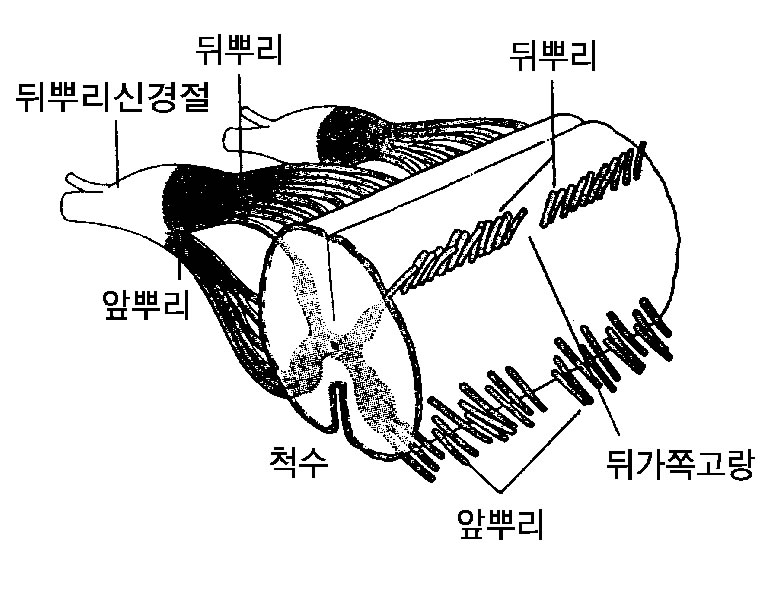 |
||
| WBC | well baby care/clinic; white blood cell; white blood cell count; whole blood cell count |
|---|---|
| CBL | circulating blood lymphocytes; chronic blood loss; cord blood leukocytes |
| MC | mass casualties; mast cell; Master of Surgery [Lat. Magister Chirurgiae]; maximum concentration; Med... |
| SC | conditioned stimulus; sacrococcygeal; Sanitary Corps; scalenus [muscle]; scapula; Schwann cell; scia... |
| SCC | self-care center; sequential combination chemotherapy; services for crippled children; short-course ... |
| pipe stem cirrhosis | Cirrhosis of the liver with finger-like fibrosis predominantly around portal tracts, seen in schistosomiasis. Leads to portal hypertension but rarely to functional failure of the liver. (05 Mar 2000) |
|---|---|
| haematopoietic stem cells | Progenitor cells from which all blood cells derive. (12 Dec 1998) |
| stem | The main stem or a branch of the main axial system of a plant, developed from the plumule of the embryo and typically bearing leaves. (09 Oct 1997) |
| stem and loop structure | <molecular biology> The structure of tRNAs is so termed because it has four base paired stems and three loops (not base paired), one of which contains the anticodon. (18 Nov 1997) |
| stem bronchus | The main bronchus from which the branches of the bronchial tree arise. (05 Mar 2000) |
| stem cells | Relatively undifferentiated cells of the same lineage (family type) that retain the ability to divide and cycle throughout postnatal life to provide cells that can become specialised and take the place of those that die or are lost. (12 Dec 1998) |
| stem-clasping | <botany> Embracing the stem with its base; amplexicaul; as a leaf or petiole. Source: Websters Dictionary (01 Mar 1998) |
| infundibular stem | The neural component of the pituitary stalk that contains nerve tracts passing from the hypothalamus to the pars nervosa. Synonym: infundibular stalk. (05 Mar 2000) |
| tumour stem cells | <cell biology> Colony-forming cells which give rise to neoplasms. (12 Dec 1998) |
| blood cell | <haematology> There are three main types of cell in the blood stream. The red cell, which carries oxygen, the white cell, which fights infections and the platelet, which helps prevent bleeding. The correct balance between each cell type must be maintained for the body to remain healthy. (13 Nov 1997) |
| blood cell count | A count of the number of leukocytes and erythrocytes per unit volume in a sample of venous blood. A complete blood count (cbc) also includes measurement of the haemoglobin, haematocrit, and erythrocyte indices. (12 Dec 1998) |
| packed red blood cell | <haematology> Red blood cells collected from one individual that are packed into a small volume for transfusion into a patient. (16 Dec 1997) |
| red blood cell | <haematology> Cell specialised for oxygen transport, having a high concentration of haemoglobin in the cytoplasm (and little else). Biconcave, anucleate discs, 7nm diameter in mammals, nucleus contracted and chromatin condensed in other vertebrates. Acronym: RBC (18 Nov 1997) |
| red blood cell cast | A urinary cast composed of a matrix containing red cells in various stages of degeneration and visibility, characteristic of glomerular disease or renal parenchymal bleeding. Synonym: red cell cast. (05 Mar 2000) |
| red blood cell count | A normal value is 4.6-6.2 million RBC's per cubic millimetre of blood. This number can increase in cases of dehydration (fluid loss) or severe lung disease. Interestingly, red blood cell counts are much higher in those who live at high altitude, because of the increased demand for oxygen carrying capacity. (27 Sep 1997) |