
| 영문 | torticollis, wry neck | 한글 | 기운목, 사경 |
|---|---|---|---|
| 설명 | 목근육이 수축된 상태로, 목이 비틀어져서 머리가 한쪽으로 기우는 증상. 또는 그 증상을 보이는 목. 목 근육이 선천적으로 짧아서 그런 경우가 많으며 후천적으로는 류마치스, 뼈의 이상, 사시나 심인 반응도 원인이 된다. |
||
| 영문 | cervix, neck | 한글 | 목, 경부 |
|---|---|---|---|
| 설명 | 목, 경부를 지칭하는 말. 특히 자궁의 목을 지칭하는데 쓰인다. 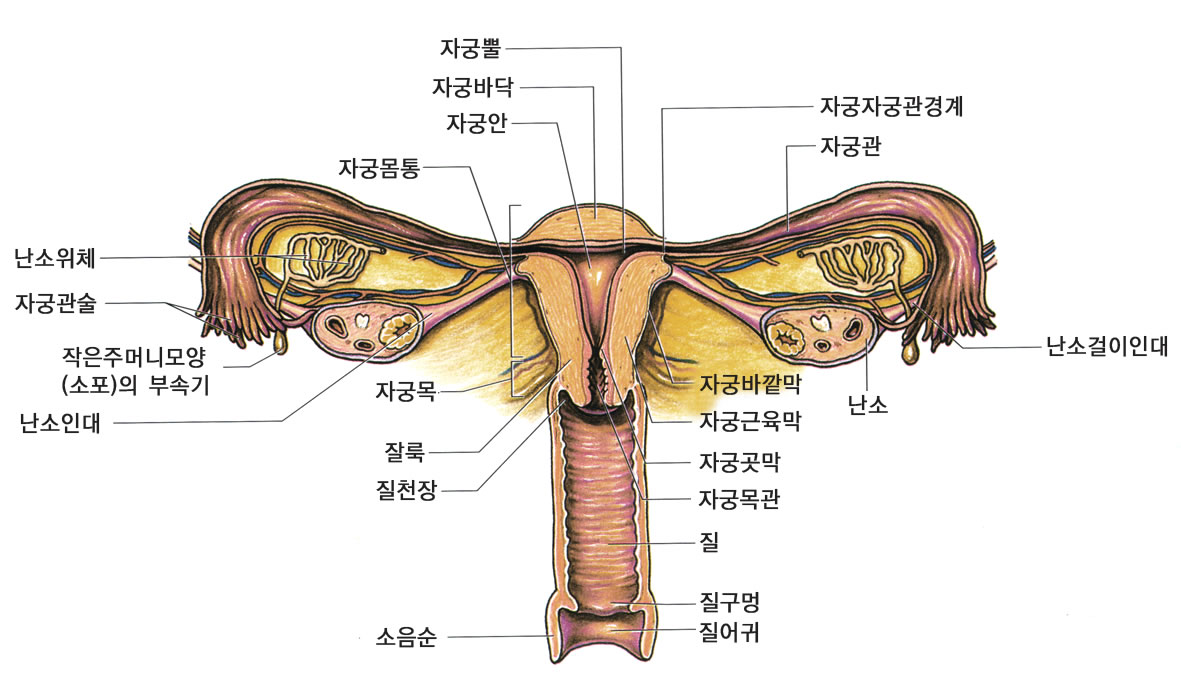 |
||
| RND | Radical Neck Dissection |
|---|---|
| MND | minimum necrosing dose; minor neurological dysfunction; modified neck dissection; motor neuron disea... |
| PND | paroxysmal nocturnal dyspnea; partial neck dissection; postnasal drainage; postnasal drip; postnatal... |
| RND | radical neck dissection; radionuclide dacryography; reactive neurotic depression |
| RPLND | Retro-Peritoneal Lymph Node Dissection |
| RND | Radical Neck Dissection |
|---|---|
| AAO-HNS | American Academy of Otolaryngology Head and Neck Surgery |
| BNI | Bladder neck incision |
| FN | Femoral neck |
| H&N | Head and Neck |
submucous dissection
| radical neck dissection | The most commonly performed major operation for head and neck malignancies, most of which are squamous cell carcinomas. The neck is opened laterally, the majority of the sternocleidomastoid muscle is removed, as are the regional cervical lymph nodes, the jugular vein, the spinal accessory nerve, the submaxillary gland and most of the parotid gland. There are several modifications. (12 Dec 1998) |
|---|---|
| neck dissection | Surgery to remove lymph nodes and other tissues in the neck. (12 Dec 1998) |
| suprahyoid | <anatomy> Hyomental. Source: Websters Dictionary (01 Mar 1998) |
| suprahyoid branch of lingual artery | <anatomy, artery> Branch of lingual artery which runs along hyoid bone; anastomosis: infrahyoid branch of superior thyroid artery and across midline with its contralateral partner. Synonym: ramus suprahyoideus arteriae lingualis. (05 Mar 2000) |
| suprahyoid gland | An isolated mass, or one of several such masses, of thyroid tissue, sometimes present in the side of the neck, or just above the hyoid bone (suprahyoid accessory thyroid gland), or even as low as the arch of the aorta. Synonym: glandula thyroidea accessoria, accessory thyroid, prehyoid gland, suprahyoid gland, thyroidea accessoria, thyroidea ima, Wolfler's gland. (05 Mar 2000) |
| suprahyoid muscles | The group of muscles attached to the upper part of the hyoid bone including the digastric, stylohyoid, mylohyoid, and geniohyoid muscles. Synonym: musculi suprahyoidei. (05 Mar 2000) |
| acute aortic dissection | <cardiology> A condition in which a weakened portion of the thoracic aorta begins to tear along the longitudinal axis of the vessel. Symptoms include sudden, severe chest pain that may radiate to the back accompanied by nausea, sweating and difficulty breathing. A common risk factor for this event is atherosclerotic vascular disease and-or hypertension. Advanced cases of syphilis (syphilitic aortitis) can also result in acute thoracic dissection as a complication of infection with Treponema pallidum. (27 Sep 1997) |
| aortic dissection | A pathologic process, characterised by splitting of the media layer of the aorta, which leads to formation of a dissecting aneurysm. Classified according to location as follows: type I involves the ascending aorta, transverse arch, and distal aorta; type II is confined to the ascending aorta; type III extends distally in the descending aorta. (05 Mar 2000) |
| aortic dissection: aetiology | <radiology> Usually degenerative, due to aging, increased risk: hypertension, bicuspic aortic valve, aortic coarctation, pregnancy, connective tissue disorder (Marfan, Ehlers-Danlos), skeletal abnormalities (scoliosis, pectus), mycotic aneurysm, Takayasu (giant cell) arteritis, aortic laceration see also: classification (12 Dec 1998) |
| aortic dissection: classification | <radiology> DeBakey: I ascending aorta to arch with or without descending aorta (30%), II ascending aorta only (20%), III descending aorta to thoracic aorta (50%), Stanford: A involvement of ascending aorta (regardless of origin), B aortic arch and distal aorta see also: aetiology mnemomics: 1 A.D. (DeBakey), A = Ascending (12 Dec 1998) |
| axillary dissection | <procedure, surgery> Surgical removal of lymph nodes from the armpit. This tissue is then sent to the pathologist to determine if the breast cancer has spread outside of the breast. The number of nodes dissected varies during surgery. (02 Jan 1998) |
| dissection | 1. The act of dissecting an animal or plant; as, dissection of the human body was held sacrilege till the time of Francis I. 2. The act of separating or dividing for the purpose of critical examination. 3. Anything dissected; especially, some part, or the whole, of an animal or plant dissected so as to exhibit the structure; an anatomical so prepared. Dissection wound, a poisoned wound incurred during the dissection of a dead body. Origin: Cf. F. Dissection. Source: Websters Dictionary (01 Mar 1998) |
| dissection tubercle | Dorsal tubercle of radius, a small prominence on the dorsal aspect of the distal end of the radius lateral to the groove for the extensor pollicis longus tendon; it serves as a trochlea or pulley for the tendon. Synonym: tuberculum dorsale, Lister's tubercle. (05 Mar 2000) |
| intramural oesophageal dissection | <radiology> Submucosal dissecting haematoma, haematemesis, chest pain, double-barreled lumen, Treatment: none (supportive) see: oesophageal trauma (12 Dec 1998) |
| anatomical neck of humerus | A groove separating the head of the humerus from the tuberosities, giving attachment to the articular capsule. Synonym: collum anatomicum humeri. (05 Mar 2000) |
제품명 |
판매사 |
보험코드 | 성분/함량 | 구분/보험급여 |
|---|
제품명 |
판매사 |
보험코드 | 성분/함량 | 구분/보험급여 |
|---|