
| 영문 | urinary tract | 한글 | 요로 |
|---|---|---|---|
| 설명 | 오줌을 몸 밖으로 배출하기 위한 길. 콩팥, 요관, 방광, 요도로 이루어져 있다. |
||
| 영문 | specific gravity | 한글 | 비중 |
|---|---|---|---|
| 설명 | 단위 부피당 질량. 소변의 비중은 소변의 농도를 반영한다. 예를 들어 소변의 비중이 크면, 콩팥의 물흡수가 원활히 이루어지고 있음을 나타낸다. |
||
| 영문 | alimentary tract | 한글 | 소화관, 영양관 |
|---|---|---|---|
| 설명 | 입에서 시작하여 항문으로 끝나는 소화를 담당하는 이르는 말. 위창자관이라고도 불린다. |
||
| 영문 | biliary tract | 한글 | 쓸개길, 담도, 담관 |
|---|---|---|---|
| 설명 | 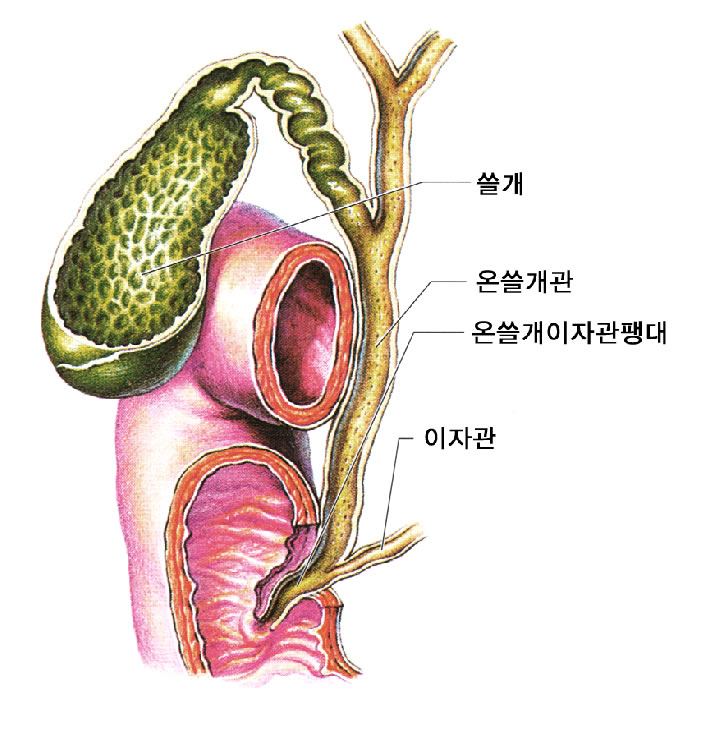 간에서 만들어진 쓸개즙을 수송하는 관조직의 일부. 간에서 만들어진 담즙은 간관, 쓸개관을 거쳐서 쓸개에 보관되었다가 온쓸개관을 통해서 샘창자로 보내진다. 이처럼 간에서 만들어진 담즙이 샘창자까지 배설되는 길로서 길이는 6~7cm 이며 간관, 쓸개관, 온쓸개관 따위로 이루어져 있다. |
||
| 영문 | infection | 한글 | 감염 |
|---|---|---|---|
| 설명 | 병원미생물이 사람이나 동물 또는 식물의 조직. 체액-표면에 정착하여 증식하는 상태. 이 경우 동물 또는 인체에 여러 가지 증상, 즉 질병을 일으키는 경우와 일으키지 않는 경우가 있다. 예를 들면, 일본뇌염바이러스가 인체에 침입하여 체내에 증식하면 어떤 사람에게는 고열-두통-의식장애-경련 등의 증상이 일어나 발병을 알지만, 대다수의 사람은 체내에서 바이러스가 증식하더라도 증세의 정도가 낮고 발열이나 그 밖의 증세도 없어 감염을 모른다. 이와 같이 병원미생물은 인체에 감염되더라도 발병하는 경우와 하지 않는 경우가 있다. 전자를 증상감염, 후자를 무증상감염이라 한다. 감염의 근원이 되는 환자-보균자-감염동물-매개동물-병원체를 포함한 배설물 및 그에 의해 감염된 것을 감염원이라 하고, 이러한 감염원에서 직접 또는 간접으로 생체에 병원체가 침입하는 경로를 감염경로라 한다. 감염경로에는 공기감염-접촉감염-경구감염-경피감염 등이 있다. 또한 감염증은 전염성과 비전염성의 두 가지로 나눌 수 있다. 전자는 질병의 경과 중에(때로는 잠복기나 회복기에) 감염한 생체의 분비물 또는 배설물과 함께 병원체가 나와서 접촉 또는 매개에 의해 다른 개체를 감염시키는 경우를 말한다. 마마-디프테리아-성홍열-페스트-콜레라-이질 등이 이에 속한다. 후자는 병원체가 감염한 생체에서 배설되지 않거나 배설되더라도 다른 개체에는 감염을 일으키지 않는 것으로 여기에는 파상풍-말라리아-발진티푸스-산후열 등이 있다. |
||
| ECG | Electro-Cardio-Graphy(-Gram); 심전도 = EKG 1. Conducting System Structu... |
|---|---|
| UTI | urinary tract infection; urinary trypsin inhibitor |
| LRI | lamina rara interna; lower respiratory [tract] illness; lower respiratory [tract] infection; lymphoc... |
| LRTI | lower respiratory tract illness; lower respiratory tract infection |
| UTI | Urinary Tract Infection; 비뇨기계 감염 |
| UTI | 3-urinary tract infection |
|---|---|
| LUTS | Lower urinary tract symptoms |
| RUTI | Recurrent urinary tract infections |
| U.U.T. | Upper Urinary Tract |
| LUT | lower urinary tract |
| pregnancy danger from urinary tract infection | A pregnant woman who develops a uti should be treated promptly to avoid premature delivery of her baby and other risks such as high blood pressure. Some antibiotics are not safe to take during pregnancy. In selecting the best treatment, doctors consider various factors such as the drug's effectiveness, the stage of pregnancy, the mother's health, and potential effects on the foetus. (12 Dec 1998) |
|---|---|
| infection, urinary tract | An infection in the urinary system that begins when microorganisms cling to the opening of the urethra (the canal from the bladder) and begin to multiply. most utis are due to one type of bacteria, e. (escherichia) coli, a normal denisen of the colon. An infection in the urethra leads to inflammation called urethritis. From there bacteria may move up, causing a bladder infection (cystitis) and if the infection is not treated promptly, bacteria may go up the ureters to infect the kidneys (pyelonephritis). Factors leading to uti include any abnormality of the urinary tract (such as a urinary tract malformation or a kidney stone) that obstructs the flow of urine, an enlarged prostate gland that slows the flow of urine, catheters (tubes) in the bladder, diabetes (due to changes of the immune system), and any disorder that suppresses the immune system. Women have more uti than men, probably because a woman's urethra is shorter (allowing bacteria quick access to the bladder) and nearer sources of bacteria from the anus and vagina. For many women, sexual intercourse seems to trigger an infection, as may the use of a diaphragm. Not everyone with a uti has symptoms but symptoms commonly include a frequent urge to urinate and a painful, burning when urinating (dysuria). The urine may look milky or cloudy, even reddish if blood is present. Kidney infection can cause pain in the back or side below the ribs. In children, symptoms may be easily missed or misunderstood. A child with a uti may be irritable, not eat normally, have an unexplained fever, have incontinence or loose bowels, or just not thrive. (12 Dec 1998) |
| urinary tract infection | A bacterial infection of the urethra, bladder, ureters or kidneys (part of the urinary tract). Common symptoms of a urinary tract infection include pain with urination, urinary urgency and increased frequency of urination. Acronym: UTI (15 Nov 1997) |
| urinary tract | The organs of the body that produce and discharge urine. These include the kidneys, ureters, bladder, and urethra. (12 Dec 1998) |
| urinary tract infections | Infections affecting those structures of the body which participate in the secretion and elimination of urine, i.e., the kidney, the ureters, the urinary bladder, and the urethra. (12 Dec 1998) |
| urinary tract physiology | Functions and activities of the urinary tract as a whole or of any of its parts. (12 Dec 1998) |
| site-specific DNA-methyltransferase (adenine-specific) | <enzyme> An enzyme responsible for producing a species-characteristic methylation pattern on adenine residues in a specific short base sequence in the host cell DNA. The enzyme catalyses the methylation of DNA adenine in the presence of s-adenosyl-l-methionine to form DNA containing 6-methylaminopurine and s-adenosyl-l-homocysteine. Registry number: EC 2.1.1.72 (12 Dec 1998) |
| site-specific DNA methyltransferase (cytosine-specific) | <enzyme> An enzyme responsible for producing a species-characteristic methylation pattern on cytosine residues in a specific short base sequence in the host cell's DNA. The enzyme catalyses the methylation of DNA cytosine in the presence of s-adenosyl-l-methionine to form s-adenosyl-l-homocysteine and DNA containing 5-methylcytosine. Registry number: EC 2.1.1.73 (12 Dec 1998) |
| antibody-coated bacteria test, urinary | Fluorescent antibody technique for visualizing antibody-bacteria complexes in urine. The presence or absence of antibody-coated bacteria in urine correlates with localization of urinary tract infection in the kidney or bladder, respectively. (12 Dec 1998) |
| anti-infective agents, urinary | Substances capable of killing agents causing urinary tract infections or of preventing them from spreading. (12 Dec 1998) |
| apex of urinary bladder | The junction of the superior and anteroinferior surfaces of the bladder, continuous above with the median umbilical ligament. Synonym: apex vesicae. (05 Mar 2000) |
| blood, urinary | Medically called haematuria, blood in the urine can be microscopic or gross. Evaluating haematuria requires consideration of the entire urinary tract. Tests used for the diagnosis of haematuria include the intravenous pyelogram (IVP), cystoscopy, and urine cytology. Management of haematuria depends upon the underlying cause. (12 Dec 1998) |
| body of urinary bladder | The portion of the bladder between the apex and fundus. Synonym: corpus vesicae urinariae. (05 Mar 2000) |
| reproductive and urinary physiology | Physiology of the human and animal body, male or female, in the reproductive process and the physiology of the urinary tract. (12 Dec 1998) |
| mucosa of urinary bladder | The inner coat of the urinary bladder. Synonym: tunica mucosa vesicae urinariae. (05 Mar 2000) |
제품명 |
판매사 |
보험코드 | 성분/함량 | 구분/보험급여 |
|---|
제품명 |
판매사 |
보험코드 | 성분/함량 | 구분/보험급여 |
|---|