¼±Åà - È­»ìǥŰ/¿£ÅÍŰ ´Ý±â - ESC

 
"indirect cell division"¿¡ ´ëÇÑ °Ë»ö °á°úÀÔ´Ï´Ù. °Ë»ö °á°ú º¸´Â µµÁß¿¡ Tab ۸¦ ´©¸£½Ã¸é °Ë»ö âÀÌ ¼±Åõ˴ϴÙ.
¾Ë±â½¬¿î ÀÇÇпë¾îÇ®ÀÌÁý, ¼­¿ïÀÇ´ë ±³¼ö ÁöÁ¦±Ù, °í·ÁÀÇÇÐ ÃâÆÇ À¯»ç °Ë»ö °á°ú : 5 ÆäÀÌÁö: 1
¿µ¹® division ÇÑ±Û ºÐ¿­
¼³¸í   
  ´Ü¼¼Æ÷ÀÇ °³Ã¼°¡ µî°¡ÀΠµÎ °³ÀÇ »õ·Î¿î °³Ã¼·Î ³ª´µ´Â °Í. ºÐ¿­¿¡´Â ´ë»ó¿¡ µû¶ó ¿°»öü-ÇÙ-¼¼Æ÷ºÐ¿­ µîÀÌ ÀÖÀ¸¸ç, ¶Ç »ýÀåÁ¡ÀÌ ºÐ¿­Çϴ °æ¿ì¸¦ »ýÀåÁ¡ ºÐ¿­, °¡Áö°¡ ³ª´µ´Â °æ¿ì¿¡´Â ºÐÁö¶ó°í ÇÑ´Ù.
¿µ¹® muscle cell(=muscle fiber) ÇÑ±Û ±ÙÀ°¼¼Æ÷
¼³¸í   
  ±ÙÀ°Àº ¼öÀDZÙ(ÀǽĿ¡ ÀÇÇØ¼­ Á¶ÀýÀÌ °¡´ÉÇÑ ±ÙÀ°: ¿¹¸¦ µé¾î ´Ù¸®, ÆÈ, ¾ó±¼±ÙÀ° µî)°ú ºÒ¼öÀDZÙ(Àǽİú ¹«°üÇϰԠÁ¶ÀýÇÏÁö ¾Ê¾Æµµ ¿òÁ÷À̴ ±ÙÀ°: ¿¹¸¦ µé¾î ½ÉÀå±Ù, ¼ÒÈ­±â°ü¿¡ ºÐÆ÷Çϴ ±ÙÀ° µî)À¸·Î ³ª´©¾îÁö¸ç, ±ÙÀ°¼¼Æ÷ÀÇ ¸ð¾çÀº ´ÙÀ½°ú °°´Ù(¼öÀDZÙ, ºÒ¼öÀDZ٠¿Ü¿¡ ½ÉÀå¿¡ Àִ ½ÉÀå±ÙÀº ºÒ¼öÀDZٿ¡ ÇØ´çÇÏÁö¸¸ ±× ¸ð¾çÀº ¼öÀDZٰú °°¾Æ µû·Î ºÐ·ùÇÑ´Ù).
  
  ±ÙÀ°¼¼Æ÷
¿µ¹® white blood cell(WBC), leukocyte ÇÑ±Û ¹éÇ÷±¸
¼³¸í   
  Ç÷¾×³»¿¡ °ñ¼ö±¸°è¼¼Æ÷¿Í ¸²ÇÁ°è¼¼Æ÷, ´ÜÇÙ±¸°è¼¼Æ÷¸¦ ¸ðµÎ ÅëÆ²¾î ¸»ÇÑ´Ù. ¹éÇ÷±¸ÀÇ Áõ°¡°¡ ÀÖÀ¸¸é ´ë°³ °¨¿°ÀÌ Àְųª, È¤Àº Å»¼öÇö»óÀÌ ÀÖÀ½À» ÀǹÌÇÑ´Ù. ¶ÇÇÑ Áö³ªÄ£ ¹éÇ÷±¸¼öÀÇ °¨¼Ò´Â ÀÎü³» ¸é¿ª±â´ÉÀÌ ¶³¾îÁ® ÀÖÀ½À» ÀǹÌÇϸç, ´Ù¸¥ Áúº´¿¡ ÀÇÇØ ³ªÅ¸³ª´Â ÀÌÂ÷ÀûÀΠÇö»óÀÌ ¾Æ´ÑÁö ²À Áø´ÜÀ» ¹Þ¾Æº¸¾Æ¾ß ÇÑ´Ù.
¿µ¹® mast cell ÇÑ±Û ºñ¸¸ ¼¼Æ÷
¼³¸í   
  µ¿¹°ÀÇ °áÇÕ Á¶Á÷ °¡¿îµ¥ ³Î¸® ºÐÆ÷Çϴ ¼¼Æ÷. °áÇÕÁ¶Á÷°ú Á¡¸·Á¶Á÷ ³»¿¡ Àִ ȣ¿°±â¼º »ö¼Ò·Î ÀÌ¿°»ö¼º(metachromasia)À» ³ªÅ¸³»´Â °ú¸³À» °¡Áø ¹æÃßÇüÀÇ ¼¼Æ÷¿¡ ÀÛÀº µÕ±Ù ÇÙÀ» °¡Áø´Ù. ºñ¸¸¼¼Æ÷ÀǠǥ¸é¿¡´Â IgE¿¡ ´ëÇÑ ¼ö¿ëü°¡ Á¸ÀçÇϸç, ¼ö¿ëü¿¡ °áÇÕÇÑ IgE ºÐÀڵ鳢¸® ´Ù°¡ÀÇ Ç׿ø¿¡ ÀÇÇØ ¼­·Î ¿¬°áµÇ¸é ºñ¸¸¼¼Æ÷ °ú¸³Å»Ãâ ¹ÝÀÀÀÌ ÀϾ, È÷½ºÅ¸¹Î, ¼¼·ÎÅä´Ñ, ÇìÆÄ¸° µîÀÇ È­ÇÐÀü´Þ ¹°ÁúÀÌ ¹æÃâµÇ¾î, Áï½ÃÇü ¾Ë·¹¸£±â ¹ÝÀÀ µîÀÇ Áõ»óÀ» ÀÏÀ¸Å²´Ù. ÇǺÎ, À帷, Ç÷°ü ÁÖÀ§, Á¡¸· ÁÖº¯¿¡ ÀÖ´Ù.
¿µ¹® cell ÇÑ±Û ¼¼Æ÷
¼³¸í   
  »ý¸íü¸¦ ÀÌ·ç´Â ±¸Á¶Àû, ±â´ÉÀû ´ÜÀ§.
  
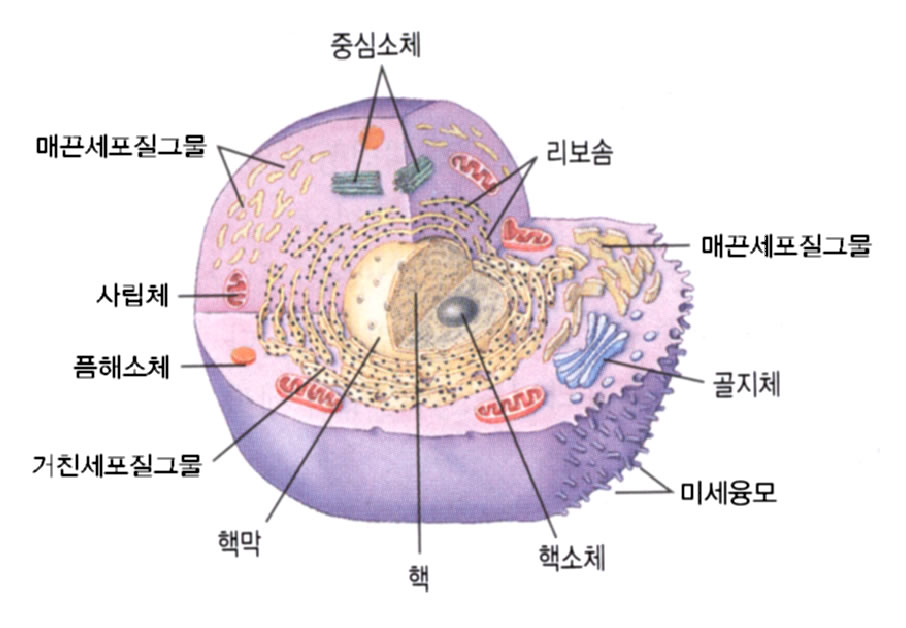
  ÇÙÀÇ À¯¹«¿¡ µû¶ó¼­ À¯ÇÙ¼¼Æ÷¿Í ¹«ÇÙ¼¼Æ÷·Î ³ª´­ ¼ö°¡ ÀÖ´Ù. ¹«ÇÙ¼¼Æ÷¶õ ÇÙÀÌ ¾ø´Â ¼¼Æ÷¸¦ ¸»ÇÑ´Ù. ÇÙÀ̶õ À¯ÀüÁ¤º¸¸¦ °¡Áö°í Àִ ¿°»öü¸¦ º¸°üÇϴ °÷Àε¥ ¹«ÇÙ¼¼Æ÷¿¡¼­´Â ¿°»öü°¡ ¼¼Æ÷¼Ó¿¡ ±×³É ³ëÃâµÇ¾î ÀÖ´Ù. ´ë°³ ¼¼Æ÷ ÇϳªÇϳª°¡ µ¶¸³µÈ »ý¸íüÀÇ ¿ªÇÒÀ» Çϴ ´Ü¼¼Æ÷»ý¹°·Î¼­ ¿ÜºÎȯ°æÀ¸·ÎºÎÅÍ ÀÚ½ÅÀ» º¸È£ÇÒ ¼ö Àִ °ß°íÇÑ ¼¼Æ÷º®À» °¡Áö°í ÀÖ´Ù. À¯ÇÙ¼¼Æ÷¶õ ÇÙÀ» °¡Áö°í À־ À¯ÀüÁ¤º¸°¡ Àִ ¿°»öü°¡ ¼¼Æ÷ÀÇ ´Ù¸¥ ºÎºÐ°ú ±¸ºÐµÇ¾î ÇÙ¼Ó¿¡ µé¾îÀÖ´Ù. ¼¼Æ÷¼Ó¿¡¼­ ÇÙ¿ÜÀÇ ºÎºÐ(À̸¦ ¼¼Æ÷ÁúÀ̶ó ÇÑ´Ù)¿¡´Â ¿©·¯ °¡Áö ¼¼Æ÷ÀÇ ¼Ò±â°üÀÌ À־ ¼¼Æ÷ÀÇ ´Ù¾çÇÑ ±â´ÉÀ» ºÐ´ãÇÑ´Ù.
  
  ¢ÂÀ¯ÇÙ¼¼Æ÷ÀÇ ±âº» ±¸Á¶
  
  1.¼¼Æ÷¸·-¼¼Æ÷¸¦ µÑ·¯½Î¼­ ÁÖÀ§È¯°æ°ú ºÐ¸®ÇÏ¿© ¼¼Æ÷ÀÇ ³»È¯°æÀ» À¯ÁöÇÑ´Ù.
  
  2.ÇüÁú³»¼¼¸Á(endoplasmic reticulum)-´ÜÀ§¸·À¸·Î µÑ·¯½×¿© Àִ ºÒ±ÔÄ¢ÇÑ ¸Á»ó±¸Á¶ÀÌ´Ù. ÀÌ ¸Á»ó±¸Á¶ÀÇ ³»ºÎ¸¦ ¼Ò°­, ¼ÒÁ¶¶ó°í ºÎ¸¥´Ù. ¿©±â¿¡´Â Ç¥¸éÀÌ ¸Å²öÇÑ ¹«°ú¸³ÇüÁú³»¼¼¸Á°ú Ç¥¸éÀÌ ºÒ±ÔÄ¢ÇÑ °ú¸³ÇüÁú³»¼¼¸ÁÀÇ µÎ °¡Áö°¡ ÀÖ´Ù. °ú¸³ÇüÁú³»¼¼¸ÁÀÇ °æ¿ì´Â Ç¥¸é¿¡ ´Ü¹éÁúÀ» ÇÕ¼ºÇϴ ¸®º¸¼ØÀ̶ó´Â °ÍÀÌ ºÎÂøµÇ¾î ÀÖ´Ù. À̰÷Àº ÁַΠ¼¼Æ÷¹ÛÀ¸·Î ºÐºñÇÒ ´Ü¹éÁúÀ» ÇÕ¼ºÇϴ Àå¼ÒÀÌ´Ù. ¹«°ú¸³ÇüÁú³»¼¼¸ÁÀº Ç¥¸é¿¡ ¸®º¸¼ØÀÌ ºÎÂøµÇ¾î ÀÖÁö ¾ÊÀº °ÍÀ» ¸»Çϸç, À̰÷¿¡¼­´Â ÁÖ·Î ÇØµ¶ÀÛ¿ë, ±Û¸®ÄÚ°ÕÀÇ ÇÕ¼º, ½ºÅ×·ÎÀ̵åÈ£¸£¸óÀÇ ÇÕ¼º µîÀÌ ÀϾ´Ù.
  
  3.¸®º¸¼Ø-´Ü¹éÁúÀ» ÇÕ¼ºÇϴ ¿ªÇÒÀ» Çϴ °÷ÀÌ´Ù.À̰ÍÀº ¼¼Æ÷Áú¿¡ Á¸ÀçÇϴ ÀÚÀ¯¸®º¸¼Ø°ú °ú¸³ÇüÁú³»¼¼¸Á¿¡ ºÎÂøÀÌ µÇ¾î Á¸ÀçÇϴ ºÎÂø¸®º¸¼ØÀÇ µÎ °¡Áö·Î ³ª´«´Ù. ÀÚÀ¯¸®º¸¼ØÀº ÁַΠ¼¼Æ÷³»¿¡¼­ ÇÊ¿äÇÑ ´Ü¹éÁúÀ» ¸¸µå´Â ¿ªÇÒÀ» Ç졒ʼÎÂø¸®º¸¼ØÀº ¼¼Æ÷¹ÛÀ¸·Î ºÐºñÇÒ ´Ü¹éÁúÀ» ¸¸µå´Â ¿ªÇÒÀ» ÇÑ´Ù.
  
  4.°ñÁöÀåÄ¡(Golgi apparatus)-ÇÙÁÖÀ§¿¡ ºÐÆ÷Çϴ ³³ÀÛÇØÁø ÁָӴϸð¾çÀÇ °ÍÀÌ ÁßøµÇ¾î Çü¼ºµÈ ÃþÆÇ ¸ð¾çÀÇ ±¸Á¶¹°·Î °ú¸³ÇüÁú³»¼¼¸Á¿¡¼­ »ý¼ºµÇ¾î ¿ÜºÎ·Î ºÐºñµÉ ´Ü¹éÁúÀ» ¸ð¾Æ¼­ ³óÃà, Æ÷ÀåÇÏ¿© °ú¸³À» ¸¸µå´Â ¿ªÇÒÀ» ÇÑ´Ù.
  
  5.»ç¸³Ã¼(mitochondria)-±¸Çü, ³­ÇüÀÇ ±ä ¸·´ë±â ¸ð¾çÀ¸·Î Å©±â°¡ ´Ù¾çÇÑ ±¸Á¶¹°. »ý¹°Ã¼ÀÇ ¿¡³ÊÁö ÀúÀå¹°ÁúÀΠATP¸¦ »ý»êÇϴ ¿ªÇÒÀ» ÇÑ´Ù. ¶Ç ¼¼Æ÷¿Í ´Ù¸¥ ÀڽŸ¸ÀÇ À¯ÀüÁ¤º¸¸¦ °¡Áø DNA, RNA¸¦ °¡Áö°í ÀÖ´Ù. ¸ð¾ç, Å©±â°¡ ¼¼±Õ°ú ºñ½ÁÇϸç ÀÚüÁõ½Ä¼º µî µ¶¸³µÈ »ý¸íü·Î¼­ ÇÊ¿äÇÑ ¿ä°ÇÀ» °®Ãß°í À־ ¼¼Æ÷¿Í °ø»ý°ü°è¸¦ °¡Áø µ¶¸³µÈ ¼¼Æ÷·Î »ý°¢Çϰí ÀÖ´Ù.
  
  6.¿ëÇØ¼Òü(lysosome)-ÀÛÀº ±¸ÇüÀÇ ¼Òü·Î ¿©·¯ °¡Áö ºÐÇØÈ¿¼Ò¸¦ °¡Áø´Ù. ¼¼Æ÷¿Ü°è¿¡¼­ µé¾î¿Â ¹°Áú°ú °áÇÕÇÏ¿© ±× ¹°ÁúµéÀ» ¿ëÇØÇϴ ¿ªÇÒÀ» Çϰí, ¿À·¡µÈ ¼¼Æ÷¼Ò±â°üµéÀ» Á¦°ÅÇϴ ¿ªÇÒµµ ÇÑ´Ù.
  
  7.¼¼Æ÷ÇÙ(nucleus)-±¸Çü, ³­ÇüÀ¸·Î ¼¼Æ÷ÀÇ Á߽ɿ¡ À§Ä¡ÇÑ´Ù. ÇÙ³»¿¡´Â À¯ÀüÁ¤º¸°¡ Àִ ¹°ÁúÀΠ¿°»öü°¡ Á¸ÀçÇÑ´Ù.
  
  8.Á߽ɼÒü(centrosome)-ÇÙÁÖÀ§¿¡ Á¸ÀçÇϸ鼭 ÇÙÀÇ ºÐ¿­½Ã¿¡ ¾çÂÊÀÇ ¿°»öü¸¦ ´ç±â´Â ÀÛÀº ¼¶À¯¸¦ ¸¸µå´Â ¿ªÇÒÀ» Çϴ °÷.
  
  ¼¼Æ÷
´ëÇÑÀÇÇù ÀÇÇпë¾î »çÀü °Ë»ö À¯»ç °Ë»ö °á°ú : 15 ÆäÀÌÁö: 1
  • ¿µ¹®
    ÇѱÛ
  • cell division
    ¼¼Æ÷ºÐ¿­
  • division
    1. ºÐ¿­, ºÐÇÒ 2. ´«±Ý 3. ±¹, °ú
  • longitudinal division
    ¼¼·ÎºÐ¿­, Á¾ºÐ¿­
  • multiple division
    º¹Çպп­
  • multiplicative division
    Áõ½ÄºÐ¿­
  • maturation division
    ¼º¼÷ºÐ¿­
  • meiotic division
    °¨¼öºÐ¿­
  • reduction division
    °¨¼öºÐ¿­
  • biologic indirect pulp capping
    »ý¹°ÇÐÀû°£Á¢Ä¡¼öijÇιý
  • indirect
    °£Á¢-
  • indirect adjustment
    °£Á¢º¸Á¤
  • indirect antiglobulin test
    °£Á¢Çױ۷κҸ°°Ë»ç
  • indirect contact
    °£Á¢Á¢ÃË
  • indirect Coombs test
    °£Á¢ÄñÁî°Ë»ç
  • indirect fluorescent antibody technique
    °£Á¢Çü±¤Ç×ü¹ý
´ëÇÑÀÇÇù Çʼö ÀÇÇпë¾îÁý »çÀü °Ë»ö À¯»ç °Ë»ö °á°ú : 15 ÆäÀÌÁö: 1
  • ¿µ¹®
    ÇѱÛ
  • division
    1.ºÐ¿­, ºÐÇÒ, 2.´«±Ý, 3.±¹, °ú
  • meiotic division
    °¨¼öºÐ¿­
  • sickle cell anemia
    ³´ÀûÇ÷±¸ºóÇ÷
  • cell
    ¼¼Æ÷
  • accessory cell
    º¸Á¶¼¼Æ÷, µ¡¼¼Æ÷
  • acinar cell
    »ù²Ê¸®¼¼Æ÷
  • amacrine cell
    ¹«Ãà»è¼¼Æ÷
  • balloon cell
    dz¼±¼¼Æ÷
  • basal cell
    ¹Ù´Ú¼¼Æ÷, ±âÀú¼¼Æ÷
  • basal cell carcinoma
    ¹Ù´Ú¼¼Æ÷¾ÏÁ¾, ±âÀú¼¼Æ÷¾ÏÁ¾
  • basket cell
    ¹Ù±¸´Ï¼¼Æ÷
  • basophilic cell
    È£¿°±â¼¼Æ÷
  • beta cell
    º£Å¸¼¼Æ÷
  • bipolar cell
    µÎ±Ø¼¼Æ÷
  • blood cell
    Ç÷¾×¼¼Æ÷, Ç÷±¸
¿¾ ´ëÇÑÀÇÇù ÀÇÇпë¾î »çÀü °Ë»ö À¯»ç °Ë»ö °á°ú : 15 ÆäÀÌÁö: 1
  • ¿µ¹®
    ÇѱÛ
  • cell division
    ¼¼Æ÷ºÐ¿­
  • division
    ºÐ¿­, ºÐÇÒ, ´«±Ý, ±¹, °ú
  • longitudinal division
    ¼¼·ÎºÐ¿­, Á¾ºÐ¿­
  • maturation division
    ¼º¼÷ºÐ¿­
  • meiotic division
    °¨¼öºÐ¿­
  • multiple division
    º¹Çպп­
  • indirect adjustment
    °£Á¢º¸Á¤
  • indirect latex agglutination
    °£Á¢¶óÅØ½ºÀÀÁý¹ÝÀÀ
  • biologic indirect pulp capping
    »ý¹°ÇÐÀû°£Á¢Ä¡¼öijÇιý
  • indirect contact
    °£Á¢Á¢ÃË
  • indirect gonioscopy
    °£Á¢¾Õ¹æ°¢°Å¿ï°Ë»ç, °£Á¢Àü¹æ°¢°æ°Ë»ç
  • indirect hemagglutination
    °£Á¢ÀûÇ÷±¸ÀÀÁý¹ý
  • indirect hyperbilirubinemia
    °£Á¢°íºô¸®·çºóÇ÷Áõ
  • indirect inguinal hernia
    °£Á¢»ô±¼Ç츣´Ï¾Æ
  • indirect
    °£Á¢-
¿¾ ´ëÇÑÀÇÇù 2 ÀÇÇпë¾î »çÀü °Ë»ö ¸ÂÃã °Ë»ö °á°ú : 1 ÆäÀÌÁö: 1
  • ¿µ¹®
    ÇѱÛ
  • indirect cell division
    °£Á¢¼¼Æ÷ºÐ¿­.
¿¾ ´ëÇÑÀÇÇù 2 ÀÇÇпë¾î »çÀü °Ë»ö À¯»ç °Ë»ö °á°ú : 15 ÆäÀÌÁö: 1
  • ¿µ¹®
    ÇѱÛ
  • gastric division
    À§ÀÇ ºÐÇÒ.
  • heterotypical division
    ÀÌÇüºÐ¿­.
  • homotypical division
    µ¿ÇüºÐ¿­.
  • prereduction division
    °¨¼öÀüºÐ¿­
  • reduction division
    °¨¼öºÐ¿­(Êõâ¦ÝÂæñ).
  • reduction division
    °¨¼öºÐ¿­
  • reduction division
    °¨¼öºÐ¿­
  • agglutination, indirect
    °£Á¢ÀÀÁý¹ý
  • antiglobulin test, indirect
    °£Á¢Çױ۷κҸ° °Ë»ç
  • hemagglutination, indirect
    °£Á¢Ç÷±¸ÀÀÁý¹ý
  • indirect
    °£Á¢
  • indirect Coombs test
    °£Á¢Äñ½º°Ë»ç
  • indirect action
    °£Á¢ÀÛ¿ë.
  • indirect action
    °£Á¢ÀÛ¿ë
  • indirect agglutination
    °£Á¢ÀÀÁý(¹ÝÀÀ).
¿¾ ´ëÇÑÀÇÇù 3 ÀÇÇпë¾î »çÀü °Ë»ö ¸ÂÃã °Ë»ö °á°ú : 1 ÆäÀÌÁö: 1
  • ¿µ¹®
    ÇѱÛ
  • indirect cell division
    °£Á¢¼¼Æ÷ºÐ¿­.
¿¾ ´ëÇÑÀÇÇù 3 ÀÇÇпë¾î »çÀü °Ë»ö À¯»ç °Ë»ö °á°ú : 15 ÆäÀÌÁö: 1
  • ¿µ¹®
    ÇѱÛ
  • asymmetric cell division
    ºñ´ëμº ¼¼Æ÷ºÐ¿­
  • cell division
    ¼¼Æ÷ºÐ¿­(¡­ÝÂæñ)
  • cell division
    ¼¼Æ÷ºÐ¿­
  • cell division
    ¼¼Æ÷ºÐ¿­
  • cell division
    ¼¼Æ÷ºÐ¿­
  • cell division
    ¼¼Æ÷ºÐ¿­(¡­ÝÂæñ).
  • cell division
    ¼¼Æ÷ºÐ¿­
  • direct (cell) division
    Á÷Á¢<¹«»ç>(¼¼Æ÷)ºÐ¿­.
  • cochlear division of vestibulocochlear nerve
    ´ÞÆØÀ̽Űæ
  • conjugate nuclear division
    Á¢ÇÕ»óź¹Á¦
  • cytoplasmic division
    ¼¼Æ÷ÁúºÐ¿­(¡­òõÝÂæñ).
  • division
    ºÐ¿­(ÝÂæñ), ºÐÇÒ, ´«±Ý, ±¹, °ú.
  • division, cellular
    ¼¼Æ÷ºÐ¿­
  • equal division
    µ¿¼öºÐ¿­
  • equational division
    µî¼öºÐ¿­.
´ëÇÑÇØºÎÇÐȸ ÀÇÇпë¾î »çÀü °Ë»ö À¯»ç °Ë»ö °á°ú : 15 ÆäÀÌÁö: 1
  • ¿µ¹®
    ÇѱÛ
  • Cochlear division of vestibulocochlear nerve
    ´ÞÆØÀ̽Űæ
    [¿¾ ¿ë¾î] ÀüÁ¤¿Í¿ì½Å°æ¿Í¿ìºÎ
  • Equal division
    µ¿¼öºÐ¿­
    [¿¾ ¿ë¾î] µ¿¼öºÐ¿­
  • Maturation division
    ¼º¼÷ºÐ¿­
    [¿¾ ¿ë¾î] ¼º¼÷ºÐ¿­
  • Inferior branch [division]
    ¾Æ·¡°¡Áö
    [¿¾ ¿ë¾î] ÇÏÁö
  • Superior branch [division]
    À§°¡Áö
    [¿¾ ¿ë¾î] »óÁö
  • Reduction division
    °¨¼öºÐ¿­
    [¿¾ ¿ë¾î] °¨¼öºÐ¿­
  • Prereduction division
    °¨¼öÀüºÐ¿­
    [¿¾ ¿ë¾î] Àü°¨¼öºÐ¿­
  • Postreduction division
    °¨¼öÈĺп­
    [¿¾ ¿ë¾î] Èݨ¼öºÐ¿­
  • Second meiotic division
    ÀÌÂ÷°¨¼öºÐ¿­
    [¿¾ ¿ë¾î] ÀÌÂ÷°¨¼öºÐ¿­
  • Chief cell [Type I glomus cell]
    °ú¸³¼¼Æ÷
    [¿¾ ¿ë¾î] ÁÖ¼¼Æ÷(Á¦1Çü»ç±¸¼¼Æ÷)
  • Clear cell [Epinephrine cell]
    ¹àÀº¼¼Æ÷ [¿¡Çdz×ÇÁ¸°¼¼Æ÷]
    [¿¾ ¿ë¾î] ¸í¼¼Æ÷(¿¡Çdz×ÇÁ¸°ºÐºñ¼¼Æ÷)
  • Sustentacular cell [Sertoli cell]
    ¹öÆÀ¼¼Æ÷
    [¿¾ ¿ë¾î] ÁöÁÖ¼¼Æ÷
  • Beta cell [Insulin cell]
    º£Å¸¼¼Æ÷ [Àν´¸°¼¼Æ÷]
    [¿¾ ¿ë¾î] º£Å¸¼¼Æ÷
  • Secretory epithelial cell [Glandular cell]
    ºÐºñ»óÇǼ¼Æ÷ [»ù¼¼Æ÷]
    [¿¾ ¿ë¾î] ºÐºñ»óÇǼ¼Æ÷
  • Interstitial cell [Dark cell]
    »çÀÌÁú¼¼Æ÷
    [¿¾ ¿ë¾î] °£Áú¼¼Æ÷
´ëÇѱâ»ýÃæÇÐȸ ÀÇÇпë¾î »çÀü °Ë»ö À¯»ç °Ë»ö °á°ú : 10 ÆäÀÌÁö: 1
  • ¿µ¹®
    ÇѱÛ
  • longitudinal division
    Á¾ºÐ¿­
  • excretory cell
    ¹è¼³¼¼Æ÷
  • flame cell
    ºÒ²É¼¼Æ÷
  • G cell G
    ¼¼Æ÷
  • germ cell
    ¹è¼¼Æ÷
  • interstitial plasma cell pneumonia
    °£Áú¼ºÇüÁú¼¼Æ÷Æó¿°
  • nurse cell
    º¸¸ð¼¼Æ÷
  • renette cell
    ¹è¼³¼¼Æ÷
  • tegumental cell
    Ç¥ÇǼ¼Æ÷
  • vitelline cell
    ³­È²¼¼Æ÷
´ëÇÑ»ýÈ­ÇкÐÀÚ»ý¹°ÇÐȸ ¿ë¾î »çÀü °Ë»ö À¯»ç °Ë»ö °á°ú : 15 ÆäÀÌÁö: 1
  • ¿µ¹®
    ÇѱÛ
  • nuclear division
    Çٺп­(ú·ÝÂÖª)
  • reduction division
    °¨¼öºÐ¿­(Êõâ¦ÝÂæñ)
  • indirect acting bilirubin
    °£Á¢ÀÛ¿ë(ÊàïÈíÂéÄ) ºô¸®·çºó
  • indirect calorimetry
    °£Á¢¿­·®ÃøÁ¤¹ý(ÊàïÈæðÕáö°ïÒÛö)
  • indirect complement fixation test
    °£Á¢º¸Ã¼°íÁ¤½ÃÇè(ÊàïÈÜÍô÷ͳïÒãËúÐ)
  • indirect Coomb's test
    °£Á¢(ÊàïÈ) Äñ½ÃÇè(ãËúÐ)
  • indirect coupling
    °£Á¢(ÊàïÈ) ¦Áþ±â
  • indirect fluoresccnt antibody technique
    °£Á¢ Çü±¤Ç×ü¼ú(ÊàïÈû«ÎÃù÷ô÷âú)
  • indirect induction
    °£Á¢À¯µµ(ÊàïÈë¯Óô)
  • indirect mutagenesis
    °£Á¢º¯ÀÌÀ¯¹ß(ÊàïÈܨì¶ë¯Û¡)
  • indirect photoreactivation
    "°£Á¢ ±¤ÀçȰ¼ºÈ­(ÊàïÈÎÃî¢üÀàõûù), °£Á¢ ±¤È¸º¹(ÊàïÈÎÃüÞÜÖ)"
  • absorption cell
    Èí¼ö¼Ò°ü (ýåâ¥á³Î·)
  • amplifier T cell
    Áõ½Ä T ¼¼Æ÷(ñòãÖ T á¬øà)
  • antigen presenting cell
    Ç׿øº¸À¯¼¼Æ÷(ù÷ê«ÜÁêóá¬øà)
  • APUD cell
    APUD ¼¼Æ÷(á¬øà)
KI ÀÇÇпë¾î »çÀü °Ë»ö À¯»ç °Ë»ö °á°ú : 15 ÆäÀÌÁö: 1
  • ¿µ¹®
    ÇѱÛ
  • nuclear division
    ¡ì¼¼Æ÷¡íÇٺп­
  • acinar cell
    Æ÷»ó¼¼Æ÷
  • air cell
    ÇԱ⵿
  • alveolar cell carcinoma
    ÆóÆ÷¼¼Æ÷¾ÏÁ¾
  • basal cell carcinoma
    ±âÀú¼¼Æ÷¾ÏÁ¾
  • blast cell
    ¸ð¼¼Æ÷
  • blood cell
    Ç÷±¸
  • cell
    ¼¼Æ÷, ¹úÁý, ºÀ¼Ò, °ÇÀüÁö
  • chromaffin cell
    Å©·Òģȭ¼¼Æ÷
  • clear cell
    Åõ¸í ¼¼Æ÷
  • columnar cell
    ¿øÁÖ¼¼Æ÷
  • cuboidal cell
    ÀԹ漼Æ÷
  • daughter cell
    µþ¼¼Æ÷, ³¶¼¼Æ÷
  • dendrite cell
    ³ª¹«°¡Áö¼¼Æ÷, ¼ö»ó¼¼Æ÷
  • differentiated cell
    ºÐÈ­¼¼Æ÷
KMLE ÀÇÇоà¾î »çÀü À¯»ç °Ë»ö °á°ú : 5 ÆäÀÌÁö: 1
ECG Electro-Cardio-Graphy(-Gram); ½ÉÀüµµ
   = EKG
  1. Conducting System Structu...
CDC calculated date of confinement; cancer diagnosis center; capillary diffusion capacity; cell division...
IFA idiopathic fibrosing alveolitis; immunofluorescence assay; immunofluorescent antibody; incomplete Fr...
IHA idiopathic hyperaldosteronism; indirect hemagglutination; indirect hemagglutination antibody
MC mass casualties; mast cell; Master of Surgery [Lat. Magister Chirurgiae]; maximum concentration; Med...
KMLE ÀÚµ¿ÃßÃâ ÀÇÇоà¾î »çÀü À¯»ç °Ë»ö °á°ú : 5 ÆäÀÌÁö: 1
cdc Cell division cycle
CDC2 cell division cycle 2
PCD Premature centromere division
IFM Indirect Flight Muscle
IFA Indirect Fluorescence Antibody
°æºÏ´ë Ä¡°ú´ëÇÐ ±¸°­³»°ú ±³½Ç »çÀü À¯»ç °Ë»ö °á°ú : 15 ÆäÀÌÁö: 1
  • ¿µ¹®
    ÇѱÛ
    ¼³¸í
  • cell division
    ¼¼Æ÷ ºÐ¿­
    ÇϳªÀÇ ¼¼Æ÷°¡ µÑ ÀÌ»óÀ¸·Î ³ª´©¾îÁö´Â ÀÏ. º¸Åë ÇÙ ºÐ¿­ÀÌ ¼¼Æ÷Áú ºÐ¿­º¸´Ù ¸ÕÀú ÀϾ´Ù. ÀÌ ÇÙ ºÐ¿­Àº ´ëºÎºÐÀÇ °æ¿ì À¯»çºÐ¿­À̸ç, À¯»çºÐ¿­Àº ¿°»öüÀÇ ºÐ¹è¿Í °°Àº Áß¿äÇÑ ÀÏÀ» ÇÑ´Ù. ü¼¼Æ÷ ºÐ¿­°ú °¨¼ö ºÐ¿­ ¾çÂÊ¿¡¼­ º¸ÀδÙ. ü¼¼Æ÷ ºÐ¿­ÀÇ ÇÙ ºÐ¿­Àº Àü±â, Áß±â, Èıâ, ¸»±â·Î ³ª´©¾îÁø´Ù. ºÐ¿­ °á°ú ¸¸µé¾îÁø µþ ¼¼Æ÷µéÀº ¸ð¼¼Æ÷¿Í µ¿ÀÏÇϸç, ÇÙ³»ÀÇ À¯Àü¹°ÁúÀº Á¤È®ÇÏ°Ô º¹Á¦µÇ¾î 2°³ÀÇ µþ ¼¼Æ÷·Î ³ª´©¾îÁ® µé¾î°£´Ù. °¨¼ö ºÐ¿­Àº »ý½Ä ¼¼Æ÷¸¦ Çü¼ºÇÒ ¶§ ÀϾ´Â ºÐ¿­·Î¼­, ±× °á°ú ¿°»öüÀÇ ¼ö°¡ ü¼¼Æ÷¿¡ ºñÇÏ¿© ¹ÝÀ¸·Î °¨¼ÒÇÑ´Ù. ±×¸®°í ü¼¼Æ÷ ºÐ¿­ÀÇ ÇÙ ºÐ¿­¿¡ ¾Õ¼­ ÀÌÇü ÇÙ ºÐ¿­ÀÎ Á¦1ºÐ¿­ÀÌ Á¸ÀçÇÑ´Ù. ¼¼Æ÷ ºÐ¿­ °úÁ¤À» »ìÆìº¸¸é, ºÐ¿­¿¡¼­ ´ÙÀ½ ºÐ¿­±îÁöÀÇ ½Ã±â¸¦ °£±â ¶Ç´Â ÈÞÁö±â¶ó°í ÇÑ´Ù. ÀÌ °£±â¿¡´Â ¼¼Æ÷³»ÀÇ ¹°Áú´ë»ç³ª °íºÐÀÚ ÇÕ¼ºÀÌ ÀϾ°í, DNA µîÀÇ ¿°»öü ¹°ÁúÀÇ º¹Á¦µµ ÀϾ´Ù. ºÐ¿­ Á÷ÈÄ Çü¼ºµÈ µþ ¼¼Æ÷´Â °£±â¿¡ Á¡Â÷ Ä¿Á® ÇÙµµ 2¹è·Î ÀÚ¶õ´Ù. °£±â ±â°£Àº µ¿¹°, ½Ä¹°, Á¾, ǰÁ¾, Á¶Á÷, ±â°üÀÇ Â÷ÀÌ, ¿Âµµ, ¿µ¾ç µî¿¡ µû¶ó ´Ù¸£¸ç, ¼ö ½Ã°£ ¶Ç´Â ¼ö½Ê ½Ã°£¿¡ À̸£´Â °æ¿ì°¡ ¸¹´Ù. °£±âÀÇ ÇÙÀº ÇÙ ºÐ¿­À» ¾È ÇÒ »Ó ¹°Áú´ë»ç´Â ¿Õ¼ºÇÏ´Ù. À¯»çºÐ¿­¿¡ ÀÇÇØ ¿°»öü°¡ 2°³ÀÇ ÇÙÀ¸·Î ³ª´©¾îÁø ÈÄ ¼¼Æ÷Áú ºÐ¿­ÀÌ ÀϾ´Ù. ºÐ¿­±â¿¡ µé¾î¼­¸é ¿ì¼± ÇÙÀÌ Àü±â, Áß±â, Èıâ, ¸»±â¸¦ °ÅÃÄ µþ ¼¼Æ÷°¡ Çü¼ºµÈ´Ù. ¨ç Àü±â : ÇÙ ¾ÈÀÇ ¿°»ö»ç°¡ ³ª¼±ÇüÀ¸·Î ²¿¿© µÎ²®°í ª¾ÆÁ® ²ö ¸ð¾çÀÇ ¿°»öü°¡ µÈ´Ù. ¿°»öü´Â 2°³ÀÇ ¿°»ö ºÐü°¡ ºÙ¾î ÀÖ´Â ¸ð¾çÀ¸·Î µÇ¾î ÀÖÀ¸¸ç, µ¿½Ã¿¡ ÇÙ¸·, ÀÎÀÌ ¼Ò½ÇµÈ´Ù. °íµî½Ä¹°À» Á¦¿ÜÇÑ ´ëºÎºÐÀÇ ¼¼Æ÷µéÀº ÇÑ ½ÖÀÇ Á߽ɸ³ÀÌ ÇÙ¸· ¹Ù±ùÂÊ¿¡ À§Ä¡ÇÑ´Ù. Á߽ɸ³Àº ¸ÕÀú ºÐ¿­ÇÑ ÈÄ À̵¿À» ½ÃÀÛÇÏ¿© ¾ç±Ø¿¡ µµ´ÞÇÑ´Ù. Áß½Éü°¡ ¾ø´Â ¼¼Æ÷¿¡¼­´Â ¾ç±ØÀ¸·ÎºÎÅÍ ¹æÃßü°¡ »ý±â±â ½ÃÀÛÇϴµ¥, À̸¦ ±Ø¸ð¶ó ÇÑ´Ù. µ¿½Ã¿¡ ¾ç±Ø ¶Ç´Â Áß½Éü¸¦ Áß½ÉÀ¸·Î ÇÏ¿© º°ºû ¸ð¾ç ¶Ç´Â ½Ç ¸ð¾ç ±¸Á¶¸¦ ÅëÆ²¾î ¼º»óü¶ó°í ÇÑ´Ù. À¯»çºÐ¿­ ±â°£ Áß Àü±â°¡ °¡Àå ±ä ½Ã°£À» Â÷ÁöÇÑ´Ù. ¨è Áß±â : ±¸ÇüÀÎ ÇÙÀÌ Å¸¿øÇüÀÌ µÇ¸ç ºñ¿°»öÁúÀº ¹æÃßÇüÀÇ ¹æÃßü¸¦ ÀÌ·ç¸é¼­ Àûµµ¸é
  • direct cell division
    Á÷Á¢ ¼¼Æ÷ ºÐ¿­
  • Angle's classification of malocclusion division 1
    ºÎÁ¤±³ÇÕÀÇ Angle ºÐ·ù 1·ù
    »óÇÏ¾Ç Á¦ 1´ë±¸Ä¡°¡ ¿ø½É±³ÇÕÀÇ ¾ç»óÀ» º¸À̸鼭 »ó¾Ç ÀüÄ¡ÀÇ °úµµÇÑ ¼øÃø °æ»ç°¡ Ư¡ÀÎ ºÎÁ¤±³ÇÕ.
  • cytoarchitectual division
    ¼¼Æ÷ ±¸ÃàÇÐÀû ºÐÇÒ
  • direct division
    Á÷Á¢ ºÐ¿­
  • division
    ºÐ¿­, ºÐÇÒ, ´«±Ý, ±¹, °ú
    µÎ °³ ÀÌ»óÀÇ ºÎºÐÀ¸·Î ºÐ¸®ÇÏ´Â ÀÛ¿ë.
  • division 2
    2·ù
    »ó¾Ç ÀüÄ¡°¡ ¶È¹Ù·Î ¼¼¿öÁ® Àְųª ÈĹæÀ¸·Î °æ»çÁ® ÀÖÀ¸¸ç Á¾Á¾ °úµµÇÑ ¼öÁ÷ Çǰ³°¡ ÀÖ´Ù.
  • equational division
    µî¼ö ºÐ¿­
  • free nuclear division
    À¯¸® ÇÙ ºÐ¿­
    ¼¼Æ÷Áúü ºÐ¿­À» ¼ö¹ÝÇÏÁö ¾Ê°í ÀÌ·ç¾îÁö´Â ÇÙ ºÐ¿­. ÀÚÀ¯ ÇÙ ºÐ¿­À̶ó°íµµ ÇÑ´Ù. À¯¸® ÇÙ ºÐ¿­ °á°ú ÀϽÃÀûÀ¸·Î ´ÙÇÙ ¼¼Æ÷°¡ Çü¼ºµÇÁö¸¸, ±× ÈÄ µ¿½Ã¿¡ ÇÙ »çÀÌ °Ýº®ÀÌ Çü¼ºµÇ¾î ´Ù¼öÀÇ ¼¼Æ÷·Î ºÐ¸®µÈ´Ù. °Ñ¾¾½Ä¹°ÀÇ ¹è Çü¼º, Á¾ÀÚ ½Ä¹°ÀÇ ¹èÁ¥ Çü¼º, °üÁ¶·ùÀÇ ¿µ¾çü µî¿¡¼­ º¼ ¼ö ÀÖ´Ù. °ïÃæÀÇ ³­ÇÒ ÃʱâÀÇ °úÁ¤µµ À̰Ϳ¡ ÇØ´çÇÑ´Ù.
  • indirect
    °£Á¢
    Áï½Ã ¶Ç´Â ¹Ù·Î°¡ ¾Æ´Ñ. Áß°£ ¾àÀ縦 ÅëÇØ ÀÛ¿ëÇÏ´Â.
  • indirect agglutination
    °£Á¢ ÀÀÁý¹ý
  • indirect effect
    °£Á¢ È¿°ú
  • indirect hemagglutination
    °£Á¢ Ç÷±¸ ÀÀÁý ¹ÝÀÀ
    ¼öµ¿ÀûÀ¸·Î Ç¥¸é¿¡ ÈíÂø½ÃŰ°Å³ª ¼¼Æ÷¿¡ È­ÇÐÀûÀ¸·Î °áÇÕ½ÃŲ Ç׿ø°ú ƯÀÌÇ×ü »çÀÌÀÇ ¹ÝÀÀ¿¡ ÀÇÇÑ ÀûÇ÷±¸ÀÇ ÀÀÁý.
  • indirect method
    °£Á¢¹ý
    䵿ÇÑ Àλ󿡼­ Á¦ÀÛµÈ ¸ðÇü»ó¿¡¼­ Ä¡°ü ¼öº¹¹°À» Á¦ÀÛÇÏ´Â ¹æ¹ý.
  • indirect pulp capping
    °£Á¢ Ä¡¼ö º¹Á¶¹ý
    »ì±Õ¼º, ÁøÅ뼺, º¸È£¼º ¹°ÁúÀ» Ä¡¼ö°¡ ³ëÃâµÇ±â Á÷ÀüÀÇ ¾ãÀº Ä¡Áú¿¡ µ¤¾î ¾º¿ì´Â °Í.
CancerWEB ¿µ¿µ ÀÇÇлçÀü À¯»ç °Ë»ö °á°ú : 15 ÆäÀÌÁö: 1
indirect nuclear division <cell biology> A method of indirect division of a cell, consisting of a complex of various processes, by means of which the two daughter nuclei normally receive identical complements of the number of chromosomes characteristic of the somatic cells of the species. Mitosis, the process by which the body grows and replaces cells, is divided into four phases.
1. Prophase: formation of paired chromosomes, disappearance of nuclear membrane, appearance of the achromatic spindle, formation of polar bodies.
2. Metaphase: arrangement of chromosomes in the equatorial plane of the central spindle to form the monaster. Chromosomes separate into exactly similar halves.
3. Anaphase: the two groups of daughter chromosomes separate and move along the fibres of the central spindle, each toward one of the asters, forming the diaster.
4. Telophase: the daughter chromosomes resolve themselves into a reticulum and the daughter nuclei are formed, the cytoplasm divides, forming two complete daughter cells.
NOTE: the term mitosis is used interchangeably with cell division, but strictly speaking it refers to nuclear division, whereas cytokinesis refers to division of the cytoplasm. In some cells, as in many fungi and the fertilized eggs of many insects, nuclear division occurs within the cell unaccompanied by division of the cytoplasm and formation of daughter cells.
(13 Nov 1997)
cell division The separation of one cell into two daughter cells, involving both nuclear division (mitosis) and subsequent cytoplasmic division (cytokinesis).
(18 Nov 1997)
cell division cycle gene Genes which control the yeast cell cycle. There are around 50 different genes which do this.
(09 Oct 1997)
cell division cycle mutant A yeast cell which has cell division cycle genes that have mutated to become sensitive to temperature, at certain temperatures (usually high ones), various parts of the normal yeast cell cycle become abnormal, and in some strains the yeast cell does not survive at all.
(09 Oct 1997)
cell division phases The stages which a cell undergoes when dividing. There are four successive phases: prophase, metaphase, anaphase, and telephase.
(12 Dec 1998)
anterior primary division <anatomy, nerve> The larger, anterolaterally-directed major terminal branch (with the dorsal primary ramus) of all 31 pairs of mixed spinal nerves, formed at the intervertebral foramen. Most ventral primary rami, especially those involved in the innervation of the limbs, participate in the formation of the major nerve plexuses (cervical, brachial, and lumbosacral) and lose their identities. Most in the thoracic region, however, remain separate from adjacent rami to become the intercostal and subcostal nerves. Ventral primary rami provide innervation to the anterolateral body wall and trunk. Nomina Anatomica lists ventral primary rami as "rami ventrales" for each group of spinal nerves: 1) cervical (nervorum cervicalium ), 2) thoracic (nervorum thoracicorum ), 3) lumbar (nervorum lumbalium ), 4) sacral (nervorum sacralium )m, and 5) coccygeal (nervi coccygei ).
Synonym: ramus ventralis nervi spinalis, anterior primary division.
(05 Mar 2000)
reduction division The first cell division in meiosis, the process by which germ cells are formed. A unique event in which the chromosome number is reduced from diploid (46 chromosomes) to haploid (23 chromosomes). Also called first meiotic division or first meiosis.
(12 Dec 1998)
Remak's nuclear division <cell biology> An unusual form of nuclear division, in which the nucleus simply constricts, rather like a cell without chromosome condensation or spindle formation. Partitioning of daughter chromosomes is haphazard. Observed in some Protozoa.
(18 Nov 1997)
meiotic division A specialised form of nuclear division in which there two successive nuclear divisions (meiosis I and II) without any chromosome replication between them. Each division can be divided into 4 phases similar to those of mitosis pro, meta, ana and telophase). Meiosis reduces the starting number of 4n chromosomes in the parent cell to n in each of the 4 daughter cells. Each cell receives only one of each homologous chromosome pair, with the maternal and paternal chromosomes being distributed randomly between the cells. This is vital for the segregation of genes. During the prophase of meiosis I (classically divided into stages: Leptotene, Zygotene, Pachytene, Diplotene and Diakinesis), homologous chromosomes pair to form bivalents, thus allowing crossing over, the physical exchange of chromatid segments. This results in the recombination of genes. Meiosis occurs during the formation of gametes in animals, which are thus haploid and fertilization gives a diploid egg. In plants meiosis leads to the formation of the spore by the sporophyte generation.
(18 Nov 1997)
cleavage division The rapid mitotic division of the zygote with decrease in size of individual cells or blastomeres and the formation of a morula.
See: cleavage.
(05 Mar 2000)
mitotic division <cell biology> A method of indirect division of a cell, consisting of a complex of various processes, by means of which the two daughter nuclei normally receive identical complements of the number of chromosomes characteristic of the somatic cells of the species. Mitosis, the process by which the body grows and replaces cells, is divided into four phases.
1. Prophase: formation of paired chromosomes, disappearance of nuclear membrane, appearance of the achromatic spindle, formation of polar bodies.
2. Metaphase: arrangement of chromosomes in the equatorial plane of the central spindle to form the monaster. Chromosomes separate into exactly similar halves.
3. Anaphase: the two groups of daughter chromosomes separate and move along the fibres of the central spindle, each toward one of the asters, forming the diaster.
4. Telophase: the daughter chromosomes resolve themselves into a reticulum and the daughter nuclei are formed, the cytoplasm divides, forming two complete daughter cells.
NOTE: the term mitosis is used interchangeably with cell division, but strictly speaking it refers to nuclear division, whereas cytokinesis refers to division of the cytoplasm. In some cells, as in many fungi and the fertilized eggs of many insects, nuclear division occurs within the cell unaccompanied by division of the cytoplasm and formation of daughter cells.
(13 Nov 1997)
multiplicative division Reproduction by simultaneous division of a mother cell into a number of daughter cells. If the process occurs without fertilization of the mother cell, or encystment, the daughter cells are called merozoites; if they develop within a cyst, and usually after fertilization, they are called sporozoites.
(05 Mar 2000)
conjugate division The nuclear division of both haploid nuclei in a dikaryon at the same time (in a dikaryon which has two nuclei). The term is relevant to the biology of fungus.
(09 Oct 1997)
posterior primary division <anatomy, nerve> The smaller, posteriorly-directed major terminal branch (with the ventral primary ramus) of all 31 pairs of mixed spinal nerves, formed at the intervertebral foramen and turning abruptly posteriorly to divide into lateral and medial branches, both of which will supply the deep (true) muscles of the back. The medial branch (rami medialis ) of the dorsal primary ramus also supplies articular branches to the zygopophyseal joints and the periosteum of the vertebral arch. In the neck and upper back, the medial branch continues through the deep and superficial back muscles to supply overlying skin; in the lower back, the lateral branch does this. Nomina Anatomica lists dorsal primary rami as "rami dorsales" for each group of spinal nerves: 1) cervical (nervorum cervicalium ), 2) thoracic (nervorum thoracicorum ), 3) lumbar (nervorum lumbalium ), 4) sacral (nervorum sacralium ), and 5) coccygeal (nervi coccygei ).
Synonym: ramus dorsalis nervorum spinalium, ramus dorsalis, rami posteriores nervorum spinalium, dorsal branch, posterior primary division.
(05 Mar 2000)
second meiotic division The second of two consecutive divisions of the nucleus of an eukaryotic cell during the process of meiosis. It includes the following stages of meiosis: prophase II, metaphase II, anaphase II, and telophase II.
(09 Oct 1997)
¿ÜºÎ ¸µÅ© - Merriam-Webster's ÀÇÇлçÀü ¸ÂÃã °Ë»ö (https://www.merriam-webster.com) °á°ú: 1 ÆäÀÌÁö: 1
ÇÑ¿µ/¿µÇÑ »çÀü À¯»ç °Ë»ö °á°ú : 15 ÆäÀÌÁö: 1
  • ¿µ¹®
    ÇѱÛ
  • cell division
    ¼¼Æ÷ºÐ¿­
  • air division
    Ç×°ø»ç
  • division
    ºÐÇÒ;ºÐ¹è;ÀǰßÀÇ Â÷ÀÌ;ºÐ¿­;±¸È¹;´«±Ý;³ª´°¼À;ÇкÎ;»ç´Ü;ºÐ´ë;Æ÷±â³ª´©±â;ºÐ¾÷;»ï±Ç ºÐ¸³
  • division bell
    (¿µ±¹ ÀÇȸÀÇ)Ç¥°á ½ÅÈ£Á¾
  • division lobby
    (¿µÀÇȸ)Ç¥°á ´ë±â ·Îºñ
  • division sign
    (¼ö)³ª´°¼À ºÎÈ£;ºÐ¼ö¸¦ ³ªÅ¸³»´Â »ç¼±
  • family Division
    °¡Á¤(°¡»ç)ºÎ
  • long division
    ÀåÁ¦¹ý(12)ÀÌ»óÀÇ ¼ö·Î ³ª´©´Â ³ª´°¼À
  • panzer division
    (µ¶ÀÏ À°±ºÀÇ)±â°© »ç´Ü
  • reduction division
    °¨¼ö ºÐ¿­
  • indirect
    ¶È¹Ù¸£Áö ¾ÊÀº
  • indirect
    (opp.direct);(±æµî)¶È¹Ù¸£Áö ¾ÊÀº;¿ìȸÇÏ´Â;(¸»µî)ºùµÑ·¯´ë´Â;¿¡µÎ¸¥;°£Á¢ÀÇ;°£Á¢ÀûÀÎ;ÀÌÂ÷ÀûÀÎ;¹æ°èÀÇ(secondary);¼ÖÁ÷ÇÏÁö ¾ÊÀº;Á¤Á÷ÇÏÁö ¾ÊÀº;(¹®¹ý)°£Á¢È­¹ýÀÇ
  • indirect aggression
    (´ë¿Ü)¹æ¼ÛÀü;¼±Àü;°£Á¢Ä§·«;ºñ±º»çÀû °ø°Ý
  • indirect cost
    (°æ)°£Á¢ºñ;ÀϹݺñ¿ë
  • indirect discourse
    (¹®¹ý)°£Á¢È­¹ý À½
ÀÌ ¾Æ·¡ ºÎÅÍ´Â °á°ú°¡ ¾ø½À´Ï´Ù.
KMLE ¾àǰ/ÀǾàǰ ¸ÂÃã °Ë»ö °á°ú : 0 ÆäÀÌÁö: 1
  • Á¦Ç°¸í
    ¼ººÐ/ÇÔ·®
    ±¸ºÐ/º¸Çè±Þ¿©
KMLE ¾àǰ/ÀǾàǰ À¯»ç °Ë»ö °á°ú : 0 ÆäÀÌÁö: 1
  • Á¦Ç°¸í
    ¼ººÐ/ÇÔ·®
    ±¸ºÐ/º¸Çè±Þ¿©
¾Ë±â½¬¿î ÀÇÇпë¾îÇ®ÀÌÁý, ¼­¿ïÀÇ´ë ±³¼ö ÁöÁ¦±Ù, °í·ÁÀÇÇÐ ÃâÆÇ ¸ÂÃã °Ë»ö °á°ú : 0 ÆäÀÌÁö: 1
´ëÇÑÀÇÇù ÀÇÇпë¾î »çÀü °Ë»ö ¸ÂÃã °Ë»ö °á°ú : 0 ÆäÀÌÁö: 1
  • ¿µ¹®
    ÇѱÛ
´ëÇÑÀÇÇù Çʼö ÀÇÇпë¾îÁý »çÀü °Ë»ö ¸ÂÃã °Ë»ö °á°ú : 0 ÆäÀÌÁö: 1
  • ¿µ¹®
    ÇѱÛ
¿¾ ´ëÇÑÀÇÇù ÀÇÇпë¾î »çÀü °Ë»ö ¸ÂÃã °Ë»ö °á°ú : 0 ÆäÀÌÁö: 1
  • ¿µ¹®
    ÇѱÛ
´ëÇÑÇØºÎÇÐȸ ÀÇÇпë¾î »çÀü °Ë»ö ¸ÂÃã °Ë»ö °á°ú : 0 ÆäÀÌÁö: 1
  • ¿µ¹®
    ÇѱÛ
´ëÇѽŰæ¿Ü°úÇÐȸ ÀÇÇпë¾î »çÀü °Ë»ö ¸ÂÃã °Ë»ö °á°ú : 0 ÆäÀÌÁö: 1
  • ¿µ¹®
    ÇѱÛ
    ÇÑÀÚ
´ëÇѽŰæ¿Ü°úÇÐȸ ÀÇÇпë¾î »çÀü °Ë»ö À¯»ç °Ë»ö °á°ú : 0 ÆäÀÌÁö: 1
  • ¿µ¹®
    ÇѱÛ
    ÇÑÀÚ
´ëÇѱâ»ýÃæÇÐȸ ÀÇÇпë¾î »çÀü °Ë»ö ¸ÂÃã °Ë»ö °á°ú : 0 ÆäÀÌÁö: 1
  • ¿µ¹®
    ÇѱÛ
´ëÇÑ»ýÈ­ÇкÐÀÚ»ý¹°ÇÐȸ ¿ë¾î »çÀü °Ë»ö ¸ÂÃã °Ë»ö °á°ú : 0 ÆäÀÌÁö: 1
  • ¿µ¹®
    ÇѱÛ
KI ÀÇÇпë¾î »çÀü °Ë»ö ¸ÂÃã °Ë»ö °á°ú : 0 ÆäÀÌÁö: 1
  • ¿µ¹®
    ÇѱÛ
KMLE ÀÇÇоà¾î »çÀü ¸ÂÃã °Ë»ö °á°ú : 0 ÆäÀÌÁö: 1
KMLE ÀÚµ¿ÃßÃâ ÀÇÇоà¾î »çÀü ¸ÂÃã °Ë»ö °á°ú : 0 ÆäÀÌÁö: 1
ÀÇÇÐ³í¹® ¾àÀÚ(Pubmed/Entrez) °Ë»ö ¸ÂÃã °Ë»ö °á°ú : 0 ÆäÀÌÁö: 1
Çѱ¹Ç¥ÁØÁúº´»çÀκзù ¾àÀÚ ¸ÂÃã °Ë»ö °á°ú : 0 ÆäÀÌÁö: 1
  • ÄÚµå
    ¿µ¹®
    ÇѱÛ
Çѱ¹Ç¥ÁØÁúº´»çÀκзù ¾àÀÚ À¯»ç °Ë»ö °á°ú : 0 ÆäÀÌÁö: 1
  • ÄÚµå
    ¿µ¹®
    ÇѱÛ
°æºÏ´ë Ä¡°ú´ëÇÐ ±¸°­³»°ú ±³½Ç »çÀü ¸ÂÃã °Ë»ö °á°ú : 0 ÆäÀÌÁö: 1
  • ¿µ¹®
    ÇѱÛ
    ¼³¸í
CancerWEB ¿µ¿µ ÀÇÇлçÀü ¸ÂÃã °Ë»ö °á°ú : 0 ÆäÀÌÁö: 1
MeSH(Medical Subject Headings) ¸ÂÃã °Ë»ö (http://www.nlm.nih.gov) °á°ú : 0 ÆäÀÌÁö: 1
MeSH(Medical Subject Headings) À¯»ç °Ë»ö (http://www.nlm.nih.gov) °á°ú : 0 ÆäÀÌÁö: 1
¿ÜºÎ ¸µÅ© - Merriam-Webster's ÀÇÇлçÀü À¯»ç °Ë»ö (https://www.merriam-webster.com) °á°ú: 0 ÆäÀÌÁö: 1
¿ÜºÎ ¸µÅ© - A.D.A.M. Medical Encyclopedia ¸ÂÃã °Ë»ö (http://www.nlm.nih.gov) °á°ú: 0 ÆäÀÌÁö: 1
¿ÜºÎ ¸µÅ© - A.D.A.M. Medical Encyclopedia À¯»ç °Ë»ö (http://www.nlm.nih.gov) °á°ú: 0 ÆäÀÌÁö: 1
¿ÜºÎ ¸µÅ© - MedlinePlus Health Topics ¸ÂÃã °Ë»ö (http://www.nlm.nih.gov) °á°ú: 0 ÆäÀÌÁö: 1
¿ÜºÎ ¸µÅ© - MedlinePlus Health Topics À¯»ç °Ë»ö (http://www.nlm.nih.gov) °á°ú: 0 ÆäÀÌÁö: 1
¿ÜºÎ ¸µÅ© - µå·¯±×ÀÎÆ÷ ¾àÇÐ Á¤º¸ ¸ÂÃã °Ë»ö (http://www.druginfo.co.kr) °á°ú: 0 ÆäÀÌÁö: 1
Á¦Ç°¸í
ÆÇ¸Å»ç
º¸ÇèÄÚµå ¼ººÐ/ÇÔ·®
±¸ºÐ/º¸Çè±Þ¿©
¿ÜºÎ ¸µÅ© - µå·¯±×ÀÎÆ÷ ¾àÇÐ Á¤º¸ À¯»ç °Ë»ö (http://www.druginfo.co.kr) °á°ú: 0 ÆäÀÌÁö: 1
Á¦Ç°¸í
ÆÇ¸Å»ç
º¸ÇèÄÚµå ¼ººÐ/ÇÔ·®
±¸ºÐ/º¸Çè±Þ¿©
¿ÜºÎ ¸µÅ© - WebMD.com Drug Reference ¸ÂÃã °Ë»ö (http://www.webmd.com) °á°ú: 0 ÆäÀÌÁö: 1
¿ÜºÎ ¸µÅ© - WebMD.com Drug Reference À¯»ç °Ë»ö (http://www.webmd.com) °á°ú: 0 ÆäÀÌÁö: 1
¿ÜºÎ ¸µÅ© - Drug.com Drugs by Medical Condition ¸ÂÃã °Ë»ö (http://www.drugs.com) °á°ú: 0 ÆäÀÌÁö: 1
¿ÜºÎ ¸µÅ© - Drug.com Drugs by Medical Condition À¯»ç °Ë»ö (http://www.drugs.com) °á°ú: 0 ÆäÀÌÁö: 1
KMLE À¥ ¿ë¾î ¸ÂÃã °Ë»ö °á°ú : 0 ÆäÀÌÁö: 1
KMLE À¥ ¿ë¾î À¯»ç °Ë»ö °á°ú : 0 ÆäÀÌÁö: 1
ÇÑ¿µ/¿µÇÑ »çÀü ¸ÂÃã °Ë»ö °á°ú : 0 ÆäÀÌÁö: 1
  • ¿µ¹®
    ÇѱÛ
WordNet ÀÏ¹Ý ¿µ¿µ »çÀü °Ë»ö °á°ú : 0 ÆäÀÌÁö: 1
¿ÜºÎ ¸µÅ© - American Heritage Dictionary ¿µ¿µ»çÀü ¸ÂÃã °Ë»ö (https://www.ahdictionary.com) °á°ú: 0 ÆäÀÌÁö: 1
¿ÜºÎ ¸µÅ© - American Heritage Dictionary ¿µ¿µ»çÀü À¯»ç °Ë»ö (https://www.ahdictionary.com) °á°ú: 0 ÆäÀÌÁö: 1
ÅëÇÕ°Ë»ö ¿Ï·á