
| 영문 | facies, face | 한글 | 얼굴, 면 |
|---|---|---|---|
| 설명 | 1. 눈, 코, 입이 있는 머리의 앞면. 즉 이마에서 턱까지를 포함. 2. 신체 전체, 그 일부 혹은 장기의 특정 표면. |
||
| 영문 | Dilatation and Curettage(D & C) | 한글 | 자궁긁어냄술, 자궁목확장 |
|---|---|---|---|
| 설명 | 자궁이란 태아가 수태되어서 분만전까지 발육하고 성장하는 공간이다. 자궁속에 병변이 있어 임신이 계속될 수 없거나 아니면 다른 이유로 임신되어 있는 태아를 제거하고자 할 경우에 사용되는 방법이다. 여기서 긁어내기 위하여는 우선 자궁의 입구에 해당하는 자궁목을 확장시켜야 한다. 여기에는 급속히 확장을 시도하는 법과 서서히 확장을 시도하는 2가지 방법이 있다. 자궁목을 급속히 확장할 때는 헤가르 목관확장기(Hegar's dilatator)를 사용한다. 이것은 작은 금속막대로 작은 크기부터 큰 크기까지 다양한 크기가 있어서 우선 작은 막대로 시작하여 점점 큰 크기의 막대를 자궁목에 넣어서 자궁목을 확장시킨다. 서서히 확장시킬 때는 Laminaria tent를 목관에 삽입하는 방법을 사용한다. Laminaria tent란 해초로 만든 작은 막대로 수분을 흡수하면 점점 늘어나는 성질이 있다. 이것을 자궁의 목에 넣으면 이것이 수분을 흡수하여 늘어나므로 천천히 자궁의 목이 늘어난다. 자궁목이 충분히 늘어나면 그 속으로 끝이 숟가락처럼 생긴 기구를 넣어서 자궁속의 병변이나 임신된 태아를 긁어내는데 여기에 사용되는 숟가락처럼 생긴 기구를 큐렛이라고 한다. 초기 임신중절 즉 유산과 같은 임신과 관련된 경우뿐만 아니라, 비임신 자궁의 자궁내막조직의 채취 및 제거를 위해서도 행해지는 수기이다. 이는 원칙적으로 마취하에 실시되는 것으로 자궁목관을 확장하고 기구로 자궁 내용물을 제거하고 큐렛으로 자궁내벽을 깨끗이 한다. 자궁천공이나 자궁목의 파열 등의 위험이 따르며, 수술후 감염 또는 출혈 등에 대한 주의가 필요하다. |
||
| 영문 | torticollis, wry neck | 한글 | 기운목, 사경 |
|---|---|---|---|
| 설명 | 목근육이 수축된 상태로, 목이 비틀어져서 머리가 한쪽으로 기우는 증상. 또는 그 증상을 보이는 목. 목 근육이 선천적으로 짧아서 그런 경우가 많으며 후천적으로는 류마치스, 뼈의 이상, 사시나 심인 반응도 원인이 된다. |
||
| 영문 | cervix, neck | 한글 | 목, 경부 |
|---|---|---|---|
| 설명 | 목, 경부를 지칭하는 말. 특히 자궁의 목을 지칭하는데 쓰인다. 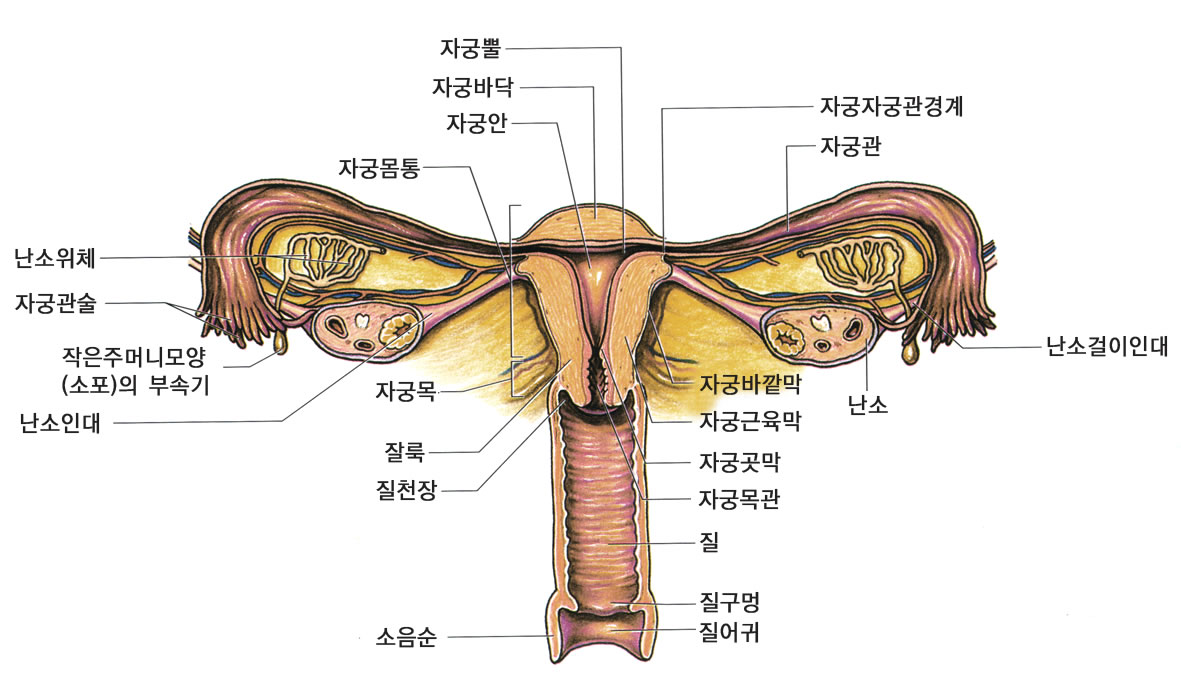 |
||
| HN | head and neck; head nurse; hemagglutinin neuraminidase; hematemesis neonatorum; hemorrhage of newbor... |
|---|---|
| F2F | face-to-face |
| ACO-HNS | American Council of Otolaryngology-Head and Neck Surgery |
| H&N | head and neck |
| HNS | head and neck surgery; home nursing supervisor |
| AAO-HNS | American Academy of Otolaryngology Head and Neck Surgery |
|---|---|
| H&N | Head and Neck |
| HNSCC | Head and Neck Squamous Cell Carcinoma |
| HNC | Head and neck cancer |
| HNSCC | Head and neck squamous cell cancers |
| head and neck neoplasms | Neoplasms of the head and neck. (12 Dec 1998) |
|---|---|
| bird face | bird face, abnormal shortness or recession of the mandible (27 Sep 1997) |
| masklike face | The expressionless or masklike facies characteristic of parkinsonism. Synonym: masklike face. (05 Mar 2000) |
| partial face-sparing lipodystrophy | A syndrome beginning at puberty that resembles total lipodystrophy but is inherited as an autosomal or X-linked dominant form. (05 Mar 2000) |
| regions of face | The topographical subdivisions of the face, including nasal, oral, mental, orbital, infraorbital, buccal, and zygomatic. Synonym: regiones faciales. (05 Mar 2000) |
| P face | Method of specimen preparation for the electron microscope in which rapidly frozen tissue is cracked so as to produce a fracture plane through the specimen. The surface of the fracture plane is then shadowed by heavy metal vapour, strengthened by a carbon film and the underlying specimen is digested away, leaving a replica that can be picked up on a grid and examined in the transmission electron microscope. The great advantage of the method is that the fracture plane tends to pass along the centre of lipid bilayers and it is therefore possible to get en face views of membranes that reveal the pattern of Integral membrane proteins. The E face is the outer lamella of the plasma membrane viewed as if from within the cell, the P face the inner lamella viewed from outside the cell. Fracture planes also often pass along lines of weakness such as the interface between cytoplasm and membrane, so that outer and inner membrane surfaces can be viewed. Further information about the structure can be revealed by freeze etching. Extremely rapid freezing followed by deep etching has allowed the structure of the cytoplasm to be studied without the artefacts that might be introduced by fixation. (18 Nov 1997) |
| moon face | The round, usually red face, with large jowls, seen in Cushing's disease or in exogenous hyperadrenocorticalism. Moon shaped face, moon facies. (05 Mar 2000) |
| whistling face syndrome | Congenital association of skeletal defects (ulnar deviation of hands with camptodactyly, talipes equinovarus, and frontal bone defects) and characteristic facies (protrusion of lips as in whistling, sunken eyes with hypertelorism, and small nose); autosomal dominant inheritance. Synonym: craniocarpotarsal dysplasia, Freeman-Sheldon syndrome, whistling face syndrome. (05 Mar 2000) |
| motor nerve of face | <anatomy, nerve> The facial nerve enervates the muscles of the face (facial expression). Lesion of the facial nerve cause a drooping to one side of the face, inability to wrinkle the forehead, inability to whistle, inability to close the eye and deviation of the mouth to the unaffected side. Synonym: cranial nerve VII. (27 Sep 1997) |
| cow face | The cowlike face of ocular hypertelorism; typical of craniofacial dysostosis. Synonym: cow face. (05 Mar 2000) |
| hippocratic face | Facies hippocratica, a pinched expression of the face, with sunken eyes, concavity of cheeks and temples, relaxed lips, and leaden complexion; observed in one close to death after severe and prolonged illness. Synonym: hippocratic face. (05 Mar 2000) |
| dish face | A facial malformation characterised by protuberant forehead, depressed nose and maxilla, and prominent chin. Synonym: dish face. (05 Mar 2000) |
| E face | In freeze fracture the plasma membrane cleaves between the acyl tails of membrane phospholipids, leaving a monolayer on each half of the specimen. The E face is the inner face of the outer lipid monolayer. From within the cell this is the view that you would have of the outer half of the plasma membrane if the inner layer could be removed. The complementary surface is the P face (the inner surface of the inner leaflet of the bilayer). E stands for ectoplasmic, P for protoplasmic: not terms that are in common usage! (18 Nov 1997) |
| transverse vein of face | <anatomy, vein> A tributary of the superficial temporal or retromandibular veins, anastomosing with the facial vein. Synonym: vena transversa faciei, transverse vein of face. (05 Mar 2000) |
| face | 1. The exterior form or appearance of anything; that part which presents itself to the view; especially, the front or upper part or surface; that which particularly offers itself to the view of a spectator. "A mist . . . Watered the whole face of the ground." (Gen. Ii. 6) "Lake Leman wooes me with its crystal face." (Byron) 2. That part of a body, having several sides, which may be seen from one point, or which is presented toward a certain direction; one of the bounding planes of a solid; as, a cube has six faces. 3. <machinery> The principal dressed surface of a plate, disk, or pulley; the principal flat surface of a part or object. That part of the acting surface of a cog in a cog wheel, which projects beyond the pitch line. The width of a pulley, or the length of a cog from end to end; as, a pulley or cog wheel of ten inches face. 4. The upper surface, or the character upon the surface, of a type, plate, etc. The style or cut of a type or font of type. 5. Outside appearance; surface show; look; external aspect, whether natural, assumed, or acquired. "To set a face upon their own malignant design." (Milton) "This would produce a new face of things in Europe." (Addison) "We wear a face of joy, because We have been glad of yore." (Wordsworth) 6. That part of the head, especially. Of man, in which the eyes, cheeks, nose, and mouth are situated; visage; countenance. "In the sweat of thy face shalt thou eat bread." (Gen. Iii. 19) 7. Cast of features; expression of countenance; look; air; appearance. "We set the best faceon it we could." (Dryden) 8. <astronomy> Ten degrees in extent of a sign of the zodiac. 9. Maintenance of the countenance free from abashment or confusion; confidence; boldness; shamelessness; effrontery. "This is the man that has the face to charge others with false citations." (Tillotson) 10. Presence; sight; front; as in the phrases, before the face of, in the immediate presence of; in the face of, before, in, or against the front of; as, to fly in the face of danger; to the face of, directly to; from the face of, from the presenceof. 11. Mode of regard, whether favorable or unfavorable; favor or anger; mostly in Scriptural phrases. "The Lord make his face to shine upon thee." (Num. Vi. 25) "My face [favor] will I turn also from them." (Ezek. Vii. 22) 12. <chemical> The end or wall of the tunnel, drift, or excavation, at which work is progressing or was last done. 13. The exact amount expressed on a bill, note, bond, or other mercantile paper, without any addition for interest or reduction for discount. Face is used either adjectively or as part of a compound; as, face guard or face-guard; face cloth; face plan or face-plan; face hammer. <medicine> Face ague A crown wheel. A Wheel whose disk face is adapted for grinding and polishing; a lap. Cylinder face, one of the sides of a battalion when formed in a square. Face of a watch, clock, compass, card etc, the dial or graduated surface on which a pointer indicates the time of day, point of the compass, etc. Face to face. In the presence of each other; as, to bring the accuser and the accused face to face. Without the interposition of any body or substance. "Now we see through a glass darkly; but then face to face." 1 . With the faces or finished surfaces turned inward or toward one another; vis a vis; opposed to back to back. To fly in the face of, to defy; to brave; to withstand. To make a face, to distort the countenance; to make a grimace. Origin: F, from L. Facies form, shape, face, perh. From facere = to make (see Fact); or perh. Orig. Meaning appearance, and from a root meaning to shine, and akin to E. Fancy. Cf. Facetious. Source: Websters Dictionary (01 Mar 1998) |
제품명 |
판매사 |
보험코드 | 성분/함량 | 구분/보험급여 |
|---|
제품명 |
판매사 |
보험코드 | 성분/함량 | 구분/보험급여 |
|---|