
| 영문 | renal cell carcinoma | 한글 | 콩팥세포암종 |
|---|---|---|---|
| 설명 | 콩팥에 생긴 원시콩팥조직에서 발생한 암. 주로 원시세뇨관조직에서 발생한다. 대표적인 세포조직형은 염색시 세포질이 맑게 비어보이는 맑은세포암종이다. 치료는 수술과 항암화학요법이며 아주 드물지만 저절로 낫는 경우도 있는 것으로 보고되어 있다. |
||
| 영문 | squamous cell carcinoma | 한글 | 편평세포암종 |
|---|---|---|---|
| 설명 | 편평세포 기원의 암으로서, 편평세포가 있는 어떤 곳에서든 발생가능함. 따라서 식도암, 피부암, 폐암, 자궁암 등이 여기에 해당된다. 특히 피부암은 많은 자외선조사에 의해 생기는 광선각화증에서 발생가능하다. 병리조직학적 특성으로서 각질을 생성한다. |
||
| 영문 | hepatic duct | 한글 | 간관 |
|---|---|---|---|
| 설명 | 간에서 생성된 담즙이 지나는 통로로 간에서 직접 담즙을 운반하는 관을 말한다. 간에서 만들어진 담즙은 간관, 쓸개주머니관를 거쳐서 쓸개에 보관되었다가 온쓸개관을 통해서 샘창자로 보내진다.  |
||
| 영문 | lacrimal duct | 한글 | 눈물관 |
|---|---|---|---|
| 설명 | 눈물이 흘러내리는 통로에 해당한다. 눈물은 대개 눈물샘에서 만들어져 눈을 적신 뒤에, 여기를 거쳐서 눈물주머니에 모인 뒤, 코눈물관으로 흘러 코 안쪽으로 내려가게 된다. 만약 여기가 막히면, 눈물이 계속 고이게 되어 계속 눈물을 흘리게 되며, 또한 병균의 서식처가 되어 감염의 위험성이 높아진다. 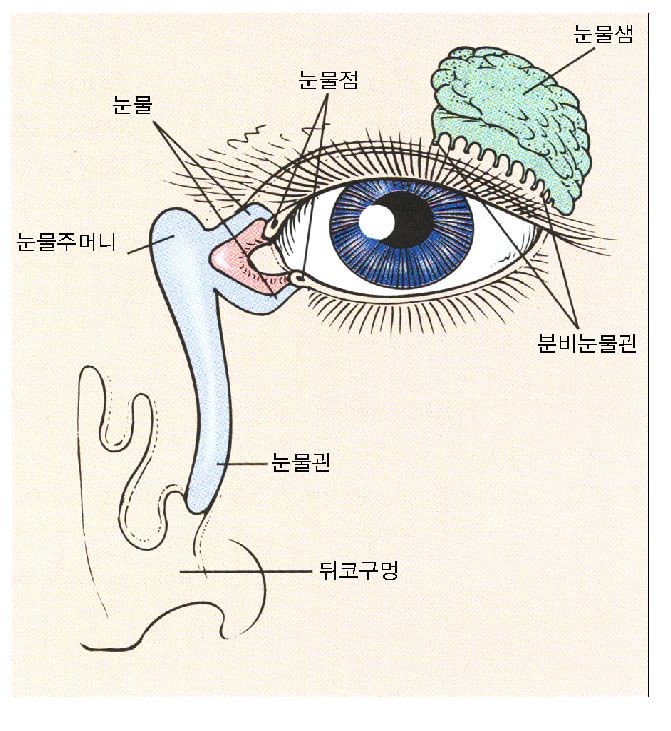 |
||
| 영문 | pancreatic duct | 한글 | 이자관, 췌장관 |
|---|---|---|---|
| 설명 | 이자에서 이자액을 분비하도록 샘창자로 이어진 관. 이자관은 샘창자의 중간부에서 온쓸개관과 같이 개구한다. |
||
| ACC | accommodation; acetyl coenzyme A carboxylase; acinic cell carcinoma; acute care center; adenoid cyst... |
|---|---|
| EC | effective concentration; ejection click; electrochemical; electron capture; embryonal carcinoma; eme... |
| SCC | self-care center; sequential combination chemotherapy; services for crippled children; short-course ... |
| CD | cadaver donor; canine distemper; canine dose; carbohydrate dehydratase; carbon dioxide; cardiac dise... |
| TDF | testis-determining factor; thoracic duct fistula; thoracic duct flow; time-dose fractionation; tissu... |
| CDC | Collecting duct carcinoma |
|---|---|
| DCIS | Duct carcinoma in situ |
| SDC | Salivary duct carcinoma |
| BDL | Bile Duct Ligated |
| BD | Bile duct |
| carcinoma, infiltrating duct | An invasive (infiltrating) carcinoma of the breast. This carcinoma in which no special histological feature is recognised is designated nos or not otherwise specified and is by far the most common ductal tumour, accounting for almost 70% of breast cancers. It is characterised by stony hardness upon palpation. It commonly metastasizes to the axillary lymph nodes and its prognosis is the poorest of the various ductal types. (12 Dec 1998) |
|---|---|
| wolffian duct carcinoma | A rare tumour of the female genital tract, most often the ovary, formerly considered to be derived from mesonephric rests. Two varieties are recognised: (1) clear cell carcinoma, so called because of its histologic resemblance to renal cell carcinoma, and now considered to be of muellerian duct derivation and (2) an embryonal tumour (called also endodermal sinus tumour and yolk sac tumour), occurring chiefly in children. The latter variety may also arise in the testis. (12 Dec 1998) |
| acinic cell carcinoma | <tumour> An adenocarcinoma arising from secreting cells of a racemose gland, particularly the salivary glands. Synonym: acinar carcinoma, acinic cell carcinoma, acinose carcinoma, acinous carcinoma. (05 Mar 2000) |
| adenoid squamous cell carcinoma | <tumour> A malignant neoplasm consisting chiefly of glandular epithelium (adenocarcinoma), usually well differentiated, with foci of metaplasia to squamous (or epidermoid) neoplastic cells. Synonym: adenoid squamous cell carcinoma. (05 Mar 2000) |
| alveolar cell carcinoma | <tumour> A carcinoma, thought to be derived from epithelium of terminal bronchioles, in which the neoplastic tissue extends along the alveolar walls and grows in small masses within the alveoli; involvement may be uniformly diffuse and massive, or nodular, or lobular; microscopically, the neoplastic cells are cuboidal or columnar and form papillary structures; mucin may be demonstrated in some of the cells and in the material in the alveoli, which also includes denuded cells; metastases in regional lymph nodes, and even in more distant sites, are known to occur, but are infrequent. Synonym: alveolar cell carcinoma, bronchiolar adenocarcinoma, bronchiolo-alveolar carcinoma, bronchioloalveolar adenocarcinoma. (05 Mar 2000) |
| basal cell carcinoma | <oncology, tumour> The most common form of skin cancer. A malignant growth of epidermal tissue, specifically basal cells. most common in the fair-skinned on sun-exposed areas (especially the face). (15 Nov 1997) |
| basal squamous cell carcinoma | <tumour> A carcinoma of the skin which in structure and behaviour is considered transitional between basal cell and squamous cell carcinoma The term should not be used for the much more common keratotic variety of basal cell carcinoma, in which the tumour cells are of basal type but which contains small foci of abrupt keratinization. Synonym: basal squamous cell carcinoma. (05 Mar 2000) |
| carcinoma, acinar cell | A malignant tumour arising from secreting cells of a racemose gland, particularly the salivary glands. Racemose (latin racemosus, full of clusters) refers, as does acinar (latin acinus, grape), to small saclike dilatations in various glands. Acinar cell carcinomas are usually well differentiated and account for about 13% of the cancers arising in the parotid gland. Lymph node metastasis occurs in about 16% of cases. Local recurrences and distant metastases many years after treatment are common. This tumour appears in all age groups and is most common in women. (12 Dec 1998) |
| carcinoma, basal cell | A malignant skin neoplasm that seldom metastasizes but has potentialities for local invasion and destruction. Clinically it is divided into types: nodular, cicatricial, morphaic, and erythematoid (pagetoid). More than 95% of these carcinomas occur in patients over 40. They develop on hair-bearing skin, most commonly on sun-exposed areas. Approximately 85% are found on the head and neck area and the remaining 15% on the trunk and limbs. (12 Dec 1998) |
| carcinoma, giant cell | An epithelial neoplasm characterised by unusually large anaplastic cells. It is highly malignant with fulminant clinical course, bizarre histologic appearance and poor prognosis. It is most common in the lung and thyroid. (12 Dec 1998) |
| carcinoma, islet cell | A carcinoma of the islets of langerhans. (12 Dec 1998) |
| carcinoma, large cell | A tumour of undifferentiated (anaplastic) cells of large size. It is usually bronchogenic. (12 Dec 1998) |
| carcinoma, merkel cell | A carcinoma arising from merkel cells located in the basal layer of the epidermis and occurring most commonly as a primary neuroendocrine carcinoma of the skin. Merkel cells are tactile cells of neuroectodermal origin and histologically show neurosecretory granules. The skin of the head and neck are a common site of merkel cell carcinoma, occurring generally in elderly patients. (12 Dec 1998) |
| carcinoma, non-small-cell lung | A heterogeneous aggregate of at least three distinct histological types of lung cancer, including squamous cell carcinoma, adenocarcinoma, and large cell carcinoma. They are dealt with collectively because of the shared properties of poor response to conventional chemotherapy and the potential for cure with surgical resection in a fraction of patients. (12 Dec 1998) |
| carcinoma, renal cell | Carcinoma of the renal parenchyma usually occurring in middle age or later and composed of tubular cells in varying arrangements. It was first described in 1826. Possible causal factors are environmental, hormonal, cellular, and genetic. Smoking is a definite risk factor and obesity is associated with increased risk. Renal cell carcinoma accounts for approximately 3% of adult cancer; the male-female ratio is 2:1. It is more common among urban residents than rural. (12 Dec 1998) |
제품명 |
판매사 |
보험코드 | 성분/함량 | 구분/보험급여 |
|---|
제품명 |
판매사 |
보험코드 | 성분/함량 | 구분/보험급여 |
|---|