
| 영문 | carotid artery | 한글 | 목동맥 |
|---|---|---|---|
| 설명 | 머리부분의 혈액을 공급하는 동맥. 온목동맥는 대동맥에서 직접 나오는 동맥으로, 바깥목동맥와 속목동맥로 나뉜다. 속목동맥은 뇌의 혈액을 공급하는 역할을 하고, 바깥목동맥은 뇌를 제외한 머리부분에 혈액을 공급하는 역할을 한다. |
||
| 영문 | hepatic duct | 한글 | 간관 |
|---|---|---|---|
| 설명 | 간에서 생성된 담즙이 지나는 통로로 간에서 직접 담즙을 운반하는 관을 말한다. 간에서 만들어진 담즙은 간관, 쓸개주머니관를 거쳐서 쓸개에 보관되었다가 온쓸개관을 통해서 샘창자로 보내진다.  |
||
| 영문 | lacrimal duct | 한글 | 눈물관 |
|---|---|---|---|
| 설명 | 눈물이 흘러내리는 통로에 해당한다. 눈물은 대개 눈물샘에서 만들어져 눈을 적신 뒤에, 여기를 거쳐서 눈물주머니에 모인 뒤, 코눈물관으로 흘러 코 안쪽으로 내려가게 된다. 만약 여기가 막히면, 눈물이 계속 고이게 되어 계속 눈물을 흘리게 되며, 또한 병균의 서식처가 되어 감염의 위험성이 높아진다. 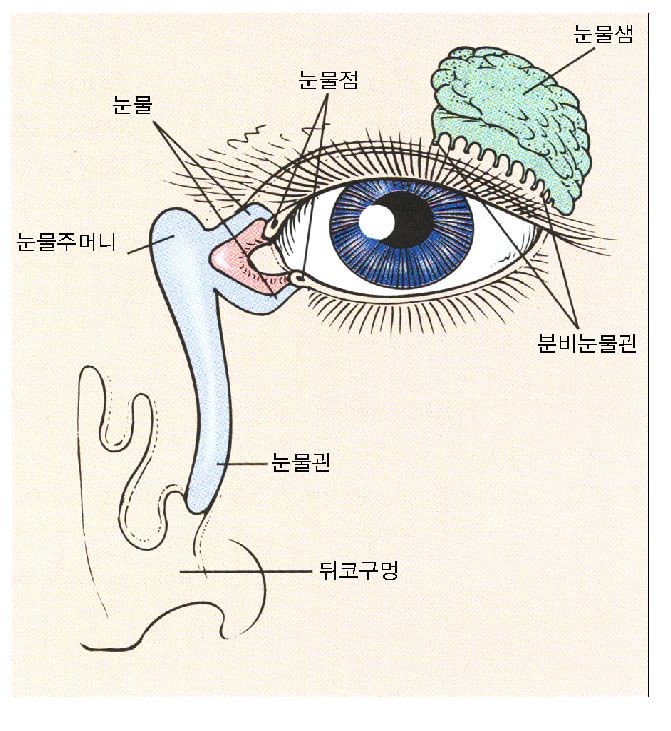 |
||
| 영문 | pancreatic duct | 한글 | 이자관, 췌장관 |
|---|---|---|---|
| 설명 | 이자에서 이자액을 분비하도록 샘창자로 이어진 관. 이자관은 샘창자의 중간부에서 온쓸개관과 같이 개구한다. |
||
| 영문 | nasolacrimal duct | 한글 | 코눈물관 |
|---|---|---|---|
| 설명 | 눈물은 대개 눈물샘에서 만들어져 눈을 적신 뒤에 누관을 거쳐서 눈물주머니에 모인 뒤에 이 코눈물관으로 흘러 코 안쪽으로 내려가게 된다. 만일 여기가 막히면, 눈물이 계속 고이게 되어 계속 눈물을 흘리게 되며, 또한 병균의 서식처가 되어 감염의 위험성이 높아진다. |
||
| JVP | [POMD P 49 - 52] 1) Jugular Vein Pressure 2) Jugular Venous Pulse ... |
|---|---|
| CD | cadaver donor; canine distemper; canine dose; carbohydrate dehydratase; carbon dioxide; cardiac dise... |
| TDF | testis-determining factor; thoracic duct fistula; thoracic duct flow; time-dose fractionation; tissu... |
| CBD | carotid body denervation; closed bladder drainage; common bile duct |
| CS | calf serum; campomelic syndrome; carcinoid syndrome; cardiogenic shock; caries-susceptible; carotid ... |
| BDL | Bile Duct Ligated |
|---|---|
| BD | Bile duct |
| BDL | Bile duct ligation |
| CDC | Collecting duct carcinoma |
| CBD | Common Bile Duct |
| carotid duct | A portion of the embryonic dorsal aorta between points of juncture with the third and fourth arch arteries; it disappears early in development. Synonym: carotid duct. (05 Mar 2000) |
|---|
| artery, carotid | A key artery located in the front of the neck that carries blood from the heart to the brain. (12 Dec 1998) |
|---|---|
| basal tentorial branch of internal carotid artery | <anatomy, artery> A small branch from the cavernous part of the internal carotid artery to the base of the tentorium. Synonym: ramus basalis tentorii arteriae carotidis internae. (05 Mar 2000) |
| ganglionic branch of internal carotid artery | <anatomy, artery> Branch to trigeminal ganglion; a small branch of the cavernous part of the internal carotid artery to the trigeminal ganglion. Synonym: ramus ganglii trigeminalis. (05 Mar 2000) |
| marginal tentorial branch of internal carotid artery | <anatomy, artery> A small branch from the cavernous part of the internal carotid artery to the free margin of the tentorium. Synonym: ramus marginalis tentorii arteriae carotidis internae. (05 Mar 2000) |
| carotid | Pertaining to the carotid artery. (12 Dec 1998) |
| carotid arteries | <anatomy> Paired large calibre vessels that pass on either side of the neck supplying oxygenated blood to the brain. Occlusive disease (atherosclerosis) of the vessels can lead to stroke. (27 Sep 1997) |
| carotid artery | <anatomy, artery> A key artery located in the front of the neck that carries blood from the heart to the brain. Cholesterol plaques on the inner wall of the carotid artery can lead to stroke. (12 Dec 1998) |
| carotid artery bruit | <radiology> Differential diagnosis: Atherosclerotic plaque or stenosis in common carotid artery or major vessels., Normal vessel. Asymptomatic bruits are a risk factor for stroke, and 75% of strokes occur in the carotid circulation. The majority of patients with bruits will have stenosis of 50% or more. The vast majority (90%) of strokes occur without prior symptoms. REF: MacNeil BJ, Abrams HL. Brigham and Women's Hospital Handbook of Diagnostic Imaging. Chapter 27. (12 Dec 1998) |
| carotid artery, common | The two principal arteries supplying the structures of the head and neck. They ascend in the neck, one on each side, and at the level of the upper border of the thyroid cartilage, each divides into two branches, the external (carotid artery, external) and internal (carotid artery, internal) carotid arteries. (12 Dec 1998) |
| carotid artery, external | Branch of the common carotid artery which supplies the exterior of the head, the face, and the greater part of the neck. (12 Dec 1998) |
| carotid artery, internal | Branch of the common carotid artery which supplies the anterior part of the brain, the eye and its appendages, the forehead and nose. (12 Dec 1998) |
| carotid artery occlusive syndrome | <syndrome> Aortic arch syndrome, also referred to by many as vertebral-basilar artery disease, carotid artery occlusive syndrome and subclavian steal syndrome. Characterised by a constellation of signs and symptoms which occur secondary to abnormalities in the major arteries which extend off of the aortic arch. These abnormalities are structural and most often secondary to the effects of atherosclerosis, blood clots, trauma or a congenital abnormality. Symptoms of this condition include various neurologic symptoms, reduction in pulse and changes in blood pressure. (27 Sep 1997) |
| carotid artery thrombosis | Formation of a clot in a carotid artery often resulting from atherosclerosis. Patients are at high risk for developing stroke. (12 Dec 1998) |
| carotid body | A small cluster of chemoreceptive and supporting cells located near the bifurcation of the internal carotid artery. The carotid body, which is richly supplied with fenestrated capillaries, senses the pH, carbon dioxide, and oxygen concentrations in the blood and plays a crucial role in their homeostatic control. (12 Dec 1998) |
| carotid body cell | <pathology> Cells derived from the neural crest, involved in sensing pH and oxygen tension of the blood. (18 Nov 1997) |
제품명 |
판매사 |
보험코드 | 성분/함량 | 구분/보험급여 |
|---|
제품명 |
판매사 |
보험코드 | 성분/함량 | 구분/보험급여 |
|---|