
| 영문 | biliary tract | 한글 | 쓸개길, 담도, 담관 |
|---|---|---|---|
| 설명 | 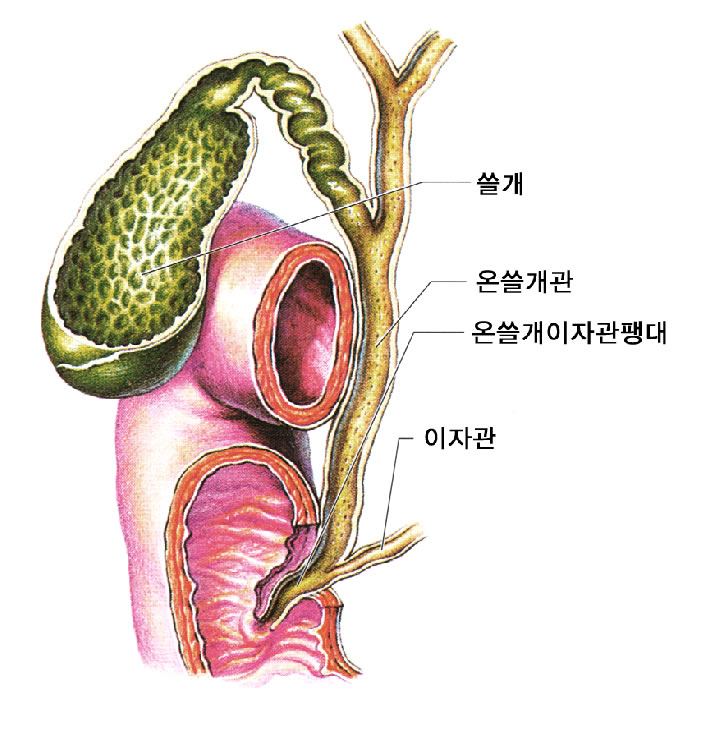 간에서 만들어진 쓸개즙을 수송하는 관조직의 일부. 간에서 만들어진 담즙은 간관, 쓸개관을 거쳐서 쓸개에 보관되었다가 온쓸개관을 통해서 샘창자로 보내진다. 이처럼 간에서 만들어진 담즙이 샘창자까지 배설되는 길로서 길이는 6~7cm 이며 간관, 쓸개관, 온쓸개관 따위로 이루어져 있다. |
||
| 영문 | lacrimal glands | 한글 | 눈물샘 |
|---|---|---|---|
| 설명 | 눈물을 만드는 곳이다. 눈물은 눈의 건조를 막고 이물질을 씻어내리는 역할을 한다. 눈물은 대개 눈물샘에서 만들어져 눈을 적신 뒤 눈물관을 거친뒤에 눈물주머니에 모여서 코눈물관으로 흘러 코 안쪽으로 내려가게 된다. |
||
| 영문 | parathyroid glands | 한글 | 부갑상샘 |
|---|---|---|---|
| 설명 | 갑상샘속에 존재하는 조그만 호르몬 생성기관. 갑상샘속에 숨어 있으므로 눈에 잘 띄지 않는다. 그래서 흔히 갑상샘절제수술시에 같이 절제되어 부갑상샘호르몬감소가 나타나기도 한다. 부갑상샘호르몬을 생성한다. 이 호르몬은 뼈에서 혈액으로 칼슘(calcium)의 이동을 증가시키고, 위장관에서 칼슘의 흡수를 촉진시키며, 콩팥에서의 칼슘분비를 감소시키는 반면에 인산염(phosphate)의 분비를 촉진시켜, 결국은 혈중칼슘의 농도를 증가시키고 혈중인산염의 농도를 감소시킨다. 또한 이 호르몬은 비타민 D의 전환을 증가시킨다. 너무 지나친 부갑상샘호르몬의 분비가 있을 경우 골다공증(osteoporosis: 뼈에 구멍이 생기는 병적상태)과 다른 조직의 석회화를 볼 수 있다.  |
||
| 영문 | exocrine glands | 한글 | 외분비샘 |
|---|---|---|---|
| 설명 | 체표나 소화관 등 신체 내외표면에의 분비를 행하는 샘. 땀샘, 눈물샘, 젓샘, 소화샘 등이 있다. 일반적으로는 분비물을 합성하는 샘세포의 집합체인 샘체와 분비물의 배출을 위한 도관으로 된다. |
||
| 영문 | mammary glands | 한글 | 젖샘, 유선 |
|---|---|---|---|
| 설명 | 정상적으로 아기를 낳은 산모에서는 뇌에서 젖분비호르몬(prolactin)의 분비가 증가하여 젖샘에서 젖을 만들게 된다. 이 때 젖의 분비를 촉진시키는 것으로는 아기가 젖을 빠는 행위 등이 있으며, 젖샘에서 생산된 모유는 젖샘관을 거쳐 젖꼭지를 통해 밖으로 나가게 된다. |
||
| BSU | Bartholin, Skene, urethral [glands]; basic structural unit; British standard unit |
|---|---|
| BUS | Bartholin, urethral, and Skene glands; busulfan |
| CHA | Canadian Hospital Association; Catholic Health Association; Chinese hamster; chronic hemolytic anemi... |
| EGBUS | external genitalia, Bartholin, urethral, Skene glands |
| GG | or S glands, goiter, or stiffness [of neck] |
| APs | Anterior pituitary glands |
|---|---|
| MSG | Minor salivary glands |
| SMSG | Submandibular Salivary Glands |
| ABP | Acute biliary pancreatitis |
| BA | Biliary atresia |
| glands of biliary mucosa | Small, mucous, tubuloalveolar glands in the mucosa of the larger bile ducts and especially in the neck of the gallbladder. Synonym: glandulae mucosae biliosae, Luschka's cystic glands, Theile's glands. (05 Mar 2000) |
|---|---|
| biliary | <anatomy> Pertaining to the bile, to the bile ducts or to the gallbladder. (13 Oct 1997) |
| biliary atresia | <embryology> A rare condition which is caused by the abnormal development of the bile ducts inside or outside the liver. The obstruction of bile flow from the liver can lead to cirrhosis of the liver if not treated. Symptoms include jaundice in the second to third week of life along with clay-coloured stools. See: newborn jaundice. (27 Sep 1997) |
| biliary calculus | <gastroenterology, surgery> A solid formation in the gallbladder composed of cholesterol and bile salts. (27 Sep 1997) |
| biliary canaliculus | One of the intercellular channels, about 1 um or less in diameter, that occurs between liver cells forming the first portion of the bile system. Synonym: bile capillary. (05 Mar 2000) |
| biliary cirrhosis | <gastroenterology> A rare form of liver disease which results in the irreversible destruction of the liver and bile ducts. The cause is unknown, but is thought to be an autoimmune mechanism. (27 Sep 1997) |
| biliary colic | Intense spasmodic pain felt in the right upper quadrant of the abdomen from impaction of a gallstone in the cystic duct. Synonym: gallstone colic, hepatic colic. (05 Mar 2000) |
| biliary duct | <anatomy> A duct that carries bile from the liver and gallbladder to the duodenum (first part of the small intestine). (27 Sep 1997) |
| biliary ductules | The excretory ducts of the liver that connect the interlobular ductules to the right (or left) hepatic duct. Synonym: ductuli biliferi, canalicular ducts, ductus biliferi, tubuli biliferi. (05 Mar 2000) |
| biliary dyskinesia | Structural or functional abnormality of the sphincter of Oddi that interferes with bile drainage. Synonym: biliary dyskinesia. (05 Mar 2000) |
| biliary endoprosthesis | <surgery> A tube inserted into a narrowed or blocked bile duct to improve bile flow. (09 Oct 1997) |
| biliary fever of dogs | A form of babesiosis (piroplasmosis) of the dog characterised by fever and icterus and caused by Babesia canis. (05 Mar 2000) |
| biliary fever of horses | <veterinary> A disease of horses caused by species of Babesia and characterised by high fever, icterus, and enlargement of the spleen and lymph nodes. Synonym: biliary fever of horses, equine biliary fever. (05 Mar 2000) |
| biliary fistula | Abnormal passage communicating with the biliary tract. (12 Dec 1998) |
| biliary obstruction | <gastroenterology, surgery> A blockage of the bile ducts can occur by a stone, tumour, pancreas (pancreatic tumour or swelling), bile duct inflammation, bile duct cysts, trauma, bile duct stricture or enlarged lymph nodes in the area. When bile duct obstruction occurs, bile accumulates in the liver and jaundice develops due to the accumulation of bilirubin in the bloodstream. (27 Sep 1997) |
제품명 |
판매사 |
보험코드 | 성분/함량 | 구분/보험급여 |
|---|
제품명 |
판매사 |
보험코드 | 성분/함량 | 구분/보험급여 |
|---|