
| 영문 | acquired immunodeficiency syndrome | 한글 | 후천면역결핍증후군, 에이즈 |
|---|---|---|---|
| 설명 | 인간면역결핍바이러스(HIV)에 의하여 면역 세포가 파괴됨으로써 인체의 면역능력이 극도로 저하되어 병원체에 대하여 무방비 상태에 이르는 병. 에이즈 바이러스의 감염으로 생기며, 1981년 미국에서 처음 보고되었다. 최초 감염으로부터 증상이 나타나기까지는 평균 10년 정도 걸리며 사망률이 대단히 높다. 성적 접촉, 오염 주사기 사용, 오염 혈액 및 혈액 제제 사용, 에이즈 산모로부터 수직감염 따위에 의하여 감염된다. 감염 후 일과성으로 감기와 같은 증상을 보이며 바이러스혈증으로 되지만 바이러스는 감소되고 6~8주 후에는 항체가 양성으로 된다. 6~10년 정도의 무증후성 보균기간을 지나서 에이즈관련증후군(AIDS related syndrome)으로 된다. 저항력의 감소, 림프절비대, 체중감소, 발열, 만성설사가 이어진다. 그 후 에이즈로 되며, 폐포자충폐렴 등의 원충병, 칸디다 등의 진균증, 헤르페스바이러스군 등의 기회감염이 이어진다. 또한 카포시육종, 림프종 등을 병발해서 사망한다. 바이러스의 뇌조직내 증식으로 치매를 일으킬 수도 있다. HIV-1은 10년간에 사망률이 90%, HIV-2는 10%이다. |
||
| 영문 | inguinal hernia | 한글 | 샅굴탈장, 서혜부탈장 |
|---|---|---|---|
| 설명 | 탈장이란 선천적 또는 후천적으로 생긴 구멍이나 틈을 통해 본래 위치하고 있던 장소로부터 장기나 조직이 탈출된 상태를 말한다. 샅굴탈장은 탈장의 가장 흔한 형태로서 전체의 약 75%를 차지한다. 샅굴과 넙적다리를 관찰하여 튀어나온 부위가 있거나 검사를 하는 동안 밑으로 힘을 주어 보았을 때 튀어 나오는 부위가 있다면 탈장을 의심할 수 있다. 감금(혈류 순환 장애), 창자폐색 등의 합병증이 오면 위험하므로 가능한 조기에 수술을 시행해야 하나 생후 3개월 이후가 안전하다. 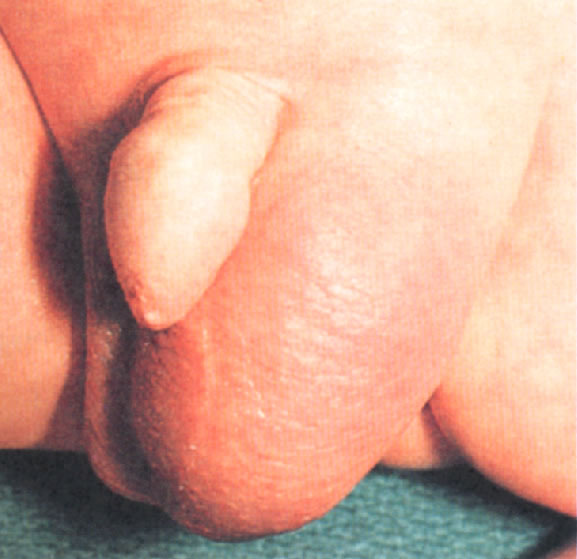 |
||
| 영문 | hiatal hernia | 한글 | 열공헤르니아 |
|---|---|---|---|
| 설명 | 위의 일부가 식도가 가로막을 통과하는 구멍을 통해서 흉강으로 빠져나가는 것이다. 탈장이 되는 방식에 따라서 미끄럼 헤르니아와 식도주위 헤르니아가 있다. 미끄럼헤르니아는 가장 흔한 형이며, 식도위접합부가 식도가 가로막을 빠져나오는 구멍 위에 위치하는 것으로, 이렇게 되면 식도와 위사이에 존재하는 조임근의 힘이 적어져서 위의 내용물이 쉽게 식도로 역류되고 이로 인해서 식도염을 일으키고 이 식도염이 지속될 경우에는 식도 협착을 일으키기도 한다. 식도주위헤르니아는 식도가 가로막을 통과하는 구멍까지 정상적으로 위치하지만 위가 흉 강으로 탈장된다. 이때는 위내용물의 식도로의 역류는 드물다. 대신에 식도가 탈장된 위에 눌려서 식도폐쇄의 증상이 나타난다. 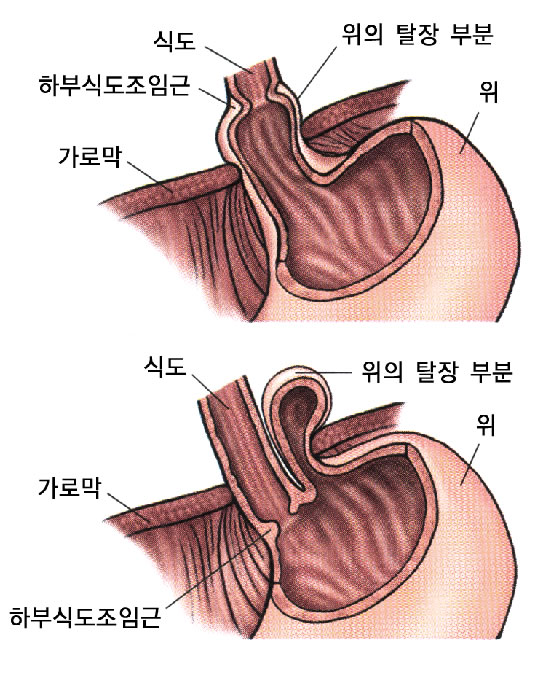 |
||
| 영문 | hernia | 한글 | 헤르니아, 탈장 |
|---|---|---|---|
| 설명 | 장기의 일부가 원래 있어야 할 장소에서 벗어난 상태. 복부에서는 사타구니, 허벅지, 배꼽, 가로막 등에 생기는 경우가 있고, 복부 이외에서는 척추원반이나 뇌에서 발생할 수 있다. 샅고랑헤르니아란 창자의 일부가 복벽의 약한 부위나 비정상적으로 존재하는 고환부위의 공간을 통해서 빠져나오는 것을 말하며, 열공헤르니아란 위의 일부가 식도가 통과하는 구멍을 통해서 흉강으로 빠져나가는 것을 말한다. |
||
| SAIDS | sexually acquired immunodeficiency syndrome; simian acquired immune deficiency syndrome |
|---|---|
| CDH | 1) Chronic Daily Headache = CTH = ... |
| CDH | ceramide dihexoside; congenital diaphragmatic hernia; congenital dislocation of hip; congenital dysp... |
| DH | daily habits; day hospital; dehydrocholate; dehydrogenase; delayed hypersensitivity; dermatitis herp... |
| EHH | esophageal hiatal hernia |
| CDH | Congenital Diaphragmatic Hernia |
|---|---|
| DH | Diaphragmatic hernia |
| H.H | hiatal hernia |
| ABI | Acquired Brain Injury |
| AISA | Acquired Idiopathic Sideroblastic Anemia |
| acquired | In medicine, the word acquired means new or added. New in the sense that it is not genetic (inherited) and added in the sense that is was not congenital (present at birth) but came along later. For example, AIDS is an acquired, not a genetic form of immune deficiency. (12 Dec 1998) |
|---|---|
| acquired agammaglobulinaemia | Heterogeneous group of immunodeficiency syndromes characterised by hypogammaglobulinaemia of most isotypes, variable B-cell defects, and the presence of recurrent bacterial infections. (12 Dec 1998) |
| acquired bronchiectasis | <chest medicine> Persistent and progressive dilation of bronchi or bronchioles as a consequence of inflammatory disease (lung infections), obstruction (tumour) or congenital abnormality (for example cystic fibrosis). Symptoms include fetid breath and paroxysmal coughing, with the expectoration of mucopurulent matter. It may affect the bronchioles uniformly (cylindric bronchiectasis) or occur in irregular pockets (sacculated bronchiectasis) or the dilated bronchi may have terminal bulbous enlargements (fusiform bronchiectasis). Although rarely congenital, it is most often an acquired condition in childhood. (13 Nov 1997) |
| acquired centric relation | See: centric jaw relation. (05 Mar 2000) |
| acquired character | A character developed in a plant or animal as a result of environmental influences during the individual's life. (05 Mar 2000) |
| acquired cuticle | A thin film (about 1 um), derived mainly from salivary glycoproteins, which forms over the surface of a cleansed tooth crown when it is exposed to the saliva. Synonym: acquired cuticle, acquired enamel cuticle, brown pellicle, posteruption cuticle. (05 Mar 2000) |
| acquired drives | Those drives not directly related to biological needs; a secondary drive can be learned as an offshoot of a primary drive, in which case it is often referred to as a motive. Synonym: acquired drives. (05 Mar 2000) |
| acquired eccentric relation | An eccentric relation that is assumed by habit in order to bring the teeth into occlusion. (05 Mar 2000) |
| acquired epileptic aphasia | <syndrome> Acquired epileptic aphasia. The typical history is that of a child whose development is normal for several years and then, either suddenly or in a fluctuating manner, loses comprehension of speech and the ability to use speech to communicate. The seizures are of no specific type, and are mostly mild and infrequent partial or atypical absences. (12 Dec 1998) |
| acquired haemolytic anaemia | Nonhereditary acute or chronic anaemia associated with or caused by extracorpuscular factors, e.g., certain infectious agents, chemicals (including autoantibodies or therapeutic agents), burns, toxic materials from higher plant and animal forms (including snake venoms). (05 Mar 2000) |
| acquired haemolytic icterus | Icterus and anaemia occuring in association with a moderate degree of splenomegaly, increased fragility of red blood cells, and increased amounts of urobilin in the urine. Synonym: icteroanaemia. Origin: G. Ikteros (05 Mar 2000) |
| acquired hyperlipidaemia | <biochemistry> A condition of elevated blood triglycerides or blood cholesterol that is a result of secondary factors (for example poor diet, drug-related causes, diabetes, hypothyroidism, Cushing's syndrome). (27 Sep 1997) |
| acquired hyperlipoproteinaemia | Nonfamilial hyperlipoproteinaemia that develops as a consequence of some primary disease, such as thyroid deficiency. (05 Mar 2000) |
| acquired hypogammaglobulinaemia | Heterogeneous group of immunodeficiency syndromes characterised by hypogammaglobulinaemia of most isotypes, variable B-cell defects, and the presence of recurrent bacterial infections. (12 Dec 1998) |
| acquired ichthyosis | A thickening and scaling of the skin associated with some malignant diseases (e.g., Hodgkin's disease, lymphosarcoma), leprosy, and severe nutritional deficiencies. (05 Mar 2000) |
| acquired hernia |
A hernia that develops any time after birth in contrast to one that is present at birth (congenital hernia). This type of hernia is usually the result of excessive strain on the muscular wall, frequently occurring following injur
출처:
|
|---|
제품명 |
판매사 |
보험코드 | 성분/함량 | 구분/보험급여 |
|---|
제품명 |
판매사 |
보험코드 | 성분/함량 | 구분/보험급여 |
|---|