
| 영문 | severe acute respiratory syndrome(SARS) | 한글 | 사스 |
|---|---|---|---|
| 설명 | 중국 광동 지역에서 가장 먼저 발생한 전염성 호흡기 질환으로 세계보건기구(WHO)에서 ‘중증급성호흡증후군(SARS)'으로 명명했다. 섭씨 38도 이상의 고열과 기침, 호흡곤란, 저산소증, X선상의 폐렴증상 중 하나 이상의 증상이 나타나며, 두통, 근육통, 식욕부진, 피로감, 발진, 설사를 동반할 수 있다. 초기 증상은 감기와 비슷하지만 폐렴으로 발전하면 치명적일 수 있다. 현재 밝혀진 감염경로는 환자가 재채기나 기침할 때 내뿜는 침방울이고, 이것이 다른 사람의 호흡기로 들어갈 때 전염된다. 침방울이 전달되는 거리는 보통 1m로 보고 있다. 공기를 통해 전염이 가능하다는 주장이 제기됐지만 아직 확인되지 않았다. 원인균은 변종 코로나바이러스로 밝혀졌다. |
||
| 영문 | alimentary tract | 한글 | 소화관, 영양관 |
|---|---|---|---|
| 설명 | 입에서 시작하여 항문으로 끝나는 소화를 담당하는 이르는 말. 위창자관이라고도 불린다. |
||
| 영문 | biliary tract | 한글 | 쓸개길, 담도, 담관 |
|---|---|---|---|
| 설명 | 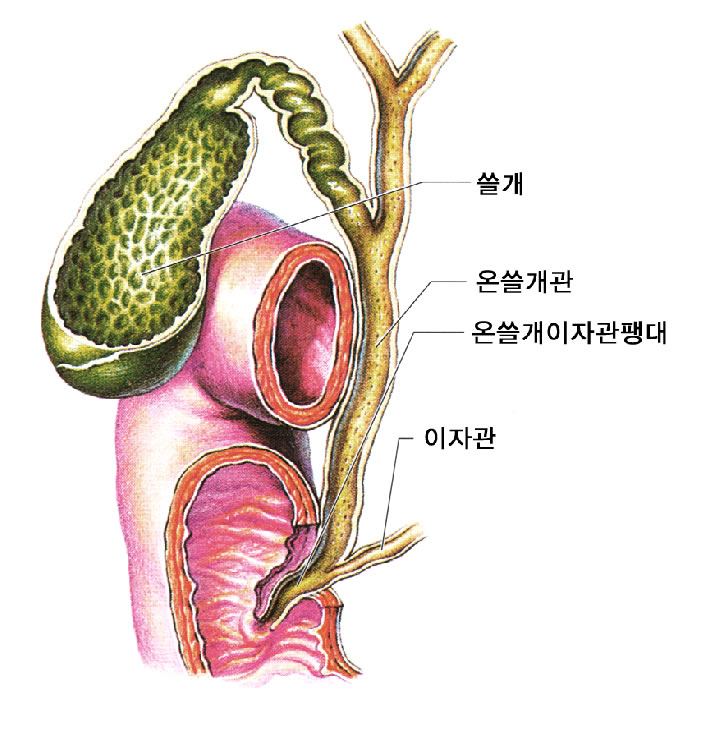 간에서 만들어진 쓸개즙을 수송하는 관조직의 일부. 간에서 만들어진 담즙은 간관, 쓸개관을 거쳐서 쓸개에 보관되었다가 온쓸개관을 통해서 샘창자로 보내진다. 이처럼 간에서 만들어진 담즙이 샘창자까지 배설되는 길로서 길이는 6~7cm 이며 간관, 쓸개관, 온쓸개관 따위로 이루어져 있다. |
||
| 영문 | urinary tract | 한글 | 요로 |
|---|---|---|---|
| 설명 | 오줌을 몸 밖으로 배출하기 위한 길. 콩팥, 요관, 방광, 요도로 이루어져 있다. |
||
| 영문 | severe acute respiratory syndrome(SARS) | 한글 | 중증급성호흡증후군 |
|---|---|---|---|
| 설명 | 중국 광동 지역에서 가장 먼저 발생한 전염성호흡기병으로 세계보건기구(WHO)에서 ‘중증급성호흡증후군(SARS)'으로 명명했다. 섭씨 38도 이상의 고열과 기침, 호흡곤란, 저산소증, X선상의 폐렴증상 중 하나 이상의 증상이 나타나며, 두통, 근육통, 식욕부진, 피로감, 발진, 설사를 동반할 수 있다. 초기 증상은 감기와 비슷하지만 폐렴으로 발전하면 치명적일 수 있다. 현재 밝혀진 감염경로는 환자가 재채기나 기침할 때 내뿜는 침방울이고, 이것이 다른 사람의 호흡기로 들어갈 때 전염된다. 침방울이 전달되는 거리는 보통 1m로 보고 있다. 공기를 통해 전염이 가능하다는 주장이 제기됐지만 아직 확인되지 않았다. 원인균은 변종 코로나바이러스로 밝혀졌다. |
||
| ECG | Electro-Cardio-Graphy(-Gram); 심전도 = EKG 1. Conducting System Structu... |
|---|---|
| LRI | lamina rara interna; lower respiratory [tract] illness; lower respiratory [tract] infection; lymphoc... |
| LRTI | lower respiratory tract illness; lower respiratory tract infection |
| AFP | Alpha(α) Feto-Protein [HP 1826, 1858, 1859, 2265] ; Oncofetal Antigens &nbs... |
| ARD | absolute reaction of degeneration; acute radiation disease; acute respiratory disease; adult respira... |
| R.E.A.L. | Revised European American Classification of Lymphoid Neoplasms |
|---|---|
| ARI | Acute Respiratory tract Infections |
| ALRI | Acute lower respiratory tract infection |
| LRT | Lower respiratory tract |
| LRI | Lower respiratory tract illness |
| respiratory tract | The air passages from the nose to the pulmonary alveoli, through the pharynx, larynx, trachea, and bronchi. (05 Mar 2000) |
|---|---|
| respiratory tract fistula | An abnormal passage communicating between any parts of the respiratory tract or between any part of the respiratory system and other organs. (12 Dec 1998) |
| granuloma, respiratory tract | Granulomatous diseases affecting one or more sites in the respiratory tract. (12 Dec 1998) |
| upper respiratory tract | The nasopharynx, oral cavity, and throat. (09 Oct 1997) |
| lower respiratory tract | <anatomy> The trachea, bronchi, and lungs. (09 Oct 1997) |
| lower respiratory tract smear | A group of cytologic specimens containing material from the lower respiratory tract and consisting mainly of sputum (spontaneous, induced) and material obtained at bronchoscopy (aspirated, lavaged, brushed); used for cytologic study of cancer and other diseases of the lungs. Synonym: bronchoscopic smear, sputum smear. (05 Mar 2000) |
| bladder neoplasms | Cancers or tumours of the bladder. The majority of bladder neoplasms are of the transitional cell variety and are usually papillary and multicentric. (12 Dec 1998) |
| bone marrow neoplasms | Neoplasms located in the bone marrow. They are differentiated from neoplasms composed of bone marrow cells, such as myeloma. most bone marrow neoplasms are metastatic. (12 Dec 1998) |
| breast neoplasms, male | Any neoplasms of the male breast. These occur infrequently in males in developed countries, the incidence being about 1% of that in females. Two-thirds of patients present with intraductal carcinoma. The average age of onset is 60 years for men. Orchiectomy was the standard treatment but it has been replaced by tamoxifen as the initial therapy since oestrogen-receptor-positive tumours are predominant in males. Orchiectomy and mastectomy may be used if initial drug therapy is not successful. The prognosis is worse than that for females. (12 Dec 1998) |
| vascular neoplasms | <oncology> Neoplasms located in vascular tissue or specific veins. They are differentiated from neoplasms, vascular tissue which are neoplasms composed of vascular tissue, such as angiofibroma or haemangioma. (12 Dec 1998) |
| pancreatic cystic neoplasms | <radiology> Microcystic adenoma, glycogen, benign, mucinous cystic neoplasm, macrocystic adenoma, cystadenoma/cystadenocarcinoma, mucin, pre-malignant, Both occur more commonly in women, peak in middle age (12 Dec 1998) |
| pancreatic neoplasms | <radiology> Adenocarcinoma, most common, usually in pancreatic head, nasty (1-2% survival at 1 yr!), cystic neoplasms, slow-growing, more common in women, isleT-cell tumours, soft-tissue tumours (rare), metastases (breast, lung, melanoma, stomach, colon) (12 Dec 1998) |
| mammary neoplasms | Tumours of the mammary gland. Their occurrence is uncommon with the exception of the female dog, in which they account for 25% of all neoplasms. (12 Dec 1998) |
| paranasal sinus neoplasms | Neoplasms or tumours of the paranasal sinuses. Malignant neoplasms are rare, comprising 3% of all head and neck neoplasms. The majority arise in the maxillary sinus with malignancies of the ethmoid sinus constituting virtually all the remaining tumours. (12 Dec 1998) |
| genital neoplasms, male | Neoplasms of the male genitalia. (12 Dec 1998) |
Synonyms : Neoplasm, Respiratory Tract, Neoplasms, Respiratory Tract, Respiratory Tract Neoplasm, Tract Neoplasm, Respiratory, Tract Neoplasms, Respiratory
제품명 |
판매사 |
보험코드 | 성분/함량 | 구분/보험급여 |
|---|
제품명 |
판매사 |
보험코드 | 성분/함량 | 구분/보험급여 |
|---|