
| 영문 | frostbite | 한글 | 동상 |
|---|---|---|---|
| 설명 | 추위 때문에 살갗이 얼어서 조직이 상하는 일. 정도에 따라 네 단계로 나뉘는데, 1도는 붉은 반점이 생긴 상태, 2도는 수포가 만들어진 상태, 3도는 피부가 괴사되어 궤양이 생긴 상태, 4도는 피부 깊숙이 괴사가 일어난 상태이다. 예방은 직접 추위에 노출되지 않도록 체표면의 보호-보온에 주의한다. 의복은 보온성이 좋은 순모제품이 좋으며, 신발은 발에 조금 큰 것으로, 물이 새어들지 않는 것을 선택한다. 동상에 걸리기 쉬운 부위(손가락-발가락-귀-코끝-뺨 등)는 동물성 기름이나 연고 등을 발라 잘 문질러 주거나 움직여서 혈액순환을 좋게 해준다. 어린이-노령자-허약자, 또는 피로할 때나 수면 중, 술에 취해 보온을 소홀히 하였을 경우 등에는 동상에 걸릴 위험이 크므로 주의하여야 한다. 따뜻한 음료를 마시는 것도 좋다. 응급처치는 제1도 및 제2도 동상의 경우에는 환자의 몸을 따뜻하게 해주는 동시에 환부를 마찰하면서 서서히 온도를 높여가는 방법과 37℃ 정도의 더운 목욕을 하여 한번에 동결을 녹여주는 방법이 있다. 온욕시간은 동상이 광범위할 때에는 30분~1시간이 적당하다. 피부에 상처가 나지 않도록 하고 청결히 하여 세균감염을 막아주고, 수포가 터지지 않도록 주의한다. 언 것이 녹으면 깨끗한 옷으로 덮고 빨리 의사의 치료를 받도록 한다. 전신에 동상을 입었을 때에는 환자의 기분을 돋우어주면서 마른 수건으로 먼저 마찰을 해주고, 서서히 실온을 높여 따뜻하게 한다. |
||
| 영문 | torticollis, wry neck | 한글 | 기운목, 사경 |
|---|---|---|---|
| 설명 | 목근육이 수축된 상태로, 목이 비틀어져서 머리가 한쪽으로 기우는 증상. 또는 그 증상을 보이는 목. 목 근육이 선천적으로 짧아서 그런 경우가 많으며 후천적으로는 류마치스, 뼈의 이상, 사시나 심인 반응도 원인이 된다. |
||
| 영문 | cervix, neck | 한글 | 목, 경부 |
|---|---|---|---|
| 설명 | 목, 경부를 지칭하는 말. 특히 자궁의 목을 지칭하는데 쓰인다. 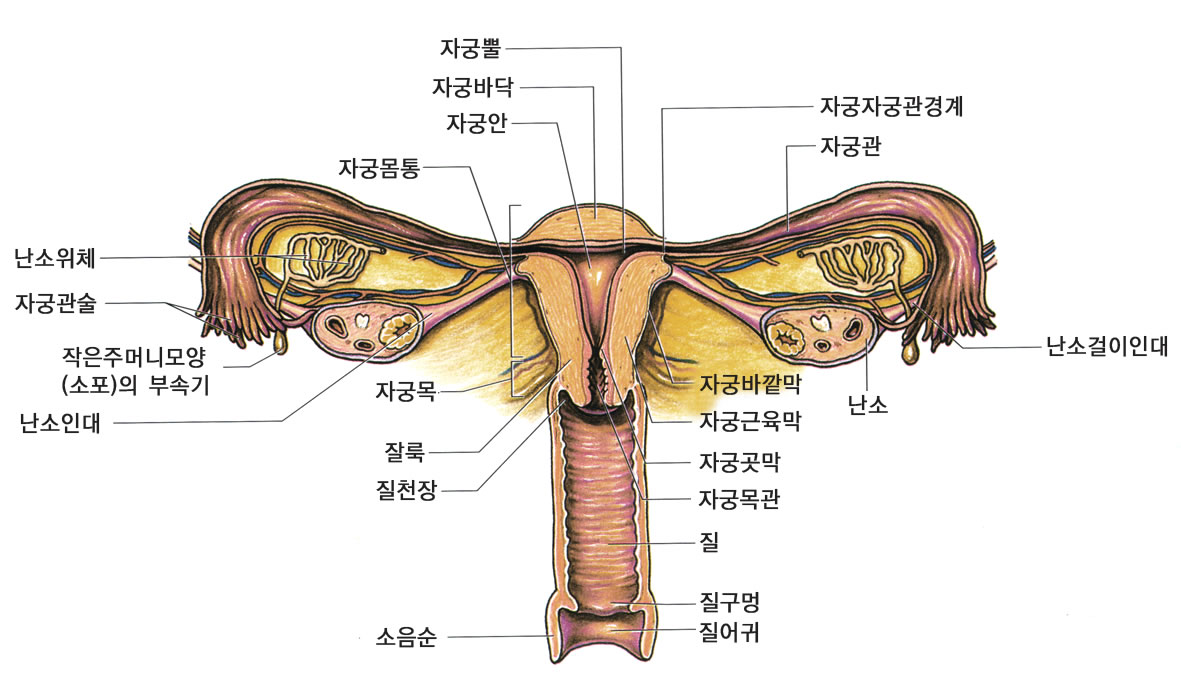 |
||
| 영문 | necrosis | 한글 | 괴사 |
|---|---|---|---|
| 설명 | 세포가 죽는 것을 말한다. 원인은 어떤 외상일 수도 있고, 혹은 동맥이 좁아져서 피가 통하지 않아 죽게 되는 것일 수도 있다. 어떤 경우이든, 괴사된 조직이 체내에 있으면, 결국은 여러 합병증을 불러 일으키므로 제거되어야 한다. 괴저괴사: gangrenous necrosis 괴저괴사라는 용어는 보통 괴사라는 것과 크게 다른 것은 없으나 임상, 특히 외과에서 흔히 쓰고 있는 말이다. 이는 팔다리, 특히 다리에서 많이 생기는데 혈액공급이 소실되고 그 후에 세균감염을 받아서 생기는 병터이다. 만약 혈류공급의 차단에 의한 조직의 죽음이 주병변이고 이차적 세균의 감염이 적고, 있더라도 아주 미약해서 병터가 마르고 액체성분이 적을 경우에 이것을 건성괴저(dry gangrene)이라고 하고, 세균의 감염이 아주 많아서 죽은 조직이 분해가 되어서 액체성분이 괴저의 조직에 많이 있어서 보기에 습해 보이면 이것을 습성괴저(wet gangrene)이라고 한다. |
||
| 영문 | fibrinoid necrosis | 한글 | 섬유소성괴사 |
|---|---|---|---|
| 설명 | 초기의 류마티스 혹은 악성종양 등에서 볼 수 있는 혈관-결합조직의 특유한 변화로 혈관벽이나 주위의 결합조직이 섬유소모양으로 균질한 물질로 되고, 호산성으로 염색된다. 이것은 섬유소와 거의 똑같은 염색성을 나타내기 때문에 염증에서 혈관으로부터 섬유소 또는 섬유소모양의 물질이 삼출하여 결합조직 섬유간에 침착하여 구조가 불명료한 것으로 생각되었으나, 최근 조직화학, 전자현미경 등에 의하여 결합섬유자체에도 변화가 있는 것으로 면역글로불린의 침착도 증명되고 있다. |
||
| HN | head and neck; head nurse; hemagglutinin neuraminidase; hematemesis neonatorum; hemorrhage of newbor... |
|---|---|
| AN | acanthosis nigricans; acne neonatorum; acoustic neuroma; adult, normal; ala nasi; amyl nitrate; aneu... |
| ARN | acute renal necrosis; acute retinal necrosis; arcuate nucleus; Association of Rehabilitation Nurses |
| SHN | spontaneous hemorrhagic necrosis; subacute hepatic necrosis |
| ABCDES | abnormal alignment, bones-periarticular osteoporosis, cartilage-joint space loss, deformities, margi... |
| AAO-HNS | American Academy of Otolaryngology Head and Neck Surgery |
|---|---|
| BNI | Bladder neck incision |
| FN | Femoral neck |
| H&N | Head and Neck |
| HNSCC | Head and Neck Squamous Cell Carcinoma |
| frostbite | A cold injury that is accompanied by pallor, numbness and a loss of cold sensation. (27 Sep 1997) |
|---|---|
| acute tubular necrosis | <nephrology> A kidney disorder that results in damage to the renal tubule cells leading to acute renal failure. Acute tubular necrosis can result from any condition which deprives the kidney of oxygen (ischaemia). Acute tubular necrosis may occur as a complication of shock, trauma or sepsis. Conditions such as diabetes or liver disease can predispose people to the development of acute tubular necrosis. Certain medications (for example aminoglycosides, amphotericin B, cyclosporine) are known to cause acute tubular necrosis as a toxic side effect. Radiopaque contrast dyes, used in some radiologic procedures, may also result in acute tubular necrosis as a rare complication from contrast dye use. Acronym: ATN (13 Nov 1997) |
| aseptic necrosis | <orthopaedics, pathology> Condition in which poor blood supply to an area of bone leads to bone death. Also called avascular necrosis and osteonecrosis. (12 Dec 1998) |
| avascular necrosis | <radiology> Aetiology (PLASTIC RAGS): P pancreatitis, L lupus, A alcohol, S steroids, T trauma, I idiopathic, infection, C caisson disease, collagen vascular disease, R radiation, rheumatoid arthritis, A amyloid, G Gaucher disease, S sickle cell disease findings: sclerosis, crescent sign, collapse (e.g., of femoral head) see also: staging (12 Dec 1998) |
| avascular necrosis staging | <radiology> Stage CT/X-ray bone scan I - cold/hot spot II sclerotic focus with osteopenic ring III crescent sign (subchondral lucency) IV articular collapse flattening of femoral head sensitivity 86% 78% specificity 79% 75% see also: avascular necrosis (AVN) (12 Dec 1998) |
| bridging hepatic necrosis | Area of liver necrosis which bridges adjacent portal areas and central veins; subsequent post-necrotic collapse and fibrosis is likely to result in cirrhosis. (05 Mar 2000) |
| p60 tumour necrosis factor receptor-associated kinase | <enzyme> Interacts with and causes phosphorylation of the cytoplasmic domain of the tnf receptor Registry number: EC 2.7.10.- Synonym: p60 tnf receptor-associated kinase, p60-trak (26 Jun 1999) |
| papillary necrosis | <radiology> Mnemonic: POST CARD, P pyelonephritis, O obstruction, S sickle cell disease, T TB, C cirrhosis (EtOH), A analgesics (phenacetin and aspirin), R renal vein thrombosis, D diabetes (12 Dec 1998) |
| receptors, tumour necrosis factor | Cell surface receptors that bind tumour necrosis factor and trigger changes which influence the behaviour of cells. The two recognised tumour necrosis factor receptors are designated alpha and beta receptors. Both receptors bind both alpha and beta tumour necrosis factors with high affinity, and both are members of the nerve growth factor receptor family. (12 Dec 1998) |
| caseous necrosis | Caseation necrosis, necrosis characteristic of certain inflammations (e.g., tuberculosis, histoplasmosis), which represents necrosis with loss of separate structures of the various cellular and histologic elements; affected tissue manifests the friable, crumbly consistency and dull, opaque quality observed in cheese. Synonym: caseous degeneration. (05 Mar 2000) |
| globus pallidus necrosis | <radiology> Carbon monoxide poisoning, barbiturate intoxication, cyanide poisoning, hydrogen sulfide poisoning, hypoglycaemia, hypoxia, hypotension, Leigh disease, Wilson disease CT: bilateral, symmetric low density in globus pallidus Cf: methanol intoxication leading to putamenal haemorrhagic necrosis (changes seen more laterally) (12 Dec 1998) |
| renal papillary necrosis | <nephrology> Necrosis of renal papillae, occurring in acute pyelonephritis, especially in diabetics, or in analgesic nephropathy; renal failure may result. Synonym: necrotizing papillitis. (05 Mar 2000) |
| central necrosis | Necrosis involving the deeper or inner portions of a tissue, or an organ or its units. (05 Mar 2000) |
| cerebrocortical necrosis | A noninfectious disease of ruminants characterised by a tissue-thiamine deficiency and by amaurosis and strabismus, followed by recumbency, opisthotonos, and convulsions. Synonym: cerebrocortical necrosis. (05 Mar 2000) |
| retinal necrosis syndrome, acute | <ophthalmology> Mild to fulminant necrotizing vaso-occlusive retinitis associated with a high incidence of retinal detachment and poor vision outcome. (12 Dec 1998) |
제품명 |
판매사 |
보험코드 | 성분/함량 | 구분/보험급여 |
|---|
제품명 |
판매사 |
보험코드 | 성분/함량 | 구분/보험급여 |
|---|