
| 영문 | Golgi body | 한글 | 골지체 |
|---|---|---|---|
| 설명 | 세포내의 세포질 소기관. 골지장치라고도 한다. 1898년 이탈리아의 C. 골지에 의해 올빼미의 신경세포체에서 발견되었으며, 이후 다른 세포에서, 또 근래에는 식물세포에서도 발견되고 있다. 전자 현미경에 의한 연구에서 골지체에 해당되는 부분은 층상구조-꽈리구조-알갱이 구조의 세가지로 되어 있으며, 이것을 골지역이라 한다. 그 작용은 명확하지는 않으나 샘세포의 소포체에서 합성된 분비물이 골지역에서 농축되어 분비과립이 되고, 그 과립의 외측에 막이 형성된다고 생각되고 있다. 골지체는 막구조를 주로 하기 때문에 인지질과 단백질을 많이 가지며 알칼리성 포스파타아제-비타민 C-카로틴 등을 함유한다. |
||
| 영문 | basal body temperature | 한글 | 기초체온 |
|---|---|---|---|
| 설명 | 음식-운동-정신감동 등 체온에 영향을 줄 만한 여러 조건을 피하여 몸과 마음이 안정되었을 때 잰 체온, 보통 아침에 눈을 뜬 직후에 재며, 여성의 경우 월경 주기에 따라 달라지므로 수태 조절이나 자궁, 난소의 병 진단에 응용한다. 6~8시간의 안정된 수면을 취한 후 아침 일찍 깨어나, 잠자리에서 나오기 전에 체온계를 입에 물어서 측정한다. 미묘한 체온의 차이를 측정하는 것이므로 여성체온계를 사용하는 것이 좋다. 이 여성체온계의 수은구부를 혀의 아랫면에 끼우고서 입을 가볍게 다물고 약 5분 동안 있다가 측정하면 된다. 정상적인 기초체온은 복잡한 성주기의 변화를 보이기 때문에 월경주기에 관한 각종 진단을 비롯하여 임신-유산-이상임신의 진단과 수태조절 등에 응용하는 등 여러 가지 효과적인 자료가 된다. |
||
| 영문 | severe acute respiratory syndrome(SARS) | 한글 | 사스 |
|---|---|---|---|
| 설명 | 중국 광동 지역에서 가장 먼저 발생한 전염성 호흡기 질환으로 세계보건기구(WHO)에서 ‘중증급성호흡증후군(SARS)'으로 명명했다. 섭씨 38도 이상의 고열과 기침, 호흡곤란, 저산소증, X선상의 폐렴증상 중 하나 이상의 증상이 나타나며, 두통, 근육통, 식욕부진, 피로감, 발진, 설사를 동반할 수 있다. 초기 증상은 감기와 비슷하지만 폐렴으로 발전하면 치명적일 수 있다. 현재 밝혀진 감염경로는 환자가 재채기나 기침할 때 내뿜는 침방울이고, 이것이 다른 사람의 호흡기로 들어갈 때 전염된다. 침방울이 전달되는 거리는 보통 1m로 보고 있다. 공기를 통해 전염이 가능하다는 주장이 제기됐지만 아직 확인되지 않았다. 원인균은 변종 코로나바이러스로 밝혀졌다. |
||
| 영문 | alimentary tract | 한글 | 소화관, 영양관 |
|---|---|---|---|
| 설명 | 입에서 시작하여 항문으로 끝나는 소화를 담당하는 이르는 말. 위창자관이라고도 불린다. |
||
| 영문 | biliary tract | 한글 | 쓸개길, 담도, 담관 |
|---|---|---|---|
| 설명 | 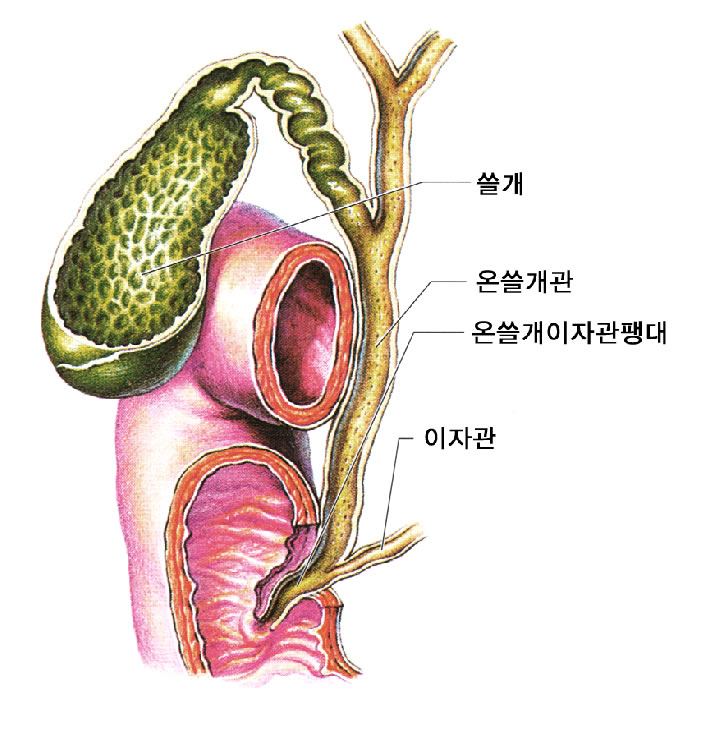 간에서 만들어진 쓸개즙을 수송하는 관조직의 일부. 간에서 만들어진 담즙은 간관, 쓸개관을 거쳐서 쓸개에 보관되었다가 온쓸개관을 통해서 샘창자로 보내진다. 이처럼 간에서 만들어진 담즙이 샘창자까지 배설되는 길로서 길이는 6~7cm 이며 간관, 쓸개관, 온쓸개관 따위로 이루어져 있다. |
||
| ECG | Electro-Cardio-Graphy(-Gram); 심전도 = EKG 1. Conducting System Structu... |
|---|---|
| LRI | lamina rara interna; lower respiratory [tract] illness; lower respiratory [tract] infection; lymphoc... |
| LRTI | lower respiratory tract illness; lower respiratory tract infection |
| ARD | absolute reaction of degeneration; acute radiation disease; acute respiratory disease; adult respira... |
| ECFMG | Educational Commission on Foreign Medical Graduates; Educational Council for Foreign Medical Graduat... |
| FBGC | Foreign Body Giant Cell |
|---|---|
| FB | Foreign body |
| IOFB | intraocular foreign body |
| ARI | Acute Respiratory tract Infections |
| ALRI | Acute lower respiratory tract infection |
| giant cells, foreign-body | Multinucleated cells (fused macrophages), characteristic of granulomatous inflammation, which form around exogenous material in the skin. They are similar in appearance to langhans giant cells (giant cells, langhans), but foreign-body giant cells have more abundant chromatin and their nuclei are scattered in an irregular pattern in the cytoplasm. (12 Dec 1998) |
|---|---|
| granuloma, foreign-body | Histiocytic, inflammatory response to a foreign body. It consists of modified macrophages with multinucleated giant cells, in this case foreign-body giant cells (giant cells, foreign-b0dy), usually surrounded by lymphocytes. (12 Dec 1998) |
| foreign body | Anything in the tissues or cavities of the body that has been introduced there from without, and that is not rapidly absorbable. (05 Mar 2000) |
| foreign-body appendicitis | Appendicitis caused by obstruction of the lumen of the appendix by a foreign substance, such as a particulate foreign body. (05 Mar 2000) |
| foreign body aspiration | <radiology> 80% most likely to be obstructive emphysema (air trapping), 20% most likely to be obstructive atelectasis, <1% most likely to be normal aeration, normal bronchi dilate during inspiration, the aspirated particle acts as a one-way valve, decubitus or inspiratory/expiratory views (12 Dec 1998) |
| foreign body giant cell | <pathology> Syncytium formed by the fusion of macrophages in response to an indigestible particle too large to be phagocytosed for example talc, silica or asbestos fibres). There may be as many as 100 nuclei randomly distributed: similar cells but with the nuclei more peripherally located (Langhans cells) are found at the centre of tuberculous lesions. (06 Mar 1998) |
| foreign body granuloma | A granuloma caused by the presence of foreign particulate material in tissue, characterised by a histiocytic reaction with foreign body giant cells. (05 Mar 2000) |
| foreign-body migration | Migration of a foreign body from its original location to some other location in the body. (12 Dec 1998) |
| foreign-body reaction | Chronic inflammation and granuloma formation around irritating foreign bodies. (12 Dec 1998) |
| foreign body salpingitis | Salpingitis in which giant cells form in the tissue, as a result of introduction of foreign material into the fallopian tube. (05 Mar 2000) |
| foreign body tumourigenesis | Induction of malignant tumours in tissues by nonviable, nonabsorable solid material not known to contain a chemical carcinogen. (05 Mar 2000) |
| lung foreign body | Any object or material that does not belong in the respiratory tree. Lung foreign bodies most often result from the accidental aspiration of an object or food particle. (27 Sep 1997) |
| respiratory tract | The air passages from the nose to the pulmonary alveoli, through the pharynx, larynx, trachea, and bronchi. (05 Mar 2000) |
| respiratory tract fistula | An abnormal passage communicating between any parts of the respiratory tract or between any part of the respiratory system and other organs. (12 Dec 1998) |
| granuloma, respiratory tract | Granulomatous diseases affecting one or more sites in the respiratory tract. (12 Dec 1998) |
제품명 |
판매사 |
보험코드 | 성분/함량 | 구분/보험급여 |
|---|
제품명 |
판매사 |
보험코드 | 성분/함량 | 구분/보험급여 |
|---|