
| 영문 | burn | 한글 | 화상 |
|---|---|---|---|
| 설명 | 화상이란 열에 의한 신체조직의 손상을 말한다. 1. 화상의 정도 피부는 신체의 가장 겉에서 신체를 보호하는 역할을 하는 것이므로 대부분의 화상은 피부를 손상시킨다. 피부는 해부학적으로 진피, 표피, 그리고 피하조직의 3개의 층으로 나뉜다. 화상의 정도는 피부의 손상정도에 따라 1, 2, 3, 4도 화상을 분류한다. -1도화상-표피만이 열로 손상을 받은 경우를 말한다. 화상을 입은 피부는 붉은 색을 뛰고 매우 아프다. 대개 1주일 이내로 완전 회복이다. -2도화상-표피의 전층과 일부분의 진피가 손상을 받은 경우를 말한다. 화상부위가 아프며 붉은 색을 띠고 물집이 생긴다. 대개 2주이내에 완전 회복이 된다. -3도화상-진피의 전층과 피하조직의 대부분이 손상을 받은 경우를 말한다. 피부의 감작을 느끼는 신경의 말단은 진피층에 존재하고 있으므로 이 경우에는 화상을 입은 부위에 감각이 없고 아프지도 않다. 그리고 피부의 혈액을 공급하는 혈관도 역시 피하지방층과 진피층의 사이에 존재하므로 이 경우에 혈관도 손상을 받아서 화상을 입은 부위가 매우 건조하게 보인다. 그리고 피부이식이 있기 전에는 완전 회복이 있을 수가 없다. -4도화상-피하조직의 전층과 피하지방층 아래에 존재하는 부분의 손상이 있는 경우를 말한다. 이 경우 화상의 부위의 특징은 거의 3도 화상과 같고 피부이하 부위의 손상에 의한 증상이 보태질 수 있다. 2. 화상의 범위 화상의 범위를 결정하는 것은 화상의 치료법과 예후를 결정하는 데에 아주 중요한 역할을 한다. 화상의 범위를 정하는 방법은 여러 가지가 있으나 9의 규칙(rule of nine)이 간단하고 보편적으로 많이 쓰인다. 머리부위-9%, 팔한쪽-9%, 몸통의 앞면-18%, 몸통의 뒷면-18%, 다리가 각각-18% 해당한다. 즉 머리전체와 한쪽 다리가 화상을 입을 경우의 화상의 범위는 몸 전체의 27%가 화상을 입은 것이다. |
||
| 영문 | severe acute respiratory syndrome(SARS) | 한글 | 사스 |
|---|---|---|---|
| 설명 | 중국 광동 지역에서 가장 먼저 발생한 전염성 호흡기 질환으로 세계보건기구(WHO)에서 ‘중증급성호흡증후군(SARS)'으로 명명했다. 섭씨 38도 이상의 고열과 기침, 호흡곤란, 저산소증, X선상의 폐렴증상 중 하나 이상의 증상이 나타나며, 두통, 근육통, 식욕부진, 피로감, 발진, 설사를 동반할 수 있다. 초기 증상은 감기와 비슷하지만 폐렴으로 발전하면 치명적일 수 있다. 현재 밝혀진 감염경로는 환자가 재채기나 기침할 때 내뿜는 침방울이고, 이것이 다른 사람의 호흡기로 들어갈 때 전염된다. 침방울이 전달되는 거리는 보통 1m로 보고 있다. 공기를 통해 전염이 가능하다는 주장이 제기됐지만 아직 확인되지 않았다. 원인균은 변종 코로나바이러스로 밝혀졌다. |
||
| 영문 | alimentary tract | 한글 | 소화관, 영양관 |
|---|---|---|---|
| 설명 | 입에서 시작하여 항문으로 끝나는 소화를 담당하는 이르는 말. 위창자관이라고도 불린다. |
||
| 영문 | biliary tract | 한글 | 쓸개길, 담도, 담관 |
|---|---|---|---|
| 설명 | 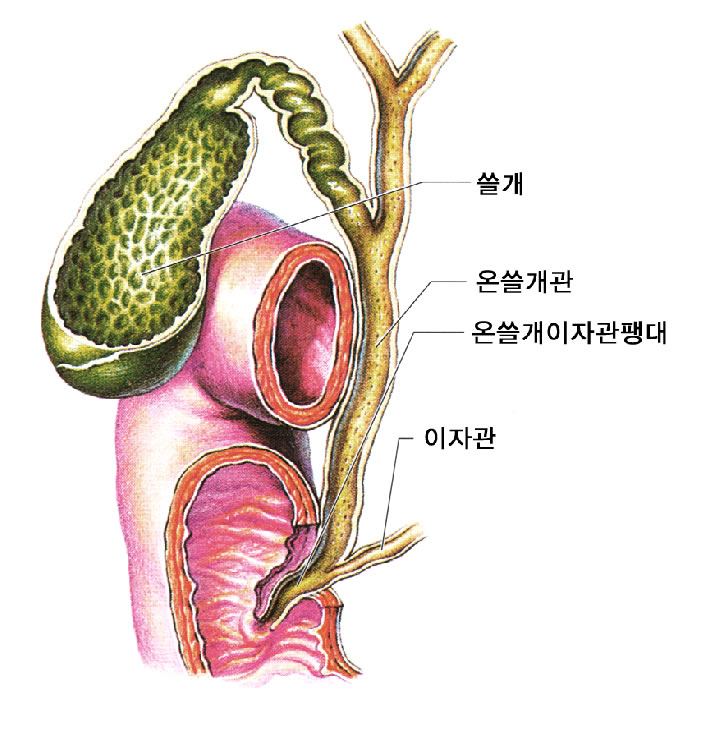 간에서 만들어진 쓸개즙을 수송하는 관조직의 일부. 간에서 만들어진 담즙은 간관, 쓸개관을 거쳐서 쓸개에 보관되었다가 온쓸개관을 통해서 샘창자로 보내진다. 이처럼 간에서 만들어진 담즙이 샘창자까지 배설되는 길로서 길이는 6~7cm 이며 간관, 쓸개관, 온쓸개관 따위로 이루어져 있다. |
||
| 영문 | urinary tract | 한글 | 요로 |
|---|---|---|---|
| 설명 | 오줌을 몸 밖으로 배출하기 위한 길. 콩팥, 요관, 방광, 요도로 이루어져 있다. |
||
| ECG | Electro-Cardio-Graphy(-Gram); 심전도 = EKG 1. Conducting System Structu... |
|---|---|
| URD | unspecified respiratory disease; upper respiratory disease |
| LRI | lamina rara interna; lower respiratory [tract] illness; lower respiratory [tract] infection; lymphoc... |
| LRTI | lower respiratory tract illness; lower respiratory tract infection |
| ARD | absolute reaction of degeneration; acute radiation disease; acute respiratory disease; adult respira... |
| ASPS | Alveolar soft part sarcoma |
|---|---|
| MBI | Maslach Burn-out Inventory |
| PBD | post burn days |
| % TBSA | Total burn surface area |
| IMHV | intermediate part of the medial hyperstriatum ventrale |
| respiratory tract | The air passages from the nose to the pulmonary alveoli, through the pharynx, larynx, trachea, and bronchi. (05 Mar 2000) |
|---|---|
| respiratory tract fistula | An abnormal passage communicating between any parts of the respiratory tract or between any part of the respiratory system and other organs. (12 Dec 1998) |
| granuloma, respiratory tract | Granulomatous diseases affecting one or more sites in the respiratory tract. (12 Dec 1998) |
| upper respiratory tract | The nasopharynx, oral cavity, and throat. (09 Oct 1997) |
| lower respiratory tract | <anatomy> The trachea, bronchi, and lungs. (09 Oct 1997) |
| lower respiratory tract smear | A group of cytologic specimens containing material from the lower respiratory tract and consisting mainly of sputum (spontaneous, induced) and material obtained at bronchoscopy (aspirated, lavaged, brushed); used for cytologic study of cancer and other diseases of the lungs. Synonym: bronchoscopic smear, sputum smear. (05 Mar 2000) |
| broadcast burn | Controlled fire over the entire surface of a designated area. (05 Dec 1998) |
| brush burn | A burn caused by friction of a rapidly moving object against the skin or ground into the skin. (05 Mar 2000) |
| burn | 1. A hurt, injury, or effect caused by fire or excessive or intense heat. 2. The operation or result of burning or baking, as in brickmaking; as, they have a good burn. 3. A disease in vegetables. See Brand. 1. To consume with fire; to reduce to ashes by the action of heat or fire; frequently intensified by up: as, to burn up wood. "We'll burn his body in the holy place." 2. To injure by fire or heat; to change destructively some property or properties of, by undue exposure to fire or heat; to scorch; to scald; to blister; to singe; to char; to sear; as, to burn steel in forging; to burn one's face in the sun; the sun burns the grass. 3. To perfect or improve by fire or heat; to submit to the action of fire or heat for some economic purpose; to destroy or change some property or properties of, by exposure to fire or heat in due degree for obtaining a desired residuum, product, or effect; to bake; as, to burn clay in making bricks or pottery; to burn wood so as to produce charcoal; to burn limestone for the lime. 4. To make or produce, as an effect or result, by the application of fire or heat; as, to burn a hole; to burn charcoal; to burn letters into a block. 5. To consume, injure, or change the condition of, as if by action of fire or heat; to affect as fire or heat does; as, to burn the mouth with pepper. "This tyrant fever burns me up." (Shak) "This dry sorrow burns up all my tears." (Dryden) "When the cold north wind bloweth, . . . It devoureth the mountains, and burneth the wilderness, and consumeth the ass as fire." (Ecclus. Xliii. 20, 21) 6. <surgery> To apply a cautery to; to cauterize. 7. <chemistry> To cause to combine with oxygen or other active agent, with evolution of heat; to consume; to oxidize; as, a man burns a certain amount of carbon at each respiration; to burn iron in oxygen. <engineering> To burn, To burn together, as two surfaces of metal, to fuse and unite them by pouring over them a quantity of the same metal in a liquid state. To burn a bowl, to displace it accidentally, the bowl so displaced being said to be burned. To burn daylight, to light candles before it is dark; to waste time; to perform superfluous actions. To burn one's fingers, to get one's self into unexpected trouble, as by interfering the concerns of others, speculation, etc. To burn out, to destroy or obliterate by burning. "Must you with hot irons burn out mine eyes?" . To be burned out, to suffer loss by fire, as the burning of one's house, store, or shop, with the contents. To burn up, To burn down, to burn entirely. Origin: OE. Bernen, brennen, v.t, early confused with beornen, birnen, v.i, AS. Baernan, bernan, v.t, birnan, v.i.; akin to OS. Brinnan, OFries. Barna, berna, OHG. Brinnan, brennan, G. Brennen, OD. Bernen, D. Branden, Dan. Braende, Sw. Branna, brinna, Icel. Brenna, Goth. Brinnan, brannjan (in comp), and possibly to E. Fervent. 1. To be of fire; to flame. "The mount burned with fire." 2. To suffer from, or be scorched by, an excess of heat. "Your meat doth burn, quoth I." (Shak) 3. To have a condition, quality, appearance, sensation, or emotion, as if on fire or excessively heated; to act or rage with destructive violence; to be in a state of lively emotion or strong desire; as, the face burns; to burn with fever. "Did not our heart burn within us, while he talked with us by the way?" (Luke xxiv. 32) "The barge she sat in, like a burnished throne, Burned on the water." (Shak) "Burning with high hope." (Byron) "The groan still deepens, and the combat burns." (Pope) "The parching air Burns frore, and cold performs the effect of fire." (Milton) 4. <chemistry> To combine energetically, with evolution of heat; as, copper burns in chlorine. 5. In certain games, to approach near to a concealed object which is sought. To burn out, to burn till the fuel is exhausted. To burn up, To burn down, to be entirely consumed. Source: Websters Dictionary (01 Mar 1998) |
| Burn and Rand theory | That stimulation of sympathetic fibres results first in the production of acetylcholine in the postganglionic nerve endings, which then release norepinephrine to act on the active site of the effector cell. (05 Mar 2000) |
| burn units | Specialised hospital facilities which provide intensive care for burn patients. (12 Dec 1998) |
| radiation burn | A burn caused by exposure to radium, X-rays, atomic energy in any form, ultraviolet rays, etc. (05 Mar 2000) |
| mass burn facility | A facility in which the pretreatment of MSW includes only inspection and simple separation to remove oversize, hazardous, or explosive materials. Large mass burn facilities have capacities of 3000 tons of MSW per day or more. Modular plants with capacities as low as 25 tons per day have been built. Mass burn technologies represent over 75% of all the MSW-to-energy facilities constructed in the United States to date. The major components of a mass burn facility include refuse receiving and handling, combustion and steam generation, flue gas cleaning, power generation, condenser cooling water, residue hauling, and storage. (05 Dec 1998) |
| partial-thickness burn | A burn involving the epidermis and dermis and usually forming blisters that may be superficial, or by deep dermal necrosis, followed by epithelial regeneration extending from the skin appendages. Synonym: partial-thickness burn. (05 Mar 2000) |
| chemical burn | A burn due to a caustic chemical. (05 Mar 2000) |
제품명 |
판매사 |
보험코드 | 성분/함량 | 구분/보험급여 |
|---|
제품명 |
판매사 |
보험코드 | 성분/함량 | 구분/보험급여 |
|---|