
| 영문 | white blood cell(WBC), leukocyte | 한글 | 백혈구 |
|---|---|---|---|
| 설명 | 혈액내에 골수구계세포와 림프계세포, 단핵구계세포를 모두 통틀어 말한다. 백혈구의 증가가 있으면 대개 감염이 있거나, 혹은 탈수현상이 있음을 의미한다. 또한 지나친 백혈구수의 감소는 인체내 면역기능이 떨어져 있음을 의미하며, 다른 질병에 의해 나타나는 이차적인 현상이 아닌지 꼭 진단을 받아보아야 한다. |
||
| 영문 | white matter | 한글 | 백색질 |
|---|---|---|---|
| 설명 | 1. 뇌는 두 부분으로 나뉘어져 있다. 대뇌겉질이나 뇌의 중앙부에 위치하는 핵(예를 들면 시상, 시상하부, 바닥핵 등)이 회색질이고 그 외는 백색질이다. 척수의 경우에는 바깥쪽의 하얀부분을 백색질이라 하고, 안쪽의 색깔이 어두운 부분을 회색질이라 한다. 이중 실제적으로 대부분의 신경세포의 돌기 특히 축삭과 말이집으로 구성된 것이 백색질이며, 회색질은 신경세포와 보조하는 세포들이 많은 곳이다. 또한 척수도 백색질과 회색질로 나뉘어 있다. 2. 치아에 점착된 백색 물질로서 세균 및 사상 미생물을 함유한 점액 및 상피세포로 구성된다. 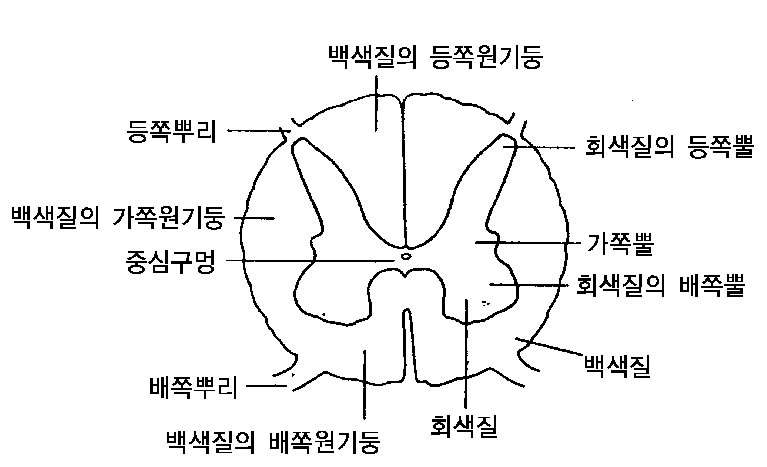 |
||
| 영문 | blood clotting, blood coagulation | 한글 | 혈액응고 |
|---|---|---|---|
| 설명 | 사람의 몸에 상처가 나서 출혈이 있을 경우에 이것을 막고 피를 더이상 나지 않게 하는 것을 지혈이라고 한다. 지혈의 과정에는 크게 두 가지 단계가 있다. 첫번째 단계는 혈소판들이 상처가 나서 손상된 혈관의 부위를 막는 것이다. 이렇게 하면 우선 혈관의 손상부위로 부터 피가 나오는 것을 막을 수가 있다. 다음의 단계는 상처를 막고 있는 혈소판위에 여러 가지 물질들이 작용해서 더욱 단단하게 하여 상처가 난 혈관에서 피가 새는 것을 영구히 막는 것이다. 쉽게 말하면 혈소판은 벽돌에 해당하는 것이고 두번째 과정에 참여하는 물질들은 시멘트에 해당하는 것이다. 이 두 과정이 완전할 경우에 지혈이 순조롭게 일어난다. 혈액응고란 두번째 단계를 지칭하는 말로써 매우 복잡한 단계를 거치는 반응으로 마지막 단계는 섬유소라는 물질이 만들어져서 이 물질이 혈소판과 그 외의 세포를 단단하게 고정시켜 피가 상처난 혈관으로 새는 것을 막는다. 이것을 가장 간단히 설명하자면 크게 다음과 같은 3가지 단계로 이루어진다. 첫번째 단계는 혈관손상에 의해서 프로트롬빈 활성제라는 것이 만들어지는 단계이다. 두번째 단계는 이 프로트롬빈 활성제라는 물질에 의해서 혈액속에 있는 프로트롬빈이라는 물질이 트롬빈이라는 물질로 바뀌는 단계이다. 세번째 단계는 트롬빈이라는 물질에 의해서 섬유소원이라는 물질이 섬유소으로 바뀌는 단계이다. |
||
| 영문 | developmental abnormality | 한글 | 발달이상 |
|---|---|---|---|
| 설명 | 발달과정, 즉 수태로부터 사춘기나 어른이 되어 성숙이 될 때까지 사이에 어느 시기에서 생기는 이상이다. 그러나 좁은 의미로는 수태부터 출생까지의 기간에 생긴 이상 즉 선천이상을 의미한다. 선천이상(congenital abnormality)과 동의어. |
||
| 영문 | chromosome abnormality | 한글 | 염색체이상 |
|---|---|---|---|
| 설명 | 염색체의 수나 구조의 이상. 이상이 생긴 세포나 개체는 유전적인 이상을 일으켜 사람의 경우, 다운 증후군-터너 증후군 따위의 여러 가지 형태로 나타난다. |
||
| WC | ward clerk; water closet; Weber-Christian [syndrome]; wheel chair; white cell; white cell casts; whi... |
|---|---|
| TWBC | total white blood cells; total white blood count |
| WBC | well baby care/clinic; white blood cell; white blood cell count; whole blood cell count |
| ECG | Electro-Cardio-Graphy(-Gram); 심전도 = EKG 1. Conducting System Structu... |
| CBV | capillary blood cell velocity; catheter balloon valvuloplasty; central blood volume; cerebral blood ... |
| W-W | white-on-white |
|---|---|
| SCIWORA | Spinal Cord Injury Without Radiographic Abnormality |
| WMA | Wall motion abnormality |
| NEC | Necrotising Enterocolitis |
| NEC | Neuroendocrine carcinomas |
| white blood cells | White blood cells (WBCs) are cells which circulate in the blood and lymphatic system and harbor in the lymph glands and spleen. They are part of the immune system responsible for both directly (t cells and macrophages) and indirectly (B-cells producing antibodies) attacking foreign invaders of the body. (12 Dec 1998) |
|---|---|
| abnormality | 1. The state or quality of being abnormal. 2. An anomaly, deformity, malformation, impairment, or dysfunction. (05 Mar 2000) |
| snowman abnormality | A radiographic appearance associated with total anomalous drainage of the pulmonary venous circulation into enlarged right and anomalous left venae cavae, that produces a globular density above the heart; the silhouette suggests the figure 8. Synonym: snowman abnormality. (05 Mar 2000) |
| karyotypic abnormality | Abnormality in the number form or structure of chromosomes. Particular abnormalities are associated with particular sub- types of leukaemia. (27 Sep 1997) |
| figure-of-8 abnormality | A radiographic appearance associated with total anomalous drainage of the pulmonary venous circulation into enlarged right and anomalous left venae cavae, that produces a globular density above the heart; the silhouette suggests the figure 8. Synonym: snowman abnormality. (05 Mar 2000) |
| white blood cell | <haematology> White corpuscles in the blood. They are spherical, colourless and nucleated masses involved with host defenses. Normal white blood cell counts are variable with age and sex. Normal adult range is 4, 500 to 11,000 cells per cubic millimetre of blood. Slightly higher counts are seen in children. Elevated counts can be seen in cases of inflammation and infection. See: leucocytes, basophils, coelomocytes, eosinophils, haemocytes, lymphocytes, neutrophils, monocytes. Acronym: WBC (13 Nov 1997) |
| white blood cell cast | A urinary cast composed of polymorphonuclear leukocytes, characteristic of tubulointerstitial disease, especially pyelonephritis. (05 Mar 2000) |
| white blood cell count | <haematology> A laboratory test which measures the number of white blood cells per cubic millimetre of blood. Normal white blood cell counts are variable with age and sex. Normal adult range is 4, 500 to 11,000 cells per cubic millimetre of blood. Slightly higher counts are seen in children. Elevated counts can be seen in cases of inflammation and infection. (13 Nov 1997) |
| white blood cell differential | <haematology> The white blood cell differential is a percentage of each type of white blood cell based on a count of 100 white cells. A change in the white blood cell type (to neutrophils or bands) can indicate a bacterial infection. Neutrophils, bands, lymphocytes, monocytes, basophils and eosinophils are all included. (13 Nov 1997) |
| differential white blood count | An estimate of the percentage of white blood cell types which make up the total white blood cell count. (05 Mar 2000) |
| packed human blood cells | Whole blood from which plasma has been removed; may be prepared any time during the dating period of the whole blood from which it is derived, but not later than six days after the blood has been drawn if separation of plasma and cell's is achieved by centrifugation. (05 Mar 2000) |
| anterior white commissure | A narrow band of white substance bordering on the anterior median fissure of the spinal cord in front of the anterior gray commissure, and consisting of nerve fibres crossing over from one half of the spinal cord to the other. Synonym: commissura alba, anterior white commissure, commissura ventralis alba, ventral white column. (05 Mar 2000) |
| blue white colour selection | <molecular biology, procedure> Method for identifying bacterial clones containing plasmids with inserts. Many modern vectors have their polycloning site within a part of the LacZ gene encoding _ galactosidase, which provides _ complementation in an appropriate mutant E. Coli strain. This means that a re ligated (empty) vector will produce blue colonies when grown on plates containing IPTG and X gal, but colonies with a substantial insert in their plasmid's polycloning site are unable to produce functional _ galactosidase and so produce white colonies. (16 Dec 1997) |
| Bouffardi's white mycetoma | <dermatology> A form of mycetoma common in India and found occasionally in Somalia, caused by the organism Streptomyces somaliensis; in this variety, the muscles, tendons, and bones of the foot are destroyed by the disease process; numerous draining sinuses discharge yellowish grains, clustered like fish roe. (05 Mar 2000) |
| Brumpt's white mycetoma | Mycetoma caused by Pseudallescheria boydii, occurring in temperate and subtropical areas in India; small, white to yellow, hard to soft granules are discharged through the draining sinuses. (05 Mar 2000) |
제품명 |
판매사 |
보험코드 | 성분/함량 | 구분/보험급여 |
|---|
제품명 |
판매사 |
보험코드 | 성분/함량 | 구분/보험급여 |
|---|